
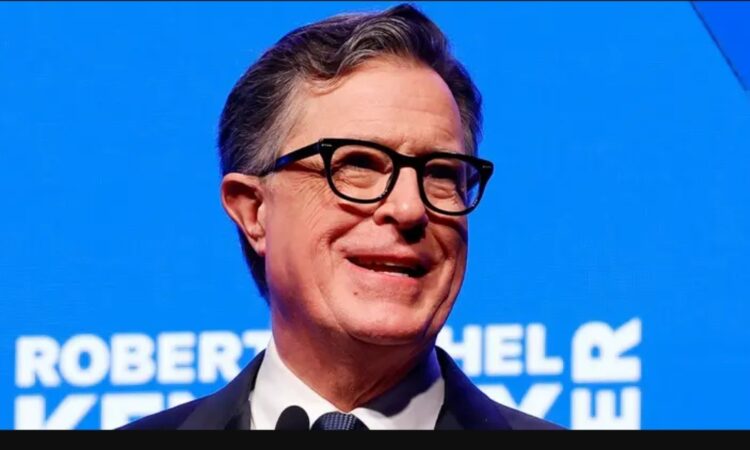
Stephen Colbert didn’t mince words when he was asked what major lesson he took away from 2025. Appearing on CNN’s New Year’s Eve broadcast with Anderson Cooper and Andy Cohen, he answered without hesitation: don’t trust billionaires.
He made the point in his usual sharp, sarcastic style, saying people don’t become billionaires by accidentally stumbling across piles of cash on the side of the road. In his view, that level of wealth almost always comes from systems that favor the powerful, reward ruthless decision-making, and leave ordinary people paying the price.
The comment landed with extra weight because of what Colbert had just been through. Last summer, CBS announced it would be ending “The Late Show,” even though it consistently ranked as the number one program in its time slot.
The network claimed the decision was purely financial and said the show was losing about $40 million a year. On its face, that explanation didn’t make much sense to many people in the industry. A top-rated late-night show brings in advertising dollars, cultural relevance, and brand value that go far beyond simple profit-and-loss math.
Other late-night hosts were quick to call out the network’s story. Jimmy Kimmel openly dismissed CBS’s explanation, saying the claims about Colbert losing that much money were obviously not true. Media analysts and viewers alike questioned why a successful, popular show would suddenly be labeled a financial burden unless other forces were at work.
Those suspicions grew stronger when people looked at the timing. CBS’s parent company, Paramount, was in the middle of negotiating a major merger with Skydance Media, a deal that required approval from the Federal Communications Commission. At the same time, Donald Trump was repeatedly attacking Colbert, criticizing his jokes, and publicly calling for him to be canceled. Colbert had been one of Trump’s most consistent and effective critics on television, and his monologues regularly drew attention for their sharp political edge.
Just a week after the FCC approved the merger, the deal was finalized, and control of the new combined company went to David Ellison. Ellison is the son of Oracle founder and billionaire Larry Ellison, who reportedly helped bankroll the merger. For many observers, the sequence of events raised serious questions about whether corporate leaders were trying to avoid political backlash or smooth the path for regulatory approval by removing a prominent and outspoken critic from their airwaves.
Colbert, for his part, has refused to quietly accept the situation. Since learning that his show would end, he has continued to mock and criticize the very company that canceled him. He has used his platform to point out the contradictions in their explanations and to highlight how corporate power really works. When Paramount recently announced a massive $108 billion bid for a hostile takeover of Warner Bros., Colbert couldn’t resist pointing out the irony. He joked that if his company had that much money available, it could surely afford to “uncancel” one of its most successful and influential shows.
Behind the jokes, though, was a serious message. Colbert’s remarks reflected a broader frustration with a media landscape increasingly controlled by a small number of ultra-wealthy individuals. Decisions that affect jobs, culture, and public discourse are often made behind closed doors, justified with vague claims about finances, and shielded from real accountability.
For Colbert, the experience seemed to confirm a long-held belief: when billionaires say something is “just business,” it usually means ordinary people are expected to accept the consequences without questioning the real motivations. His blunt lesson wasn’t just a punchline for New Year’s Eve. It was a warning about how concentrated wealth and power can shape what the public sees, hears, and is allowed to criticize, even in spaces that once prided themselves on independence and free expression.