Supreme Court Justices’ lives at risk due to ‘incredibly dangerous’ Donald Trump move

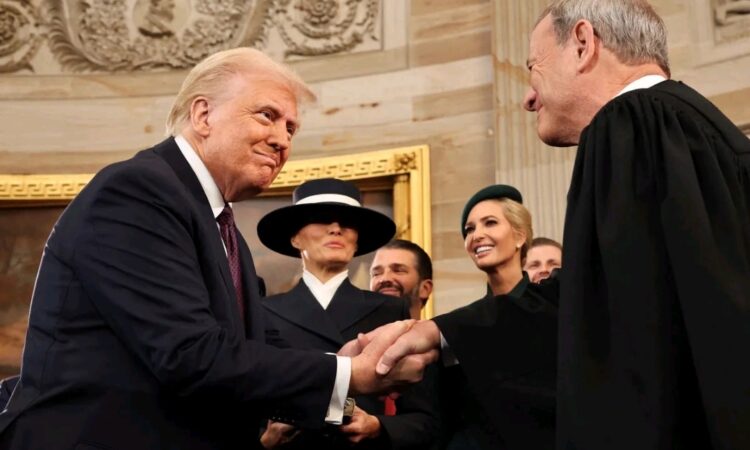
An attorney who previously worked as an investigator for the U.S. House committee that looked into the January 6 attack on the Capitol says he is deeply concerned that members of the Supreme Court could face real danger because of how Donald Trump responded to a recent ruling.
The court had decided to limit the president’s ability to impose new tariffs whenever he chooses. After the decision, Trump publicly criticized the justices in strong and personal terms.
The attorney, Temidayo Aganga-Williams, shared his concerns during an appearance on MSNBC. He explained that what makes this situation especially striking is that the justices involved are people Trump himself nominated and praised in the past.
These are judges he selected, supported, and publicly described as highly qualified and trustworthy. Yet when they ruled in a way that did not favor him, his reaction was not simply to disagree with their legal reasoning. Instead, according to Aganga-Williams, he shifted to attacking them personally.
Aganga-Williams said there is an important difference between criticizing a court decision and targeting the character or integrity of the judges themselves. In a healthy democracy, leaders can strongly disagree with court rulings.
They can argue that the judges misunderstood the law or reached the wrong conclusion. But when the criticism becomes personal, it can create a different and more dangerous atmosphere. It can suggest that the problem is not just the legal outcome, but the individuals who made it.
He warned that in a time when political tensions are already high and the country has experienced episodes of political violence, this kind of personal attack could have serious consequences. Some people may interpret harsh, personal language as a signal that the judges themselves are enemies or obstacles that need to be dealt with.
That kind of thinking, he suggested, moves away from relying on democratic institutions and peaceful processes. Instead of encouraging people to work through elections, courts, and laws, it risks encouraging anger directed at individuals.
Aganga-Williams said that when leaders frame disagreements in personal terms, it can slowly teach people that if they are unhappy with a decision, they should focus on the person rather than the system.
Over time, that mindset can weaken trust in institutions like the Supreme Court. It can also make public officials feel unsafe simply for doing their jobs and interpreting the law as they see it.
His broader concern is that the country could move further down a path where political disputes are no longer handled mainly through debate, legal arguments, and voting, but through hostility and threats. He described that direction as deeply troubling and potentially dangerous, especially for judges whose role is to make decisions independently, even when those decisions anger powerful figures.