Terrified Republicans face reckoning as Donald Trump’s madness comes back to haunt them

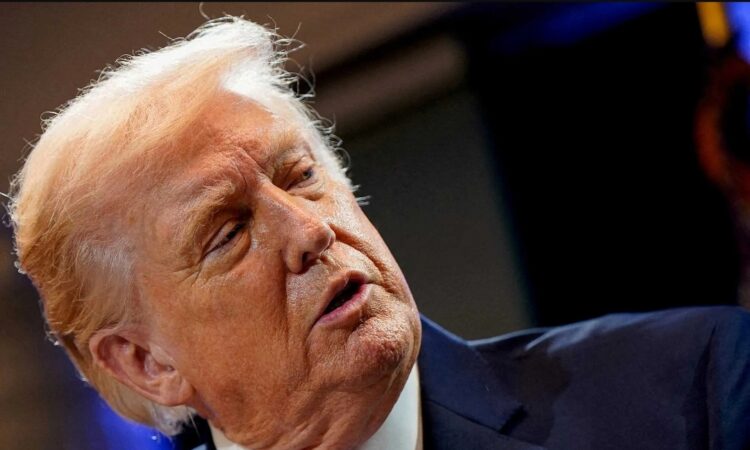
A photo taken earlier this month shows Donald Trump speaking at the White House after the U.S. Supreme Court ruled that he went beyond his legal authority when he placed new taxes, called tariffs, on goods coming into the country from overseas.
The Court made it clear that the Constitution gives Congress not the president the main power to control taxes and trade. In simple terms, the justices were reminding lawmakers that this is their job.
They were telling Congress, especially Republicans who have mostly supported Trump, that they are supposed to act as an independent branch of government and not just let the president do whatever he wants.
But even with that clear message from the Court, no one really expects Congress to suddenly change course.
In Nevada, Democratic leaders quickly began talking about how much these import taxes have cost people in the state. Aaron Ford, who is running for governor, and Zach Conine, who is running for attorney general, both pointed to estimates showing that the tariffs have cost Nevadans billions of dollars.
Conine even said he had sent a $2.1 billion “bill” to the Trump administration on behalf of workers and families in Nevada. The message was clear: this money should never have been collected in the first place, and the state wants it back.
Still, it is very unlikely that regular families will ever see a direct refund check.
When tariffs are collected, the businesses that import goods are the ones who actually pay the government. Those companies often pass the cost along to consumers by raising prices. So if refunds ever happen, the companies that directly paid the tariffs will be first in line to get their money back.
Even they have no clear answer about when or whether refunds will come. And if they do get reimbursed, there is no guarantee that they will lower prices for customers. Any benefit to shoppers would likely be indirect and possibly small.
Nevada Senator Jacky Rosen joined about 20 other Democratic senators to support a bill that would require the federal government to refund the $175 billion collected through these tariffs. The bill says businesses that paid the import taxes should receive their money back within 180 days.
It also directs U.S. Customs and Border Protection, the agency responsible for collecting tariffs, to make small businesses a priority when issuing refunds. The idea is that smaller companies are less able to absorb big financial losses and may have been hit harder by the added costs.
In the House of Representatives, Nevada Democrat Steven Horsford and Oregon Democrat Janelle Bynum introduced a similar bill. Their version would require refunds even faster, within 90 days after the bill becomes law.
Horsford said something that sounds simple and fair: when the government takes money without proper legal authority, it should not get to keep it. That idea speaks to basic fairness and accountability.
However, passing these bills will not be easy. For either proposal to move forward, some Republicans in Congress would have to break from Trump and assert their own authority. That would mean acting as an independent branch of government rather than simply following the president’s lead.
Many observers are skeptical that enough Republican lawmakers are willing to do that. There is a strong belief that Trump would pressure Republican House Speaker Mike Johnson to block any refund bill from even coming up for a vote.
Business groups in Nevada are watching closely. The Retail Association of Nevada released a hopeful statement after the Supreme Court’s decision. The group called for a clear and efficient process to return the money to the businesses that paid it.
They also said the Court’s ruling provides much-needed certainty. For retailers, small businesses, and manufacturers, stability matters. When rules keep changing, it becomes hard to plan, manage supply chains, or set prices.
Unfortunately, instead of bringing stability, the situation may become even more confusing. After the Court struck down the original tariffs, Trump began talking about imposing new import taxes to replace them. He has suggested that more tariffs could be coming.
That means continued legal battles, uncertainty for businesses, and possibly higher prices for consumers. Companies may hesitate to invest or hire when they do not know what trade rules will look like next month. Consumers may continue facing higher costs if businesses build the risk of new tariffs into their pricing.
The broader concern is that some of the damage may not be fully reversible. Trade relationships can take years to build and only moments to strain. Once supply chains shift to other countries or companies lose international partners, it is not always easy to restore those connections. In addition, ongoing uncertainty can weaken confidence in the stability of U.S. economic policy.
In Nevada and across the country, many Republican officials either strongly support Trump’s approach or feel pressured to go along with it because they fear political backlash from his supporters.
Whether they agree with him privately or simply do not want to challenge him publicly, the result is largely the same: continued backing for his trade policies. Nevada Governor Joe Lombardo and other Republican leaders will have to decide how closely they want to tie themselves to Trump’s actions, especially if the economic consequences continue.
In the end, voters will likely have the final say. If import taxes remain in place, if refunds never materialize, and if prices continue to rise, people may judge the leaders who supported those policies.
The Supreme Court has spoken about the limits of presidential power. What happens next depends on whether Congress chooses to act and whether elected officials are willing to put constitutional responsibility ahead of political loyalty.