There was a ghost at Donald Trump’s feast it will be back to haunt him soon enough

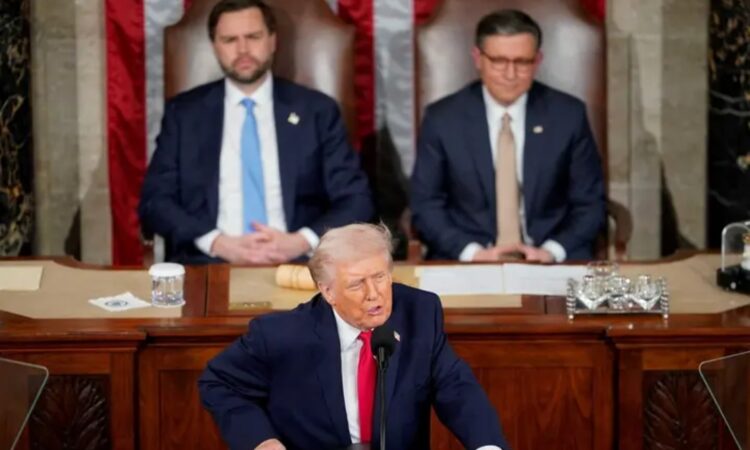
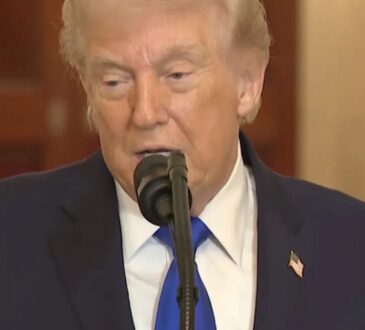
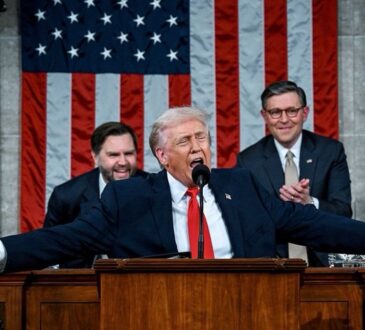
Donald Trump recently gave his State of the Union address, and it sounded exactly like many people expected. He described a version of America that feels very different from the one most people see in their daily lives. In his telling, the economy is stronger than ever, mass deportations are going smoothly, democracy is thriving, Americans are thrilled with his leadership, and other countries respect the United States more than at any time in history.
He spoke for 107 long minutes, painting what he called a new “Golden Age of America.” But instead of offering a clear and realistic picture, his speech jumped from topic to topic, mixing exaggerations, half-truths, and claims that critics say do not match reality. To them, it felt more like a performance than a serious report on the country’s condition.
During the speech, he highlighted war heroes, Olympic gold medalists, and victims of crimes involving immigrants. Critics felt these individuals were being used to support his political message. When he talked about crime and immigration, he used very graphic and intense language to argue that strict deportation policies are still necessary. To some listeners, the tone felt overly dramatic and harsh.
One notable omission was any mention of the Epstein files or acknowledgment of survivors who were reportedly present in the chamber. That absence stood out to observers who expected the topic to come up.
Trump said he inherited a country in crisis, with a weak economy, an open border, and rising crime. He then claimed that in just one year he had turned everything around in a way never seen before, creating an economy that is now “roaring.” However, critics argue that the economy is struggling and that the country feels more divided than ever. They worry about threats to democratic institutions and say relationships with long-standing allies have been strained.
There were several moments that drew strong reactions. Trump promised he would always protect Social Security and Medicare, even though opponents point to large proposed cuts to Medicaid and administrative changes affecting Social Security. He asked members of Congress to stand if they believed the government’s first duty is to protect American citizens rather than undocumented immigrants. Many Democrats stayed seated, which created a tense and highly visible moment.
He again claimed that he had ended eight wars, though he did not elaborate in detail. He also spoke proudly about removing 2.4 million people from food assistance programs, framing it as a success. Critics argue that cutting food aid harms vulnerable families rather than helping the country.
At one point, while discussing immigration, crime, elections, and gender-related issues, he gestured toward Democrats in the room and called them “crazy,” accusing them of destroying the country. Supporters saw this as strong leadership; opponents saw it as more divisive rhetoric.
He suggested that health-care costs would soon go down because of his policies, despite changes affecting Affordable Care Act subsidies that could lead to higher costs for some people. He also made the bold claim that tariffs could replace income taxes as a way to fund the federal government, a statement many economists would strongly dispute.
In a brief aside, he repeated his claim that he should have won in 2020 and said, “This should be my third term. Strange things happen.” The comment was vague but raised eyebrows, as the Constitution limits presidents to two terms.
Trump announced that Vice President J.D. Vance would lead a new task force focused on fighting fraud. He also repeated his long-standing claim that election cheating is widespread, arguing that Democrats can only win through fraud. Critics say there is no solid evidence of widespread voter fraud and warn that such statements undermine trust in elections.
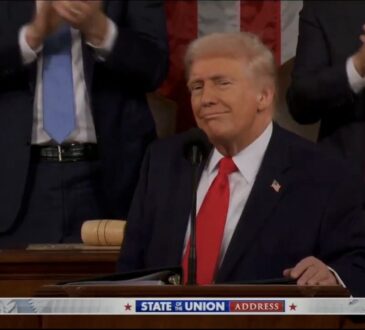
Throughout the speech, Republican lawmakers frequently stood and applauded, and chants of “USA! USA!” broke out more than once. To many watching at home, the atmosphere felt more like a campaign rally than a traditional State of the Union address. Instead of focusing on unity, humility, or bipartisan cooperation, the tone centered heavily on Trump’s accomplishments and harsh criticism of his opponents.
Some commentators believe that while such a speech might energize his supporters and briefly boost his approval ratings, it could also deepen frustration among the large portion of Americans who disapprove of his performance. Whether that political impact lasts remains to be seen.