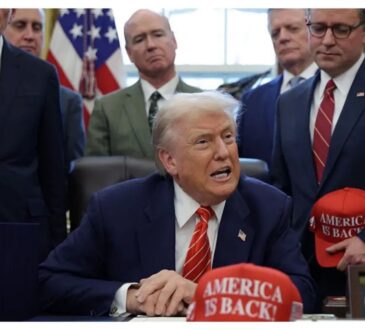

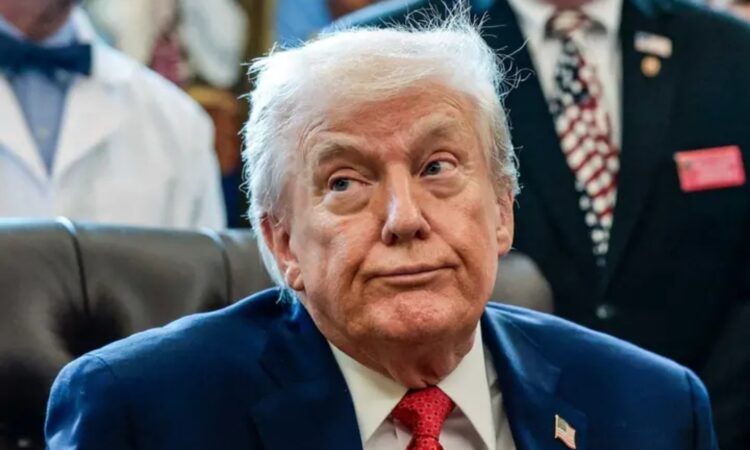
The scene shows U.S. President Donald Trump in the Oval Office signing an order suggesting that federal marijuana rules should be relaxed.
Speaking not as a therapist or a professional, but simply as a parent, an adult, a worker, a citizen, and a human being, I feel that something is very wrong with Donald Trump as a leader.
His Wednesday night speech made that clear to me. He did not have to insult Joe Biden, or say that America was “dead” when he took office, or exaggerate what he has achieved, or talk about the country in a way that many people feel is not true. Those things were not needed to make any political point.
He also did not need to make negative comments about former presidents or swap out photographs in the White House just to make himself look better.
These actions remind me of behavior we often see in troubled teenagers—kids who bully others, who desperately want attention, who want to look powerful because they don’t feel powerful inside. It is the sort of behavior that most people grow out of.
To me, this shows that something in Trump’s way of thinking and behaving feels unhealthy, and I believe that it is affecting the whole country. Many people around him seem willing to accept this behavior, or even join in. Some appear to support the anger, the insults, or the constant need to dominate every situation.
It feels like more than simple political ambition. It feels like it involves cruelty, insecurity, and strong intolerance toward people who are different or who disagree. Leaders around the world, and people who have held leadership roles in communities or businesses, look at this and are shocked.
The government right now gives off an image of chaos and emotional immaturity. There is harsh language, strong threats, and an excitement toward conflict that worries many people. Rather than calming tensions, it feels like leadership that increases division and fear.
On Wednesday night, Trump yelled for a long period of time, making claims that many people believe were not true and using harsh language toward groups and individuals. It was loud, angry, and confusing to many listeners.
No U.S. president has acted quite like this publicly. It feels embarrassing and painful for Americans who want their country to be respected.
Young people are also watching. Kids who started school around the time Trump entered politics are now growing up thinking that this sort of behavior from leaders is normal. That is worrying for the future of American culture, respect, and democracy.
There are also many serious concerns being discussed about his decisions on foreign policy, his relationships with powerful people, the way he has spoken about other nations, and how he has handled questions about his past. These issues create mistrust, fear, and confusion.
Some people believe that he has weakened important American institutions, acted too closely with violent leaders or dictators overseas, and damaged the country’s image. Others worry that the government under him has supported actions that go against core American values like fairness, human rights, and respect for the law.
This moment in history does not feel like normal political disagreement between left and right. It feels much bigger. It raises the question of whether we are willing to accept harmful behavior from people in power simply because facing the problem is uncomfortable.
History shows that societies can slowly get used to cruelty, dishonesty, and instability if ordinary people stay silent. But silence is not neutral—it becomes agreement.
Everyone still has the ability to speak up and act. We can talk with our neighbors, support honest journalism, vote, join local organizations, and refuse to treat harmful behavior as entertainment.
We should expect leaders to behave like adults—responsible, calm, truthful, and respectful. Power should be used to serve the country, not to feed ego or anger.
Change comes when people decide that enough is enough. Democracy only works if its citizens stay alert and active, and if they refuse to trade their values for comfort or fear.
We do not need to be perfect to protect the future. We only need the courage to say, “This is wrong, and we will not accept it.”
Future generations are watching what we do now, and one day our children will ask how we responded. We should work toward answers we can be proud of.