Trump Mocks Biden And Obama For How They Walk — And It Reveals More Than He Realizes

Donald Trump has often spent a lot of time talking about his political opponents, and the way he talks about them can reveal more about his own thinking than he probably intends.
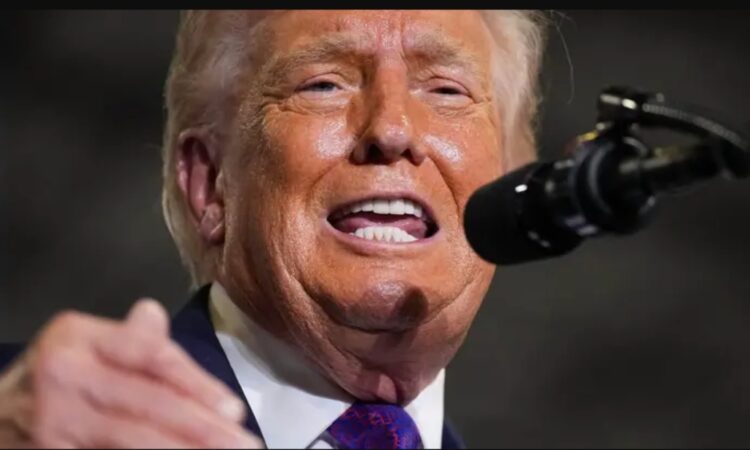
At his first campaign rally after the United States and Israel launched military action against Iran, Trump spoke about the economy and about the U.S. military mission. But he also spent part of his speech criticizing his political rivals, focusing on their physical abilities.
During the rally in Kentucky, Trump talked about how he carefully walked down some very wet stairs at an event. He said he moved slowly because no one cares if you go down stairs quickly. Then he mentioned former President Barack Obama. Trump said he admired how Obama walks down stairs, but then quickly mocked him, saying Obama’s way of stepping down looked unpresidential.
After that, Trump brought up Joe Biden. He talked about times when Biden had fallen down and said that people around the world watch moments like that and don’t like seeing it.
Trump focusing on things like how his opponents walk or whether they fall down is not new. He has talked about similar things in other speeches before. Some experts say this shows that he tends to link physical strength with leadership, almost suggesting that someone’s ability to walk steadily or climb stairs says something about their capability as a leader.
Douglas Kruse, who helps run a disability research program at Rutgers University, said Trump’s comments may reflect ableism, but they may also come from something else: fear of aging. Kruse suggested that Trump might be trying to show that he is still strong and capable, something many older people try to demonstrate as they get older.
Ableism is a way of thinking that favors people whose bodies and minds are considered “normal” while pushing aside or undervaluing people whose bodies or minds work differently. Davey Shlasko, who runs a training and consulting organization focused on social issues, explained that ableism is basically a system that gives advantages to people who are seen as physically or mentally typical.
This kind of thinking is actually very common, and many people use ableist ideas in everyday language without realizing it.
Shlasko said Trump’s comments show a common assumption: that if someone has a difficulty in one area of life, people assume they must be incompetent in other areas too. For example, sometimes people speak very slowly or loudly to someone who uses a wheelchair, as if not being able to walk also means someone cannot hear or understand. In reality, those things are completely unrelated.
This mindset is not just about language. It can also influence how people think about laws, policies, and who deserves opportunities.
According to Shlasko, one of the core problems of ableism is the belief that if someone experiences mental or cognitive decline, that somehow makes them less valuable as a person. Disability activist Stacey Milbern once described ableism as a system that prioritizes being able-bodied at all costs, often harming people with disabilities in the process.
Trump’s comments about his opponents can be seen as ableist, but critics say the problem does not only go one way. Sometimes people who oppose Trump end up using similar kinds of language when they attack him.
At the same rally in Kentucky, Trump also mocked California Governor Gavin Newsom’s dyslexia. Trump said Newsom had “mental problems” and suggested that a “cognitive deficiency” made him unfit to be president. Critics say that argument is ableist because having a specific learning disability like dyslexia does not say anything about a person’s intelligence or ability to reason.
Newsom later responded to Trump on social media by calling him a “brain-dead moron.”
Shlasko pointed out that even this response contains ableist language. The word “moron,” for example, was once used as a medical label for people with intellectual disabilities, and today it is considered outdated and offensive. Shlasko said this shows how people sometimes end up using ableism while trying to fight ableism. For many people, ableist ideas do not stand out as a problem because society often treats physical and mental ability as a natural hierarchy, where being able-bodied is automatically considered better.
However, critics say there are stronger and more meaningful ways to challenge Trump than making fun of how he walks, how he looks, or speculating about his mental abilities.
Representative Ilhan Omar of Minnesota gave an example of this. Back in 2020, Trump claimed he was helping her home state. Omar responded on social media with a joke saying Trump could not even help himself down a set of stairs. Later, she deleted the message and admitted it was the wrong approach. She wrote that Trump is a racist, incompetent leader who wants to act like a dictator, and that those are the reasons he should be criticized—not his physical abilities.
For many critics, the more important issue is Trump’s policies and how they affect people with disabilities and other vulnerable groups.
Last year, layoffs during the Trump administration reportedly affected workers with disabilities at higher rates than others. The administration also weakened certain policies designed to prevent discrimination against disabled workers. In addition, Trump’s decision to reduce parts of the U.S. Department of Education’s special education office affects more than 7.5 million children with disabilities who depend on those services.
Because of actions like these, the think tank Center for American Progress described the early months of Trump’s second administration as a serious attack on disability rights.
Shlasko said the conversation should focus not just on whether Trump’s comments were inappropriate, but also on the policies and protections that his administration has tried to weaken.
For many critics, those policy decisions alone are reason enough to be concerned.