
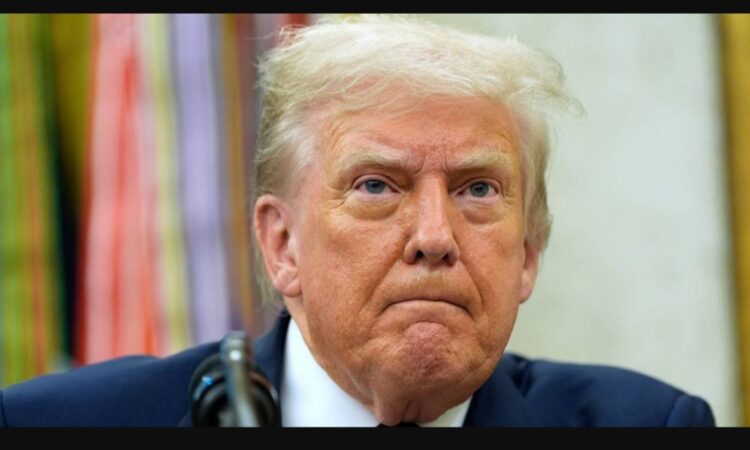
President Donald Trump sparked fresh controversy late Tuesday night after posting on his Truth Social platform in a way that many people saw as a clear threat. He shared a post from a pro-MAGA account calling for the arrest of two long-time figures he has clashed with, then added his own message on top of it: “And many others!!!” The words were short, but the meaning felt heavy, sounding less like a comment and more like a warning.
The two people singled out were former Attorney General Merrick Garland and former FBI Director Chris Wray, both of whom Trump has attacked repeatedly over the years. By adding “many others,” Trump left it open who else he believes should be targeted, creating the impression of a long and growing list of enemies.
Since returning to the White House in January, Trump has often framed his presidency as a chance to settle scores. He has blamed certain individuals and institutions for what he sees as the biggest wrongs done to him, including the Russia investigation, his impeachments, and the congressional inquiry into the January 6 Capitol riot. Many of the people in his crosshairs are former prosecutors, investigators, or officials who were connected to cases that caused him legal and political trouble.
So far, however, this push for revenge has not gone the way Trump seems to want. Courts have repeatedly stepped in, and judges have dismissed cases tied to his political opponents. These legal roadblocks have raised serious questions in Washington and beyond about whether Trump’s approach is reckless, unrealistic, or simply running into the limits of the justice system.
His latest post did not sound like a careful legal argument or a serious policy proposal. Instead, it felt more like a public finger-pointing exercise, daring someone to act on his anger. The vague phrase “many others” only added to the sense that he was casting a wide net of threats without naming everyone involved.
Garland and Wray have long been at the center of Trump’s frustration. Trump has accused Garland of allowing the Justice Department to pursue investigations into him, including those related to classified documents and efforts to overturn the 2020 election. He has also repeatedly attacked Wray, claiming without evidence that Wray lied about FBI involvement during the January 6 riot. These accusations have become a regular part of Trump’s public narrative.
The timing of Trump’s latest outburst also matters. In recent months, several cases aimed at his critics have collapsed in court. Former FBI Director James Comey was indicted earlier in 2025, but the case was later thrown out by a federal judge, with critics accusing Trump of pushing the charges out of political spite. That same judge also dismissed a case against New York Attorney General Letitia James, another outspoken Trump critic. Attempts to revive or refile those cases failed when grand juries refused to move forward.
Each of these legal defeats has added to the sense that Trump is trying to pressure the courts into delivering outcomes they are unwilling to support. When the courts say no, he often turns back to social media, using each setback as fuel for new demands and renewed anger.
Trump’s allies have tried to soften the picture. In an interview with Vanity Fair, Susie Wiles rejected the idea that Trump is running a revenge campaign, even though she admitted it can look that way. Asked about her earlier statement that Trump would end any “revenge and retribution tour” after 90 days, she said she does not believe he is on such a tour at all. She described his thinking as wanting to make sure that what happened to him does not happen to others.
At the same time, Wiles acknowledged the reality many people see. She admitted that in some some situations, Trump’s actions may appear like retribution and conceded that, at times, there could be an element of it. She finished by saying she does not blame him for feeling that way.
Taken together, Trump’s words and actions paint a picture of a president still deeply focused on old battles, unresolved grudges, and personal grievances. His late-night post, short as it was, has added to growing concerns that his language is becoming more aggressive as legal efforts against his enemies continue to fail. Whether these threats lead to real consequences or remain loud online warnings, they continue to push the boundaries between political rhetoric and the rule of law.