

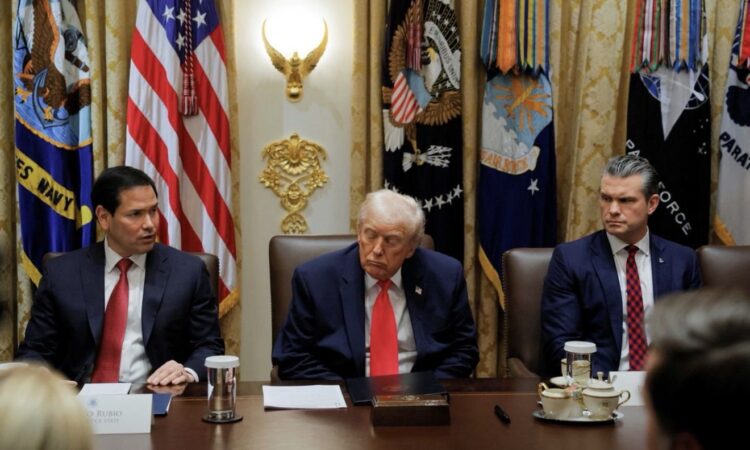
On Tuesday, the President of the United States led a cabinet meeting that looked nothing like what Americans would have imagined even ten years ago. I hadn’t planned to watch it at all. It felt like something out of a state-controlled North Korean broadcast, the kind of staged performance you expect only from governments trying to hide the truth. But once I accidentally came across it, I couldn’t look away.
The whole thing was a disaster. It was painful to watch, almost unbelievable, and in any normal country at any normal time, it would have ended a presidency immediately.
Anyone who watched even a few minutes of that meeting could tell something was terribly wrong. How could anyone see a leader who looked so exhausted and mentally checked out, and not realize how absurd and dangerous the situation had become?
These questions should have been asked loudly by the major news networks, but they seemed more interested in pretending everything was fine. Their silence made the moment even worse.
Inside that room, nothing felt normal. And nothing looked like it was functioning the way a government is supposed to work.
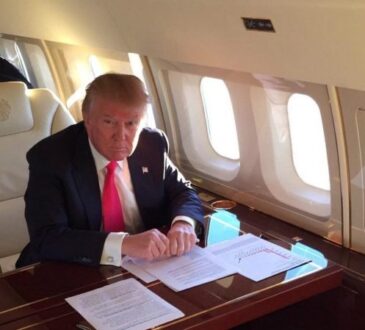
There sat Donald Trump — now 79 years old — wearing a bright pink tie, a tight white shirt, and a dark jacket that clashed with his unnatural orange face and the yellowish hair puffed carefully across his head. It was as if he had chosen his appearance the way a child picks a costume.
“Less combover today … more fluff. A little more white around the eyes … make the cheeks more orange … yes, that pink tie works.”
The end result looked ridiculous.
Throughout the meeting, Trump struggled to stay awake. His head kept dropping, jerking, drifting. He rubbed at his face over and over, half-asleep, as if his mind was somewhere far away on a golf course in Florida. It was impossible to tell whether he had forgotten to take one of the medications he relies on, or whether he had taken too many in preparation for this carefully staged performance.
Meanwhile, the people seated around him — a group full of anti-vaccine activists, open bigots, wealthy donors, political opportunists, and individuals repeatedly accused of corruption — took turns praising him. They spoke as if reading from a script, thanking him for “doing a wonderful job,” for “leading the nation,” for “protecting America.” Every compliment felt more unreal than the last.
At one point, Homeland Security Secretary Kristi Noem actually thanked him for “keeping hurricanes away from the United States this year,” as if he personally controlled the weather.
Under normal circumstances, Trump would have perked up immediately at such praise. This time, he barely reacted. His eyes stayed half-shut. His face hardly moved. For the first time, he looked like someone who was simply unable to keep performing the version of himself he loves to project.
It was hard to know whether to laugh at the absurdity or feel terrified. Because indifference isn’t an option. A drunk driver is steering the vehicle, and nobody has taken the keys away.
After the endless stream of praise ended, the press was finally allowed to ask questions. But not one reporter asked what should have been the first question:
“Do you force these people to praise you like a dictator, or do they humiliate themselves voluntarily?”
Instead of addressing the dangerous circus happening right in front of them, the reporters asked about other scandals and problems happening elsewhere — problems created by the same people sitting in that room.
And then, suddenly, Trump snapped awake. He sat up straight, cleared his throat, and started talking with anger and bitterness. You could almost feel the hatred in the way he moved his mouth, the way his hands made that strange accordion motion he always does when he’s furious.
He was in a terrible mood.
He lashed out at Somali immigrants, saying, “I don’t want them in our country.”
Then he went further: “We’re going the wrong way if we keep taking in garbage into our country.”
Then he attacked Representative Ilhan Omar directly, calling her “garbage.”
Once he started, the insults kept coming. He ranted about countries “ripping off America,” pretending not to mention names while clearly aiming at Japan and South Korea. But, as always, he left out Russia and Saudi Arabia — nations he never criticizes, no matter what they do.
It was disturbing to watch. Even worse was the silence that followed. Nobody in that room, and nobody in the press, called out the behavior for what it was: a sign that he is spiraling out of control and trying to drag the country down with him.
Finally, Trump brought up his health, bragging about a physical exam. He told a strange story about doctors offering him a cognitive test:
“They said it was hard. I said, ‘I’m smart, who took it before me?’ They said no president ever took one. And I aced it.”
No one challenged him. No one questioned the strange story. It was as if the only voice in the room belonged to whatever was going on inside his head.
The entire scene felt unreal — a mixture of denial, fear, and forced loyalty surrounding a leader who looked exhausted, unstable, and incapable of doing the job.
And yet, everyone stayed silent.


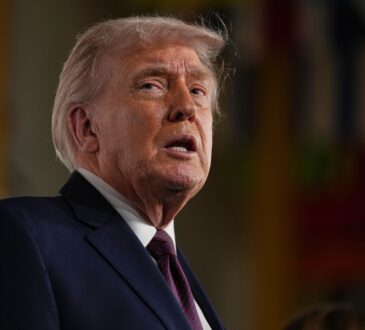

Trump physically has gone WAAAAAY down just since January; his physical appearance looks worse every time I see him on TV or my tablet. It seems to be a physical lack, a spaced out stare, the vacant eyes that tells me that nobody’s home. This man is NOT doing a good job because he physically doesn’t have the stamina. And as far as mentally, he started out a lying thief, now it’s downgraded into pure evil and violence. I don’t see how this is making America great in ANY form or fashion.