Karoline Leavitt Lets Her Guard Down — Reporter Sees the Opening and Lands a Brutal Question That Forces Her to Pull an Absurd Move That Turns On Her

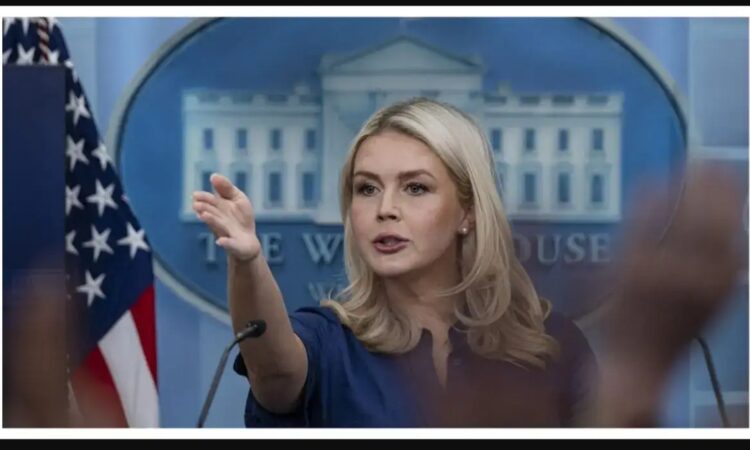
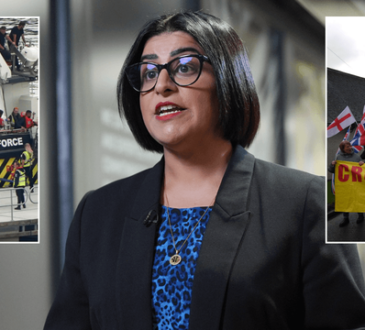
The moment stood out not just because of the question itself, but because of how quickly the tone in the room shifted. Just before the exchange, the atmosphere had been relatively relaxed. There was some light laughter, and Leavitt appeared comfortable, even casual. That made what happened next feel sharper. The reporter saw an opening and used it to ask something more serious and direct than the usual back-and-forth.
His question wasn’t random—it was carefully framed to highlight a contradiction. For decades, American leaders from both parties have tried to present the country as a force for stability and moral responsibility, especially when it comes to war. Even during controversial conflicts, presidents have typically emphasized that the U.S. does not target civilians and follows international rules. By bringing up past messaging from earlier administrations, the reporter was essentially asking whether that standard still applies.
What made the question difficult is that it didn’t just challenge a single statement. It challenged the broader idea of how the U.S. sees itself and wants to be seen by the rest of the world. If a president openly talks about destroying an entire civilization, even as a threat, it raises uncomfortable questions about whether that moral framing still holds up.
Leavitt’s response showed a very different approach. Instead of engaging with the comparison or explaining how those two ideas could fit together, she redirected the conversation toward Iran’s actions. That’s a common strategy in political communication—shift the focus to the opponent’s behavior instead of defending your own side directly. By highlighting Iran’s long history of hostility toward the U.S., she tried to justify the president’s stance without actually addressing the wording or implications of his statement.
But that approach has limits, and this was one of those moments where it became obvious. The reporter wasn’t asking whether Iran is an adversary—he was asking whether threatening civilians undermines America’s moral position. By not answering that directly, it created the impression that the question didn’t have a strong response, or at least not one she was willing to give publicly.
Her decision to shut down the follow-up added to that impression. In press briefings, reporters often rely on follow-up questions to pin down unclear answers or push past talking points. When that opportunity is cut off, it can feel like the conversation is being controlled rather than genuinely addressed. That’s part of why the moment resonated online—people weren’t just reacting to what she said, but to what she avoided saying.
The public reaction reflected a growing frustration with how political figures handle tough questions. Some viewers felt that her answer was scripted and predictable, sticking to familiar lines about national security without engaging with the deeper issue. Others were more blunt, accusing her of deliberately dodging accountability. At the same time, the reporter’s persistence stood out because it’s not always common to see journalists keep pushing after being brushed off.
Beyond the exchange itself, the bigger concern comes from the language that sparked the question in the first place. When leaders use extreme or absolute terms—like suggesting the destruction of an entire civilization—it doesn’t just stay in the realm of politics or rhetoric. Words like that can influence how other countries interpret intentions, how allies respond, and how military decisions are understood on the ground.
Legal experts worry about this because international law isn’t just about actions—it also considers intent and threats. The rules of war, developed over many years and formalized in agreements like the Geneva Conventions, are built around the idea that civilians should be protected as much as possible. Even when infrastructure is targeted, there are supposed to be limits, and commanders are expected to weigh the potential harm to ordinary people.
When a leader speaks in a way that seems to ignore those limits, it can create confusion or pressure within the military itself. Commanders still have to follow the law, regardless of political rhetoric, and they can be held responsible if they carry out unlawful orders. That puts them in a difficult position if the messaging from the top appears to conflict with those rules.
There’s also a broader shift in tone that some observers are noticing. In earlier eras, even when the U.S. took aggressive actions, leaders often tried to frame them in terms of necessity, legality, and restraint. Now, critics argue that there’s less emphasis on those ideas and more willingness to speak in blunt, forceful terms that dismiss international norms altogether. Statements like “I don’t need international law” reinforce that perception.
All of this makes moments like the press briefing more significant than they might seem at first glance. It’s not just about one reporter and one answer—it’s about how governments explain themselves, how they respond to criticism, and whether they’re willing to engage with difficult questions in a meaningful way.
For Leavitt, the challenge is becoming more visible. Defending policy is one thing, but defending language that raises legal and moral concerns is much harder, especially in a public setting where every word is scrutinized. The exchange showed that sticking to a combative style can work up to a point, but it can also backfire when the question requires a more thoughtful or nuanced response.