Asylum Seekers And Refugees Reveal Their Biggest Fear After Reform Called for Birmingham to End Popular Scheme

Refugees and asylum seekers living in Birmingham have spoken about their fear, sadness and uncertainty after Reform UK councillors called for the city council to withdraw from the City of Sanctuary scheme. The proposal sparked a heated debate at Birmingham City Council and drew strong reactions from politicians, community groups and people who have rebuilt their lives in the city after fleeing conflict and persecution.
The motion was put forward by Reform councillors Graham Green and Cherie Waddingham, who argued that Birmingham should stop taking part in the City of Sanctuary programme and refuse to join any future voluntary refugee sponsorship schemes. They said the council should instead focus its attention and resources on improving services for existing residents, pointing to ongoing pressures on housing, neighbourhood services and the council’s finances.
Ahead of the council meeting, the Reform councillors said Birmingham’s first responsibility should be to the people already living in the city. They argued that public money and council resources should be directed towards restoring local services rather than expanding support programmes linked to refugees and asylum seekers.
However, the proposal failed after it was voted down by councillors from Labour, the Liberal Democrats, the Green Party and independent groups, who rejected Reform’s arguments and defended Birmingham’s commitment to welcoming people fleeing war and persecution.
Despite the motion being defeated, the debate left many refugees living in Birmingham feeling worried about what the future might hold.
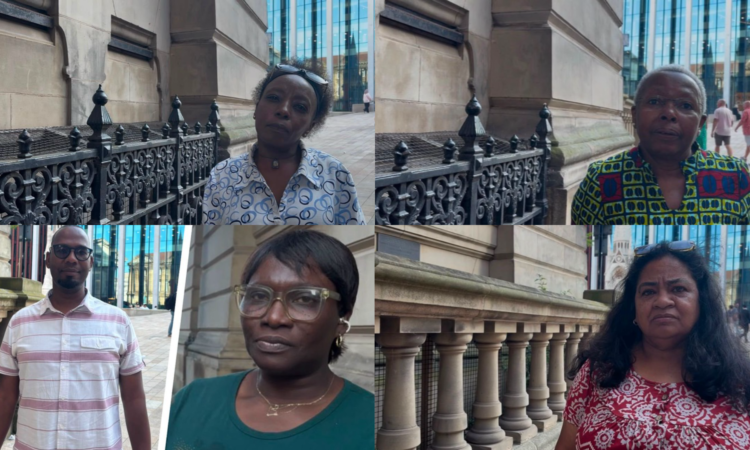
Algar Goredema-Braid, who moved to Birmingham from Zimbabwe almost 40 years ago, said she had witnessed a major change in attitudes towards refugees over the decades. She said that when she first arrived, she and many others were warmly welcomed and encouraged to build successful lives.
She explained that she had always been proud of her Zimbabwean roots while also proudly calling herself a Brummie because Birmingham had become her home. She said it was upsetting to now hear people being judged because of their skin colour, accent or where they came from.
Speaking after the council meeting, she described Reform’s proposal as deeply disappointing. She said it left her feeling a mixture of sadness, anger and disbelief, adding that she wondered where people’s sense of humanity had gone.
Charley Jacobs, who originally came from South Africa and has lived in Birmingham for more than ten years, said the City of Sanctuary programme had helped her find confidence and build her own place within the local community.
She warned that removing Birmingham’s sanctuary status would unfairly blame refugees and asylum seekers for problems they had not created. She also questioned what would happen to the many refugees who now work as carers, doctors and in other important jobs across the city if the welcoming environment disappeared.
According to Charley, Birmingham would lose something valuable if it stopped supporting the City of Sanctuary scheme. She described most people in the city as welcoming, generous and kind.
Virginia Njenga, who came from East Africa, said the programme had helped her feel safe, accepted and included. She explained that it allowed her to work, make friends and become part of the community without feeling judged.
She said Birmingham already felt like home and believed that diversity made the city stronger because people from different countries bring valuable skills, experience and ideas that benefit everyone.
Temitayo Ajayi, who moved to Birmingham from Nigeria in 2019, also praised the support she received after arriving in the UK. She said the welcoming atmosphere gave her confidence to express herself and settle into her new life.
When asked about Reform’s proposal, she admitted it made her feel frightened.
Mansour Masoud, who has lived in Birmingham since 2017, said he now considers himself a Brummie and feels fully part of the local community. He argued that immigrants make important contributions to Britain and pointed to the England football team as an example of how people from different backgrounds help the country succeed.
He said ending Birmingham’s participation in the City of Sanctuary scheme would not benefit anyone because it helps people escaping conflict rebuild their lives before contributing back to society.
Another refugee, Ali from Algeria, said Birmingham had shown him more kindness and support than any other English city he had visited. He explained that the city never made him feel far away from his family or homeland.
Angel, who came from Albania, said she was proud that Birmingham was recognised as a City of Sanctuary because it reflected values of compassion, kindness and making people feel safe. She described the idea of making the city less welcoming as deeply upsetting.
Shari Brown, chair of Birmingham City of Sanctuary, said the programme represented an important statement about the city’s values. She explained that many schools, universities, theatres and places of worship across Birmingham have embraced the idea of being places of sanctuary.
She argued that promoting inclusion benefits everyone, not just refugees and asylum seekers. According to her, creating a welcoming city helps strengthen communities as a whole.
Responding to Reform’s proposal, Brown said she believed there was confusion about how funding works. She explained that money provided to support asylum seekers is ringfenced and cannot simply be redirected to other council services if Birmingham withdrew from the scheme.
She added that concerns about housing, healthcare and employment should include support for vulnerable people rather than exclude them, arguing that compassion and responsible financial management can exist together.
During the council debate, Reform councillor Graham Green criticised Birmingham’s previous Labour leadership, claiming the city had been badly managed for years. He said councillors should remember that their first duty is to local residents who have lived, worked and raised families in Birmingham.
Reform group leader Jex Parkin said the party simply wanted Birmingham to put its own residents first and concentrate on delivering better public services.
Other councillors strongly disagreed. Green councillor Jane Baston defended Birmingham as a city that celebrates diversity because it makes the city stronger.
Labour group leader Nicky Brennan said Reform had missed an opportunity to discuss issues that could genuinely improve Birmingham. She also argued that leaving the City of Sanctuary programme would not release extra money for housing, social care or street cleaning because the funding would simply leave the city.
Independent councillor Nosheen Khalid said putting Birmingham first should never involve turning vulnerable people into political targets.
Liberal Democrat councillor Izzy Knowles shared her own experience of helping a Ukrainian family settle in the city and argued that removing sanctuary status would do nothing to solve Birmingham’s housing problems.
The Conservative group also supported ending Birmingham’s City of Sanctuary status through an amendment, saying the council should focus on the thousands of people from every background who remain on the city’s housing waiting list.
Conservative leader Robert Alden said the council has a duty to look after every resident in Birmingham regardless of their background.
After a lengthy and often heated debate, councillors voted against Reform’s motion, meaning Birmingham will keep its City of Sanctuary status and continue participating in programmes that support refugees and asylum seekers rebuilding their lives in the city.