A Convicted Terrorist Linked to the 7/7 London Bombings Has Received Thousands From UK Taxpayers, and Many People Are Angry After Learning Why

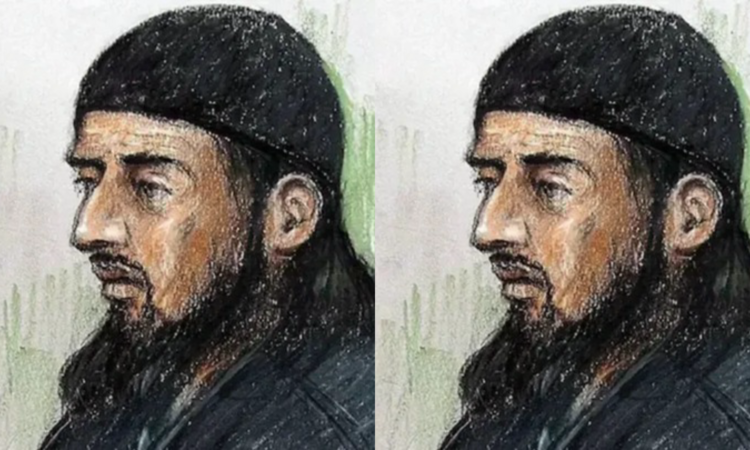
Police decided last year that Haroon Aswat still posed a risk to national security while he was trying to win his release from detention.
A convicted Islamist terrorist who has been linked to the 7/7 London bombings has received almost £15,000 in taxpayer-funded legal aid for mental health cases, GB News has revealed.
Haroon Aswat, 51, who was born in Batley, West Yorkshire, received a total of £14,092.96 in legal aid for mental health matters over a period of 21 years.
After returning to the UK in 2022, following time spent in a US prison for helping plan an extremist training camp, Aswat was detained under the Mental Health Act. He was admitted to Bethlem Royal Hospital in Bromley, south-east London.
Last month, however, a High Court judge ruled that he could be released after completing his treatment. The Ministry of Justice has not confirmed where he is now, although it is believed he may have been transferred to another secure mental health facility.
The legal aid payments were revealed through a Freedom of Information request obtained by GB News. The records show that Aswat received five separate grants for mental health legal representation between 2008 and 2025, adding up to £14,092.96.
Mental health legal aid is available in England and Wales for people detained under the Mental Health Act. It pays for legal advice and representation, including appeals against detention.
Aswat was arrested in Zambia in 2005 and returned to the UK. He then spent nine years fighting attempts to extradite him to the United States over a plot to establish an extremist training camp in Oregon in 1999.
In 2008, he was moved to Broadmoor Hospital after being diagnosed with schizoaffective disorder, a serious mental illness that can affect a person’s thinking, emotions and behaviour.
In 2015, he was sentenced to 20 years in prison in the United States after admitting that he conspired with convicted terrorist Abu Hamza to set up the extremist training camp. He returned to Britain in 2022 after serving part of his sentence, with time spent in custody before extradition counting towards his prison term.
A psychiatrist later said there was no evidence that Aswat had the mental illness at the time of the offences in 1999. During an assessment, Aswat reportedly told the psychiatrist: “I am a terrorist.”
The psychiatrist also said that even when his mental health appeared stable, Aswat continued to express violent extremist views. The report stated that he often stopped taking his medication, suffered relapses, and that these periods were linked to violent behaviour. It concluded that he continued to pose a risk of violent Islamist extremism.
During a High Court hearing last year, UK police assessed Aswat and said he still represented a risk to national security.
Aswat has long been linked to the 7/7 London bombings in 2005, although he has never been charged or stood trial over the attacks. Investigators found that the bombers made 20 phone calls to a number linked to him shortly before the attacks, which killed 52 people and injured more than 770 others.
He also left the UK for India through Heathrow Airport just hours before the bombings took place.
Reports have also claimed that while in US custody, Aswat admitted involvement in both the 9/11 attacks in New York and the 7/7 London bombings. He is also believed to have trained at an al-Qaeda camp in Afghanistan in 2001 and stayed at a safe house in Pakistan, where he met two of the 7/7 bombers.
The Freedom of Information records show that Aswat has received a total of £65,315.91 in legal aid over the past 21 years.
The biggest payment was £30,168 for civil legal representation between 2013 and 2022. Of that amount, £6,194.54 went to solicitors and £23,973.46 was paid to barristers.
He also received £21,054.95 in criminal legal aid between 2005 and 2007. This included £435.17 for legal advice at a police station and £20,619.78 for legal representation at a magistrates’ court.
In addition, he received £14,092.96 in mental health legal aid across five separate grants, with the largest single payment of £6,643.35 covering the period from 2010 to 2015.
The Ministry of Justice said the money is paid directly to solicitors and barristers, not to the offender. It also explained that anyone questioned at a police station can receive criminal legal aid, regardless of their financial situation.
The department added that its records do not always identify people by their full names because its system usually records only initials and surnames.
A Ministry of Justice spokesperson said: “Offenders do not receive any of this money themselves. The payments are means-tested where appropriate and are made directly to the solicitors and barristers representing people in legal proceedings.
“Without legal representation, offenders could argue that they did not receive a fair trial, which could lead to convictions being challenged, more appeals and higher costs for taxpayers.”