GB News halts for breaking Illegal Boat migrant alert – the British taxpayer will be furious About it

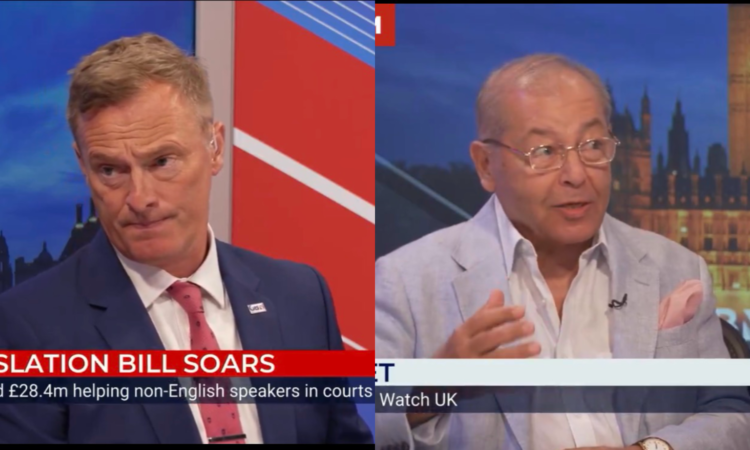
GB News interrupted its normal programme to announce a major update about the amount of taxpayers’ money being spent on interpreters in British courts.
Presenter Martin Daubney revealed that millions of pounds had been used to help defendants, witnesses and victims who could not speak or understand English properly. The programme initially described the cost as around £28.4 million, while the detailed figures later given showed that £28.2 million was spent during the 2025/26 financial year.
The money paid for interpreters and other language support across the court system. This service covered 103 different languages and was provided to people from many nationalities and backgrounds. The figures do not show that everyone who needed an interpreter entered Britain illegally, although the news was discussed as part of the wider debate about immigration and small-boat crossings.
Alp Mehmet, chairman of Migration Watch UK, joined the programme to discuss the figures. He argued that the growing cost was unfair to British taxpayers because ordinary people were not directly asked whether they supported this level of spending.
Mehmet said taxpayers were already paying large amounts to provide accommodation, food and other support for people arriving in the country. He claimed that the lifetime cost of supporting someone who entered Britain illegally could reach around £400,000. He also suggested that maintaining a newly arrived person could cost more than £40,000 a year.
He questioned how long taxpayers could continue carrying these costs, especially during a time when many British families were struggling with expensive food, energy bills, rent and mortgage payments.
According to Mehmet, taxpayers have very little control over how the money is spent. He argued that if members of the public were asked directly whether they wanted to pay these costs, many would probably refuse.
He also questioned whether politicians fully understood the concerns of ordinary working people. In his view, the Government continues approving spending without properly considering how taxpayers feel about it.
The figures showed that the cost of court interpreters and language support increased by nine per cent. Spending rose from £25.9 million in the previous financial year to £28.2 million in 2025/26.
This means that more than £545,000 was being spent every week to provide language services in courts. These interpreters helped people understand questions, evidence, legal arguments and decisions made during court proceedings.
Romanian was the most expensive language for the second year in a row. Providing Romanian-language services cost taxpayers approximately £3.2 million during the year.
Polish was the second most expensive language, although the amount spent on it fell for the second year running. It still cost around £3 million.
Mehmet drew attention to the fact that Romanian and Polish were at the top of the list, despite Romania and Poland being members of the European Union. He questioned why Britain was still paying such large amounts for people from EU countries, particularly several years after the UK left the European Union.
However, court interpreters are not provided only because of a person’s immigration status. They can be used by defendants, victims or witnesses who are legally living in Britain but do not have enough English to understand complicated court proceedings. Interpreters are also important because everyone involved in a court case must be able to understand what is happening and communicate accurately.
Figures covering the six years between 2020/21 and 2025/26 showed which languages had cost the Ministry of Justice the most.
Polish was at the top of the six-year list, costing taxpayers approximately £18.5 million. Romanian followed closely with a total cost of £17.7 million.
Arabic-language services cost £11.3 million, while Albanian interpreters accounted for around £9.5 million. Urdu services cost another £9.3 million.
Different versions of Kurdish had a combined cost of £7.3 million. Bengali-language support cost £6.2 million, while Punjabi interpreters cost £6 million.
Lithuanian-language services added another £4.7 million to the total bill. Russian completed the list of the ten most expensive languages, costing approximately £3.2 million over the six-year period.
The figures have now increased pressure on the Government to explain why interpreter costs are rising and whether more should be done to reduce the burden on taxpayers. At the same time, the courts must ensure that defendants, witnesses and victims can understand legal proceedings, regardless of the language they speak.