Migrants in London tent city reveal a Chilling Amount Of Money they make illegally begging

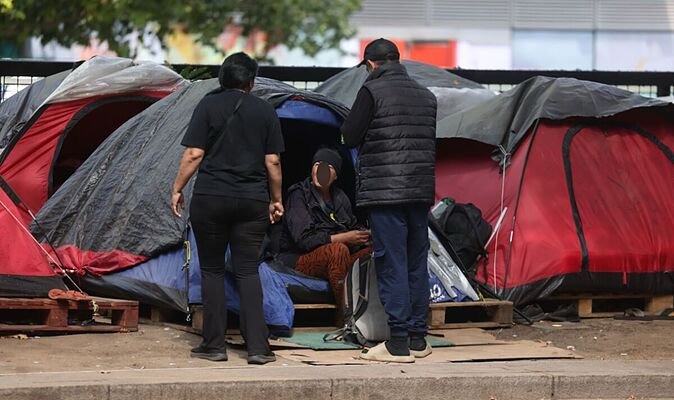
Migrants living in a makeshift tent camp in central London have defended themselves against claims that they are criminals and troublemakers.
The camp, which has been set up on the central reservation of Euston Road, has existed in some form since the Covid pandemic. Around 30 to 40 tents are packed closely together in two rows, creating what some people have described as a “tent city” in the middle of one of the world’s richest capitals.
Some local residents say the camp has become an eyesore. They have also complained about public urination, street drinking, gambling and begging in the area. However, people living at the camp insist that most of them are simply homeless and trying to survive.
Liliana, a 50-year-old grandmother from Romania, said those staying there should not automatically be treated like criminals. She said negative comments about the camp have been shared on TikTok and Facebook, but argued that the accusations are unfair.
“We are not criminals,” she said. “If we were criminals, the police would come and arrest us.”
Liliana claimed that people from the camp do not beg because they see it as an easy way to make money. She said they only ask strangers for help when they are desperate and need something to eat.
According to her, a person could spend three hours begging and receive only about £1. She said this showed that nobody was getting rich from sitting on the street and asking for money.
She also rejected claims that everyone living in the camp is addicted to drugs or alcohol. Liliana said people should not judge the whole group based on what they may have seen or heard about a small number of individuals.
She arrived in Britain in 2017, hoping to find work and build a better life. She previously lived in Boston, Lincolnshire, where she worked in factories. However, when the available work began to disappear, she and her husband moved to London around four months ago in the hope of finding more opportunities.
Since arriving in the capital, Liliana said she has found cleaning work in hotels through zero-hours contracts. She earns around £13 an hour and sometimes works six or seven hours a day. However, she explained that the work is not always guaranteed and that her income is still not enough to cover London’s high rental costs.
With no affordable home available, she and her husband ended up living in the Euston Road camp. She said the situation is especially painful because her family in Romania also has very little, meaning they cannot provide her with financial support.
Liliana insisted that begging is not something she wants to do and that she would only consider it when she had no other way to buy food.
Another Romanian migrant living at the camp told the Express that he had been there for around five years. He said he had previously worked as a decorator and at a roadside car wash but was currently unemployed and searching for another job.
The man, who did not want his name to be published, admitted that he sometimes begged when he needed money for food. However, he denied taking part in gambling and said people should understand the difficult circumstances faced by those sleeping rough.
The camp is located in a very busy part of central London, close to University College Hospital and Warren Street Underground Station. It also sits inside Prime Minister Andy Burnham’s constituency.
People from several countries reportedly live at the site, including Romania, Bulgaria, Italy, Poland and the United Kingdom. Their presence on the streets highlights the sharp difference between London’s enormous wealth and the severe hardship experienced by some of its residents.
Camden Council said it is deeply concerned about the wellbeing of the people sleeping rough on Euston Road. The council said its immediate priority is to help them leave the streets, rebuild their lives and move into suitable accommodation.
Officials said this would require more than simply removing the tents. Many of those living at the camp may need housing support, help finding work, medical care or assistance with other personal problems. The council said it is working with community organisations to support the homeless people while also keeping the surrounding area clean and safe for everyone.
The Metropolitan Police confirmed that local officers know about the camp and are working with other organisations to find a lasting solution.
Police encouraged anyone who believes they have witnessed a crime in the area to report it by calling 101 or using the force’s online reporting service. They said any allegations of criminal activity could then be properly investigated.
Homelessness charity St Mungo’s described the continuing problem of people sleeping on Britain’s streets in the 21st century as a scandal. The organisation warned that rough sleepers can face violence, abuse and serious emotional trauma. Their physical and mental health can also become worse with every night they remain outside.
The charity welcomed Prime Minister Andy Burnham’s promise to end rough sleeping in England. However, it said the Government must now turn that promise into real action and provide the housing and long-term support needed to prevent people from being forced to live in tents or sleep on pavements.