Top Legal Expert Reveals the Real Reason Britain Is Struggling to Stop Migrant Boats And It’s Not a Lack of Laws

The small boat crisis continues to cause anger and frustration across the UK, with many people asking the same question: why is Britain still struggling to stop boats carrying migrants across the English Channel?
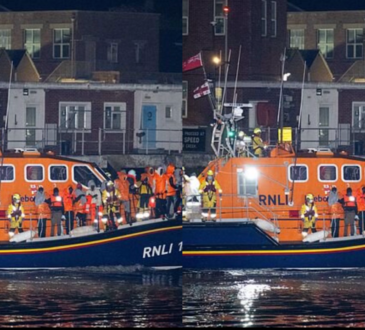
The issue came back into the spotlight after nearly 150 migrants arrived in Hampshire on a single boat, leading to angry protests and clashes with police.
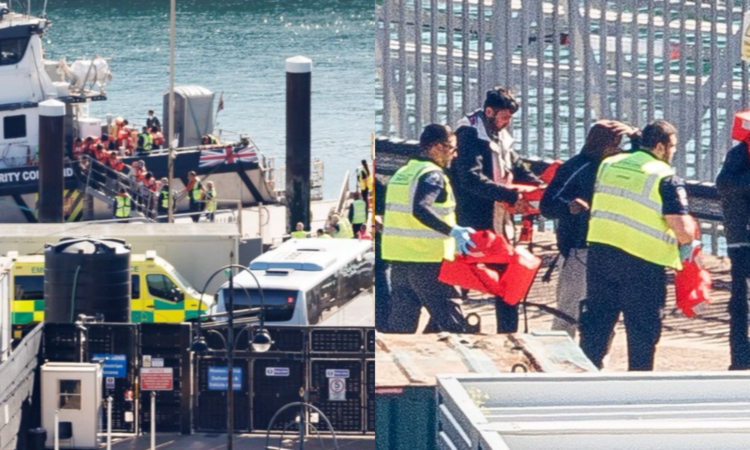
Around 300 protesters gathered near Haslar Marina in Gosport on Sunday evening as the migrants were brought ashore. Some protesters shouted at police and chanted for the migrants to be deported.
Police said emergency vehicles were blocked during the disorder, while flares were also set off. Six people were arrested as officers tried to bring the situation under control.
The Home Office confirmed that as many as 149 people were on the boat. The vessel was reported to have travelled from Normandy in France before reaching the Hampshire coast.
The unusual journey has raised concerns that people-smuggling gangs may be changing their routes in an attempt to make it harder for British and French authorities to stop them.
The arrival has also restarted the debate about whether the UK actually has enough legal power to stop people crossing the Channel in small boats.
Legal expert Cam Ashouripour, a partner at Rosenblatt Law, says the problem is more complicated than simply sending boats back to France.
He explained that Britain already has laws designed to tackle illegal entry and discourage people from entering the country without permission.
However, the UK also has legal obligations relating to human rights and the protection of people who may be in danger.
This means that when Border Force or rescue services find a crowded boat in trouble at sea, they cannot simply ignore it. Protecting human life becomes an immediate priority.
Once people arrive in the UK, the government may also have to consider claims from those who say they need protection.
Ashouripour explained that entering Britain without permission can be a criminal offence. The Nationality and Borders Act 2022 strengthened the law surrounding illegal entry into the country.
The law also created powers relating to asylum seekers who have connections with countries considered safe.
But there is a major practical problem.
Even if Britain decides that someone’s asylum claim should be dealt with elsewhere, another country normally needs to agree to accept that person.
That is one of the reasons the situation is so difficult.
France is generally regarded as a safe country, but Britain cannot simply send every person who crosses the Channel back to France without the necessary legal and political arrangements.
Border Force officers have significant powers. They can stop and board vessels, investigate suspected smugglers and detain people in certain circumstances.
However, those powers do not mean officers can leave people in danger at sea.
Previous plans to turn small boats around in the Channel also faced serious safety and legal concerns. A small inflatable boat carrying dozens of people can quickly become dangerous, especially in bad weather or busy shipping lanes.
Trying to force such a boat to turn around could put lives at risk.
The government has introduced several laws over the years in an attempt to deal with the problem.
The Illegal Migration Act 2023 was designed to make it easier to remove people who entered Britain through unauthorised routes. However, important parts of that approach were later changed or repealed, meaning many asylum cases continue to be considered in the UK.
Ashouripour said laws can be used against illegal crossings and the criminal networks organising them, but they do not automatically remove Britain’s responsibility to consider whether someone genuinely needs protection.
There are also restrictions on sending people to places where they could face serious harm.
This helps explain why stopping the boats has proved much harder than political slogans can sometimes suggest.
Another example was the previous government’s Rwanda plan.
The idea was to send certain asylum seekers to Rwanda instead of allowing their claims to be dealt with entirely in Britain. The plan became the subject of a long political and legal battle.
Parliament eventually passed legislation declaring Rwanda a safe country for the purposes of the scheme, but the policy was abandoned after the change of government in 2024 before it became a large-scale removal programme.
For Ashouripour, this shows the difference between creating a law and actually making that law work in practice.
Successive governments have promised tougher action on small boats. There have been new laws, increased enforcement, agreements with other countries and attempts to target smugglers.
Yet boats continue to arrive.
Ashouripour believes this shows that another new law by itself is unlikely to solve the entire problem.
Britain’s geography also makes the challenge more difficult.
The UK is an island with a very long coastline. Authorities cannot place large numbers of officers along every beach, harbour and possible landing point.
If police and Border Force concentrate heavily on one location, smuggling gangs can change their methods and try another route.
That may be particularly important following the latest arrival in Hampshire.
Much of the attention surrounding Channel crossings has traditionally focused on routes towards Kent. But smugglers may look for different routes if they believe authorities are becoming better at monitoring familiar crossing points.
Ashouripour argues that Britain therefore needs to focus not only on the migrants arriving in boats, but also on the international criminal networks making money from the journeys.
The boats, engines and other equipment used for crossings can pass through several countries before reaching beaches in northern France.
Investigators have previously looked at supply chains stretching across different countries, meaning Britain cannot completely disrupt the business without cooperation from international partners.
Smuggling gangs can also change their tactics when authorities close one route.
This creates a constant battle between law enforcement and organised criminal groups.
Ashouripour believes authorities need to attack every part of that network, including the supply of boats, transportation routes, financial networks and the people organising journeys.
That requires cooperation between Britain, France and other European countries.
Simply dealing with migrants after each boat reaches British waters does not necessarily stop the people higher up the smuggling network who are organising and profiting from the crossings.
The latest scenes in Gosport therefore highlight a much bigger problem.
Britain has laws and enforcement powers that can be used against illegal migration and people smugglers, but those powers exist alongside legal duties to protect human life and consider legitimate claims for protection.
At the same time, sending people back to another country requires agreements that can actually work in practice.
That combination of legal responsibilities, international cooperation, geography and constantly changing smuggling tactics helps explain why successive British governments have found it so difficult to deliver the promise to “stop the boats.”
According to Ashouripour, the debate may need to focus less on repeatedly creating new powers and more on deciding how existing laws can realistically be used, while working with other countries to disrupt the criminal networks behind the crossings.