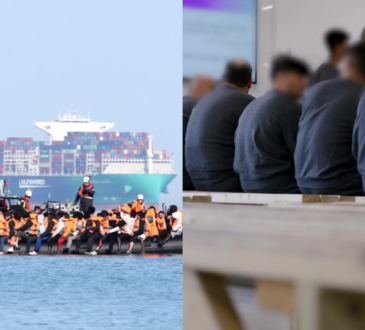
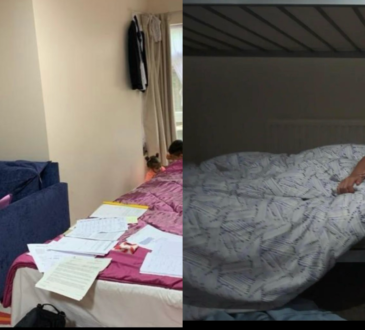
Illegal Boat Migrants Arrived in Hampshire, Leaving Residents Angry and Prompting Them to Take Unexpected Action, Resulting in a Huge Financial Cost That Could Have Been Avoided

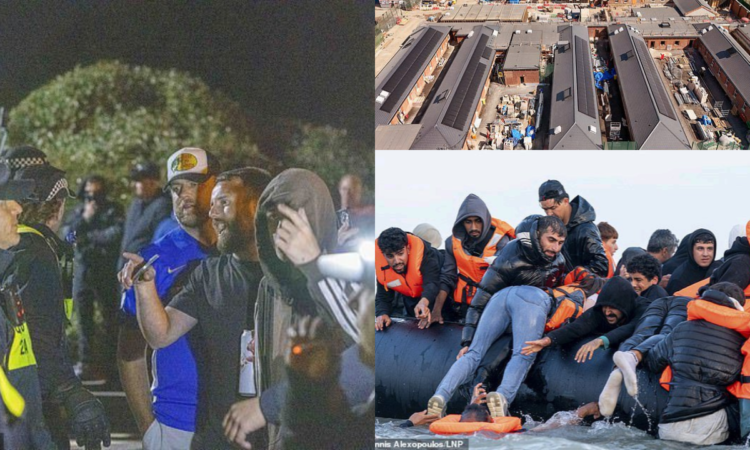
The Government has agreed to cover hundreds of thousands of pounds in extra policing costs after the arrival of small boat migrants in Hampshire led to several protests and clashes with police.
Hampshire and Isle of Wight Constabulary faced a huge bill after migrants crossing the English Channel were brought ashore in Portsmouth and Gosport. The arrivals caused anger among some local residents, leading to protests around ferry terminals and other parts of the area during September and October.
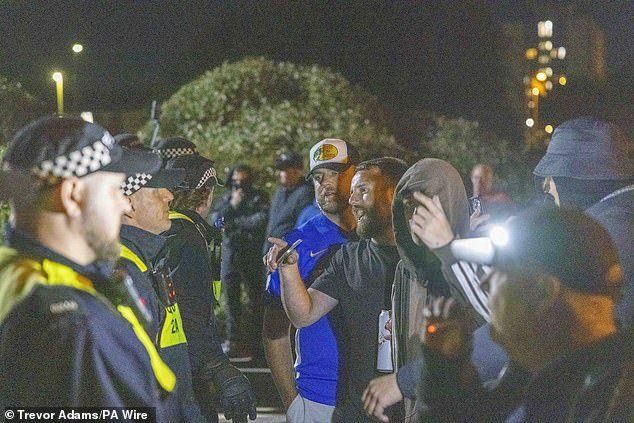
Hundreds of people gathered on different nights to protest against the arrival of migrants. Some demonstrations became violent, with police officers being attacked while trying to control the crowds. A total of 18 people were arrested during the unrest.
The protests also forced police to bring in additional officers and resources to maintain public safety. This created unexpected costs for the force, which was already dealing with its normal policing responsibilities.
Donna Jones, the Police and Crime Commissioner for Hampshire and the Isle of Wight, raised serious concerns about the amount of money being spent. She said it was unfair for local police to carry the financial burden of dealing with migrant arrivals and the protests that followed.
According to Ms Jones, the police force spent an additional £803,343 in just four weeks. The money was used to manage the arrival of migrants, provide security, control demonstrations and protect officers and members of the public.
She described the cost as extraordinary and wrote to the Government asking for the money to be paid back.
The Home Office has now agreed to provide financial support to cover the extra policing costs.
Speaking to LBC, Ms Jones confirmed that the Minister for Border Security and Asylum had written to the Chief Constable, promising that the force would receive compensation for the additional money spent.
However, the exact amount the Government will pay has not yet been made public. Ms Jones explained that the final figure could still change following further discussions and checks.
The Home Office also confirmed that a funding package had been agreed to help Hampshire Police deal with the significant policing operation required in Portsmouth over recent months.
Despite this agreement, concerns remain about the possibility of more migrants being brought ashore in Hampshire.
The Home Office has refused to rule out further small boat arrivals in Portsmouth and Gosport. Officials say they have emergency plans in place to deal with future crossings but have declined to reveal the details for operational reasons.
This has worried local leaders, who fear that Hampshire could become a regular location for bringing migrants ashore after they are rescued or intercepted in the English Channel.
Ms Jones said she had already asked the Home Secretary to stop Hampshire from becoming a regular landing point for migrant boats.
Gosport Borough Council has also taken action by passing a motion calling for the town to be excluded from future migrant landings.
The council’s decision came after several incidents involving boats carrying migrants from France.
Over a period of six weeks, there were three Channel crossing operations involving boats travelling from Normandy. Migrants were brought ashore in Hampshire on two occasions.
One of the largest arrivals happened on October 4, when 149 migrants were brought into Gosport aboard two RNLI lifeboats.
Their arrival came at a time when tensions were already high following earlier protests.
The demonstrations first began on September 6, when hundreds of protesters blocked roads in Portsmouth in an attempt to stop coaches carrying around 140 migrants from leaving the city.
Police were forced to intervene to keep the roads clear and allow the vehicles to continue their journeys.
Just over two weeks later, another group of protesters, including some wearing masks, gathered after hearing reports that more migrants were expected to arrive.
Anti-migrant activist Daniel Thomas, also known as Danny Tommo, had told his supporters that approximately 50 migrants were expected to be brought ashore.
Following the reports, protesters gathered in the area, creating another difficult situation for police.
Border Force boats were later diverted to Dover, while disorder in Gosport resulted in six arrests.
Three coaches that had been waiting to collect migrants also needed police escorts because of the situation.
Several people have since been sentenced for offences linked to the protests, including violent disorder and assaults on police officers.
Meanwhile, the Government is also preparing to reopen the former Haslar Immigration Removal Centre in Gosport.
The centre is expected to hold migrants who are being detained under immigration rules while their cases are being handled.
Under the Home Office’s plans, the first stage of the reopening would provide accommodation for 130 detainees.
A second stage would increase the centre’s capacity to 600 people, with new three-storey accommodation buildings planned.
The Government has already started recruiting workers for the centre, suggesting that preparations are moving forward.
Seven detention engagement officer jobs have been advertised, with salaries of almost £35,000 a year.
The positions are at executive officer level within the Civil Service.
Successful applicants will work directly with people being held at the immigration detention centre. Their responsibilities will include providing information about immigration cases, helping detainees understand what is happening with their applications and checking on their welfare.
The Home Office described the jobs as an opportunity for staff to make a positive difference to people in immigration detention.
However, the plans to reopen the centre have added to concerns among some residents and local officials about the Government’s wider approach to managing migration in Hampshire.
The Home Office has previously stated that migrants arriving by boat in Gosport will not be processed at Fort Blockhouse. Instead, they will be taken to the Manston processing centre in Kent, where immigration and security checks can take place.
Ms Jones has continued to demand better communication between the Government and local police leaders.
She believes police authorities should be informed much earlier whenever the Government is making plans that could lead to large numbers of migrants arriving in their areas.
She warned that repeated protests could place serious pressure on police resources and make it harder for officers to carry out their normal duties.
As the person responsible for overseeing Hampshire and Isle of Wight’s policing budget, she said she must be involved in discussions about future Government plans.
Ms Jones also expressed concern that the Home Office was still making arrangements for possible additional small boat landings in Hampshire.
She said the protests had placed unsustainable demands on policing and that the financial pressure should not be left for the local force to manage alone.
A Home Office spokesperson confirmed that an agreement had already been reached with Hampshire Police to help cover the significant costs of the recent policing operations.
The department added that it would continue working closely with police forces to understand their financial challenges and provide support through its Financial Resilience framework.
For now, the agreement means Hampshire Police is expected to recover additional money spent dealing with the migrant arrivals and related demonstrations.
However, questions remain about whether more boats will be brought into Portsmouth and Gosport, how future protests will be managed and whether local police forces will face similar costs again.
With the Government refusing to rule out further arrivals, local leaders are continuing to call for clearer plans, better communication and stronger financial support to ensure that any future operations do not place additional pressure on local policing services.