Two Iranians Who Vowed They Would Rather Die Than Return to France Risked Their Lives and Took a Dangerous Journey to Reach the UK, But Got the Shock of Their Lives After Arriving in Britain, Where They Faced a Terrible Situation They Never Expected

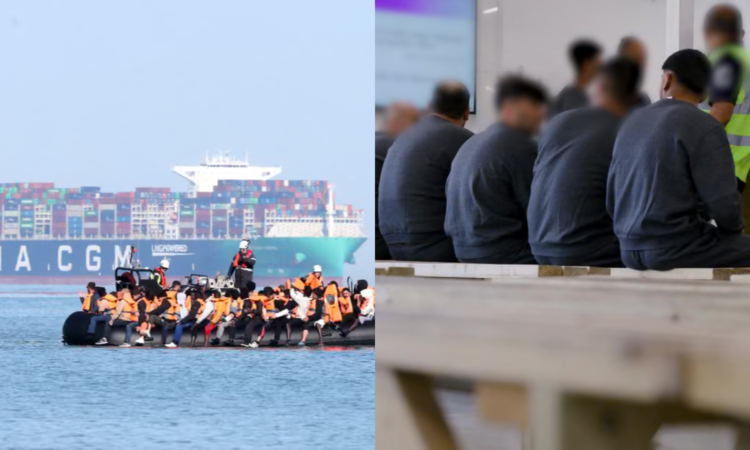
Two Iranian asylum seekers who risked their lives to reach the United Kingdom have shared their heartbreaking experiences after being sent back to France under the British government’s controversial immigration policy.
The two men, Aso, 28, and Baran, 33, say they travelled to Britain hoping to find safety and start a better life. However, instead of finding the peace they had been looking for, they faced detention, deportation, homelessness and frightening experiences that left them struggling physically and emotionally.
Their stories have raised serious questions about the UK government’s “one in, one out” immigration scheme, which allows Britain to return some asylum seekers who arrive in small boats to France in exchange for accepting other eligible migrants through a legal route.
For Aso, the journey began in Iran, where he says his decision to leave Islam and become a Christian put his life in serious danger.
He explained that converting to Christianity was something he had to hide because he feared being arrested and possibly executed by the Iranian authorities.
“I had to keep my conversion to Christianity a secret,” he said.
Aso believed he could no longer remain safely in his home country. According to him, a trusted relative arranged and paid people smugglers to help him escape Iran in November.
Another Iranian man, Baran, was also facing serious problems in his home country.
Baran said he had been involved in political activities against the Iranian government and feared punishment from the country’s intelligence authorities.
He claimed that security officers had previously targeted him during protests, shooting him with rubber bullets and striking him on the back of his head.
One rubber bullet remained lodged in his private parts, causing him continuing pain.
He also said intelligence officers raided his home while he was away and took his identification documents.
After relatives warned him not to return home, they helped him escape to another village before arranging for smugglers to take him across the border into Turkey.
Both men eventually made their way separately to northern France, where they prepared to cross the English Channel.
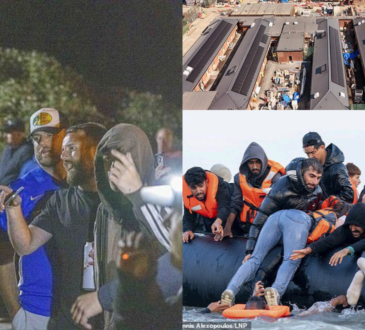
In January 2026, they boarded the same overcrowded small boat heading towards Britain, although they did not know each other at the time.
Aso described the journey as one of the most frightening experiences of his life.
He said smugglers had beaten his legs with a pipe the night before the crossing. Because the boat was overcrowded, he was forced to remain on his knees throughout the eight-hour journey.
“There was no room to sit, and the waves were crashing into us. It is the most frightening thing in the world,” he recalled.
After reaching Britain, both men were taken to an immigration detention centre.
It was there that they finally met and became friends.
Aso said Baran was a calm and kind person who helped him cope with the difficult conditions inside the detention centre.
According to Aso, they sometimes spent up to 12 hours locked inside their cells, not knowing whether they would be allowed to stay in Britain or be sent back to France.
Their biggest fear eventually became reality.
Under the agreement between Britain and France, the Home Office had begun selecting some asylum seekers who crossed the Channel in small boats for removal to France.
The scheme was introduced as part of the government’s efforts to discourage dangerous Channel crossings and reduce the number of people arriving illegally by boat.
However, the two men said returning to France would put them in serious danger.
When Baran discovered that he might be deported, he begged immigration officials to reconsider their decision.
His detention records showed that he even refused food and water in protest.
“I would rather die than return to France,” he reportedly told officials.
Despite his desperate appeal, Baran was sent back to Paris in February.
What happened next, according to his account, was even more frightening than the journey he had made to Britain.
After arriving in France, Baran said he visited a hospital because he was still suffering from pain caused by the rubber bullet lodged in his body.
However, he claimed that the people smugglers who had helped him travel to Britain discovered where he was staying.
He explained that his family had not paid the smugglers the remaining money because he had been returned to France instead of being allowed to remain in Britain.
According to Baran, the smugglers became angry and went looking for him.
He said they eventually found him, took him to an informal migrant camp near Dunkirk and subjected him to serious abuse.
Baran claimed the men beat him with sticks, threatened him with guns and forced him to work for long hours without proper breaks.
“They forced me to wash dishes and clothes for eight to 10 hours every day, without breaks,” he said.
He also claimed that whenever he refused to follow their instructions, they would beat him.
The experience left him frightened and desperate to escape France again.
Meanwhile, his friend Aso was also facing deportation.
In March, Aso was placed on a flight back to France, accompanied by Home Office officers.
He said the experience made him feel as though he was being treated like a dangerous criminal.
“Two officers hold you and sit right next to you on the plane, treating you as if you’ve committed a major crime,” he explained.
Aso said the experience seriously affected his mental health.
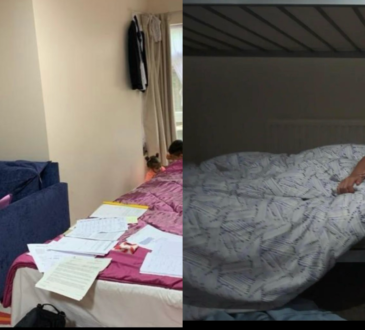
After arriving in Paris, he was placed in accommodation that he described as extremely cold, with poor living conditions and insufficient food.
He later sent desperate messages asking for help.
“We cannot have a shower because the water is ice cold. We are completely lost and confused. I am so scared,” he wrote.
He also expressed fears about being returned to Iran, where he believed his religious conversion could put his life at risk.
“I don’t want to die. I want to live. I am deeply heartbroken,” he said.
Things became even worse when Aso was told to leave his temporary accommodation.
With nowhere else to stay, he travelled back to the migrant camps around Dunkirk, where he lived in the forest with other people seeking asylum.
He said he constantly feared being attacked by smugglers.
In one message sent on 28 March, he explained how frightened he was.
“I am terrified here. These smugglers are heartless. They will hurt me wherever they find me.”
As Aso struggled to survive in France, Baran had already made another attempt to enter Britain.
In early March, Baran returned to the UK by hiding inside a lorry travelling to Dover.
However, he was discovered, arrested and taken back into immigration detention.
His second attempt to remain in Britain also became a difficult experience.
Baran spent more than four months in detention while waiting for a decision about his future.
He repeatedly asked what would happen to him and why he had been kept in detention for so long.
He was also told that he needed surgery to remove the rubber bullet still lodged in his body.
According to the report, the Home Office did not arrange the operation, saying it could be carried out in France.
In July, the French authorities accepted another request for Baran to be returned.
Before being removed for the second time, he wrote a message begging British officials not to send him back.
“I can’t go back to France because over there is not safe for me. Don’t let them to send me back,” he wrote.
Despite his appeal, he was returned to France again.
His situation became increasingly difficult after he arrived.
He said he could not access proper medical treatment, housing or welfare support.
At the same time, Aso was also struggling to cope with life in France.
In May, he sent another emotional message describing how his experiences had affected him.
“Even though I am only 28, I feel like a 60-year-old man because of all the stress, grief and depression I’ve experienced,” he said.
He explained that he had no money, no clothes and nobody to help him.
Aso said he felt trapped between returning to Iran, where he feared persecution, and risking another dangerous journey to Britain.
“My life is ruined here. I have no money, no clothes and there is absolutely no one to help me,” he wrote.
Eventually, in June, Aso decided to return to Britain.
Like his friend, he travelled inside a lorry and was detained after arriving.
He explained that he would never have taken such a risk if he had felt safe in France.
“If France were safe and my life were not in danger, I would never have risked returning to the UK,” he said.
However, the two friends eventually experienced very different outcomes.
While Baran was sent back to France for the second time, Aso was later granted immigration bail in Britain.
A friend living in Swansea offered him somewhere to stay and support while his immigration situation remained unresolved.
For the first time in months, Aso began to feel hopeful.
In August, he sent a message saying he was starting to recover from the terrible experiences he had been through.
“I feel like I’m getting better. I’m feeling safe,” he said.
He even mentioned plans to visit the beach because of the hot weather.
But his happiness was mixed with sadness because Baran was still suffering in France.
Aso said he could not understand why the authorities had allowed him to remain in Britain on bail while sending his friend back.
The two continued communicating through WhatsApp, although Baran sometimes struggled to charge his phone because he had no permanent home.
Meanwhile, an investigation by The Guardian found that the two men were not the only asylum seekers who had returned to Britain after being deported under the scheme.
The newspaper said it had followed the experiences of more than 30 people who had been sent back to France.
Many complained about poor accommodation, lack of support and fears for their safety.
Some travelled to other European countries, while others attempted to enter Britain again.
According to estimates provided by asylum seekers themselves, around 200 people who had been deported under the scheme may have returned to Britain. This figure was not independently confirmed.
The Home Office acknowledged that around 50 people who had previously been removed had been detained again after returning to the UK.
Critics of the policy argue that sending people back to France does not necessarily stop them from trying to reach Britain again.
They believe some migrants may simply choose more dangerous routes or attempt to enter the country without reporting themselves to immigration officials.
Supporters of stronger border controls, however, argue that Britain must discourage dangerous small boat crossings and prevent criminal gangs from making money by transporting migrants across the Channel.
The government introduced the scheme to reduce irregular arrivals and encourage people to use legal routes instead.
Although Channel crossings reportedly fell during 2026, it remains unclear how much of that reduction was caused by the policy, as weather conditions and wider migration trends may also have played a part.
For Baran, the debate over immigration policy has become a daily struggle for survival.
When a Guardian journalist met him in Lille, France, he was sleeping under a tree in a park.
He had very few belongings apart from the clothes he was wearing and a package containing his Home Office documents.
He appeared exhausted and deeply unhappy.
The journalist offered to take him to a supermarket to buy some basic food.
However, Baran seemed to have lost interest in eating.
He eventually selected just one apple, two bananas, a packet of nuts and some crackers.
He explained that a few people living near the park sometimes gave him food and allowed him to use their shower.
But he remained frightened that the smugglers who had previously attacked him might find him again.
“I don’t have any friends in France or any plan,” he said.
He explained that his greatest wish was to find a way back to Britain, although he did not know how he could make that happen.
“My only hope is to find a way to return to the UK. But I don’t know how.”
Baran last contacted The Guardian shortly before midnight on 24 August 2026.
Since then, the newspaper said it had been unable to establish where he was or whether he was safe.
His story, alongside Aso’s experience, highlights the difficult choices facing some people who flee their home countries hoping to find protection.
Both men said they had escaped Iran because they feared for their lives, endured dangerous journeys to Britain and were then returned to France, where they claimed they faced further suffering.
While Aso eventually found temporary safety in Britain, Baran’s future remained uncertain.
Their experiences have also raised questions about whether returning asylum seekers to France is enough to discourage further attempts to cross the Channel, particularly when some say they are prepared to risk their lives again rather than remain in conditions they consider unsafe.