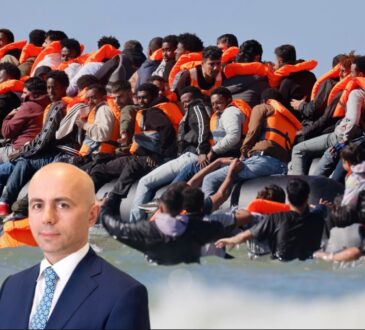
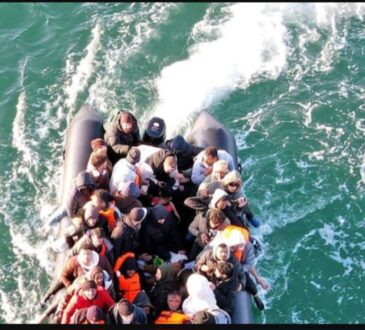
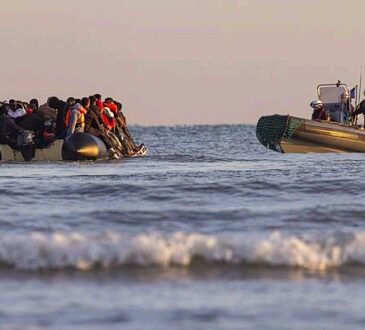
I Joined a Illegal Migrant Rescue Team Looking for Small Boats at Sea, But What I Saw Happening to Migrants Trying to Reach Europe Left Me in Shock

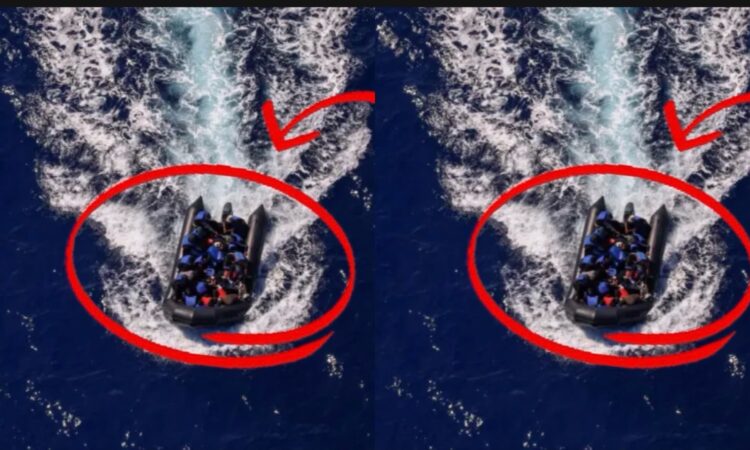
A rescue team flying over the Mediterranean Sea has revealed the dangerous situation facing migrants who are trying to reach Europe by boat. During one of their patrols, the team spotted a small wooden boat carrying around 25 people, including women and children, who were travelling from Libya towards Italy.
Many of the people on the boat were not wearing life jackets, even though they were crossing one of the most dangerous seas in the world. The boat was overcrowded, and there were serious concerns that it could overturn or break down before reaching land.
The discovery was made by a rescue monitoring aircraft called Albatross, which regularly flies over the Mediterranean Sea looking for migrants who may need help. The aircraft is operated by humanitarian workers who also monitor how the Libyan coastguard treats migrants attempting to reach Europe.
The small aircraft can carry only four people, including the pilot. During each patrol, the crew spends several hours looking through the windows and using cameras to record what is happening below.
The team normally flies from the Italian island of Lampedusa, which has become one of the main places where migrants arrive after crossing the Mediterranean Sea.
During the latest patrol, the crew noticed a small blue boat in the distance. As the aircraft moved closer, they realised that it was carrying about 25 people.
The passengers were still several hours away from reaching the Italian coast, and the condition of their boat raised serious concerns.
The rescue team immediately contacted the Italian and Maltese coastguards to report the boat’s location and request assistance. However, according to the crew, they received no response despite making repeated calls.
With little else they could do from the aircraft, the team continued their patrol after reporting the situation to the authorities.
The crew also noticed that the boat’s engine had been switched off. They believed the passengers might have become frightened after seeing the aircraft overhead.
Some migrants reportedly fear that aircraft belong to security authorities who may identify the person driving their boat and accuse them of helping people smugglers.
Humanitarian workers explained that the person driving a migrant boat is sometimes another passenger who has agreed to operate it in exchange for paying less money for the journey.
As the patrol continued, the rescue team discovered five empty boats floating on the sea. Most were rubber boats that had lost their air.
The crew explained that finding empty boats is particularly worrying because there is often no way of knowing whether the passengers were rescued or whether something terrible happened to them.
In some cases, the team has discovered dead bodies floating in the water.
One of the crew members showed the visiting journalist a photograph of a man whose body had been discovered during an earlier patrol. He was fully dressed and floating face down in the sea.
The discovery was another reminder of the dangers facing people who attempt the journey.
According to figures mentioned in the report, nearly 27,000 people have died or disappeared while attempting to reach Europe through this part of the Mediterranean over the past 12 years.
At least 996 people were believed to have died along the route during 2026 by the time of the report.
Although fewer migrants have been reaching Italy this year, the number of deaths has continued to rise.
The report said that around 22,500 migrants arrived through the central Mediterranean route during the first nine months of 2026. This represented a fall of 56 per cent compared with the same period in 2025.
The number of arrivals was also much lower than in 2023, when around 150,000 people reached Europe through the route.
However, humanitarian workers believe the reduction in arrivals does not necessarily mean that fewer people are attempting the dangerous journey.
They say that increased action by the Libyan coastguard has resulted in more boats being stopped and their passengers returned to Libya.
The rescue team claimed that some of these operations have involved violence against migrants.
San Trouvé, a coordinator working with the Albatross team, said they had witnessed Libyan coastguard vessels hitting migrant boats to prevent them from continuing towards Europe.
She described one incident in which a coastguard vessel reportedly struck a migrant boat so forcefully that one of the passengers fell into the water.
The crew also claimed to have witnessed migrants being beaten and shots being fired towards small boats and humanitarian rescue vessels.
In one incident last year, a Libyan coastguard vessel reportedly opened fire on a rescue ship called Ocean Viking while it was operating in international waters.
According to the humanitarian organisation, the shooting lasted around 20 minutes and damaged parts of the ship, including windows and rescue equipment.
During the latest patrol, the Albatross crew spotted what they believed was the same Libyan coastguard vessel involved in that incident.
The crew photographed the vessel before the pilot increased the aircraft’s height as a safety precaution.
Humanitarian organisations have repeatedly raised concerns about migrants being returned to Libya because of reports of violence, detention and mistreatment in the country.
There have been serious allegations of torture and abuse inside Libyan detention centres, raising questions about what happens to migrants after they are intercepted at sea.
Trouvé explained that many of the people attempting to reach Europe are escaping war, poverty and difficult living conditions.
She said some migrants had been promised jobs abroad but later discovered that they had been deceived.
Others reportedly had no idea that they would eventually be placed on small boats and sent across the Mediterranean Sea.
According to her, the people making these journeys come from different backgrounds and have different reasons for leaving their countries.
She also challenged the belief that most migrants travelling across the Mediterranean are young men, explaining that rescue workers regularly encounter women, children and even babies.
The pilot flying the Albatross during the patrol was Olivier Wilmart, a retired airline pilot from Belgium.
After spending many years flying passengers for Air France, he decided to volunteer his flying experience to help people in danger.
Wilmart explained that he had enjoyed a successful career and wanted to use his skills to support humanitarian work.
However, he admitted that the experience had sometimes been emotionally difficult.
He said watching overcrowded boats carrying families and young children had changed his understanding of migration.
Before joining the rescue operation, he had mainly learned about the situation through television and newspaper reports.
Seeing the conditions for himself made him realise how dangerous the journey could be.
He also explained that many migrants had already travelled long distances and experienced serious difficulties before reaching the Mediterranean coast.
For some, the sea crossing is only the final part of a much longer journey.
Wilmart said one of the most upsetting experiences is watching migrants come close to reaching Italy before being stopped by the Libyan coastguard and taken back.
He explained that knowing the conditions some migrants may face after being returned to Libya makes those situations particularly difficult to witness.
The pilot admitted that some patrols leave him struggling to sleep because of the disturbing scenes he has seen.
However, he said there are also moments of happiness when the team discovers that people have been rescued safely.
He recalled being shown a drawing made by a child who had been rescued and taken to a migrant reception centre in Lampedusa.
The child had drawn the rescue aircraft, something Wilmart said had deeply moved him.
During the latest patrol, the team eventually returned to the location where they had first spotted the small blue boat carrying around 25 people.
When they arrived, the boat was empty.
At first, an empty boat could have raised fears about what had happened to the passengers.
However, the team later received confirmation that the Italian coastguard had rescued everyone on board and was taking them towards land.
The news brought relief to the rescue workers, who had spent hours monitoring the situation.
For the 25 passengers, the dangerous journey had ended with a rescue.
But humanitarian organisations warn that many others attempting to reach Europe are not as fortunate.
Some are intercepted and returned to Libya, while others disappear at sea without their families ever knowing what happened to them.
The experience shows the dangers surrounding migrant crossings in the Mediterranean and the difficult work carried out by rescue teams trying to prevent more people from losing their lives.