Failed Asylum Seekers’ Dreams of Staying in the UK Could Soon Come to an End as New Plans Reveal Where They May Be Sent, and They Might Not Be Happy About It

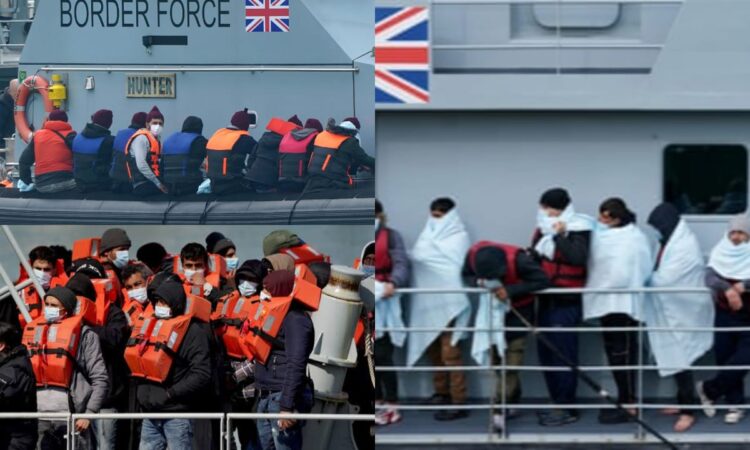
Five European countries are reportedly preparing to make a new agreement with Rwanda that could see migrants sent to the African country using buildings originally prepared for the UK government’s cancelled asylum scheme.
Germany, Austria, Greece, the Netherlands and Denmark are believed to be discussing plans with Rwanda to send certain migrants there. If the agreement goes ahead, some of the accommodation built or prepared for people who were supposed to be deported from Britain could now be used by these European countries instead.
The development has raised fresh questions about the millions of pounds the UK government spent on its own Rwanda plan before Labour cancelled it after winning the general election in July 2024.
The previous Conservative government had planned to send people who arrived in Britain illegally, including those crossing the English Channel in small boats, to Rwanda. Once there, they would have their asylum claims considered under Rwanda’s system rather than in the UK.
However, the Labour government scrapped the arrangement shortly after taking office, arguing that it was not the right way to deal with illegal immigration.
Before the scheme was cancelled, around £700 million of British taxpayers’ money had reportedly been spent on preparing and setting up the agreement. This included £290 million paid directly to the Rwandan government to help provide accommodation, services and other arrangements for migrants expected to arrive from Britain.

Now, according to reports, some of the facilities prepared for the British scheme could be used by other European countries facing their own immigration challenges.
One of the locations being considered is a large housing development in Gahanga, just outside Rwanda’s capital, Kigali. The development was planned to contain more than 500 apartments.
In March 2023, former UK Home Secretary Suella Braverman visited Rwanda and took part in a ceremony to mark the beginning of construction. She was photographed laying bricks alongside Rwandan officials as part of preparations for the UK’s asylum agreement.
At the time, the housing project was presented as one of the places that could accommodate migrants sent from Britain.
Another location that could be used is the Hope Hostel in Kigali. The building became well known in 2022 when former Home Secretary Priti Patel visited Rwanda to announce the UK government’s agreement with the country.
The hostel had been prepared to receive migrants arriving on deportation flights from Britain. However, the UK scheme never operated as originally planned, and no asylum seekers were sent to Rwanda under the main relocation arrangement before Labour cancelled it.
The Financial Times reported that the five European countries are now close to reaching their own agreement with Rwanda.
An announcement could come next month during a migration conference in Vienna, Austria.
Greece’s migration minister, Thanos Plevris, suggested that more details about the arrangement could be announced in November.
He explained that the countries involved and the timetable would be made public, with an agreement expected to be signed before the end of the year or in January.
According to his comments, the first transfers of migrants to a third country could begin as early as April or May if everything goes according to plan.
However, the discussions are still ongoing, and there has been no final confirmation that the facilities originally prepared for Britain will definitely be used.
People familiar with the negotiations reportedly said the European countries are trying to keep costs down by using buildings and services that already exist in Rwanda.
Instead of spending large amounts of money constructing new accommodation, they could take advantage of facilities that were previously developed or prepared for the British government’s cancelled programme.
One source reportedly told the Financial Times that officials were specifically considering a housing complex originally intended for the UK.
The new European plan would also work differently from the original British proposal.
Under the UK’s cancelled scheme, people who arrived illegally could have been sent to Rwanda to have their asylum applications considered there.
However, the arrangement being discussed by the five European countries would initially focus on migrants whose asylum applications have already been rejected.
These are people who applied for protection in a European country but were told that they did not qualify to stay.
The governments involved want to explore whether such individuals could be transferred to Rwanda instead of remaining in Europe.
There are also suggestions that some countries, including Denmark, might eventually consider expanding the arrangement to include people whose asylum applications are still being processed.
Such an expansion would depend on future decisions, legal requirements and the terms of any agreement reached with Rwanda.
The reports have caused a political argument in Britain, particularly between the Conservatives and Labour.
Senior Conservatives believe the development shows that the previous government’s Rwanda policy should not have been cancelled.
Shadow Home Secretary Chris Philp strongly criticised Labour’s decision, saying Britain had spent a considerable amount of money preparing the arrangement only for other European countries to potentially benefit from the facilities.
Philp argued that the Conservative government’s scheme had been close to starting in July 2024 before Labour came into power and stopped it.
He said it was frustrating to see other European governments considering the same facilities that British taxpayers had helped finance.
According to Philp, Labour made a serious mistake by cancelling the agreement rather than allowing it to go ahead.
He believes that quickly removing people who enter a country illegally would discourage others from attempting the same journey.
The Conservative politician also called on the government to reconsider its position and bring back the Rwanda scheme.
He warned that people would continue crossing the English Channel in small boats unless the government introduced stronger measures to stop illegal immigration.
Philp claimed that around 85,000 people had crossed the Channel since Labour won the election, with more arrivals expected.
However, the argument over whether sending migrants to Rwanda would reduce Channel crossings remains controversial.
Supporters of such agreements believe they could discourage dangerous journeys, reduce pressure on asylum systems and make it harder for people-smuggling gangs to operate.
Critics have questioned whether these arrangements are effective, affordable and consistent with international obligations to protect people seeking asylum.
There are also concerns about what would happen to migrants after arriving in Rwanda, including whether they would have access to suitable accommodation, legal support and other essential services.
For Britain, the latest reports have brought attention back to the money already spent on the cancelled agreement.
The possibility that Germany, Austria, Greece, the Netherlands and Denmark could use facilities originally prepared for the UK has raised questions about whether British taxpayers received value for the money spent.
It has also reopened the debate about whether Labour was right to cancel the programme or whether the previous Conservative government should have been allowed to continue with it.
For now, the five European countries have not announced a completed agreement with Rwanda, and the exact buildings they would use have not been officially confirmed.
If the negotiations succeed, Rwanda could once again become a destination for migrants transferred from Europe, although this time the arrangement would involve several European countries rather than Britain alone.
The coming months will determine whether the proposal becomes a reality and whether accommodation once associated with the UK’s cancelled deportation plan will finally be used for a new European migration programme.