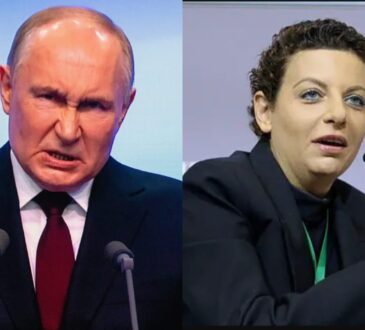
MS NOW’s Jen Psaki Reveals Shocking Evidence She Says Shows Pete Hegseth Is Humiliating and Disgracing America


US Secretary of Defense Pete Hegseth has become the centre of a growing controversy following reports that he wants the man responsible for the deadly Fort Hood military base shooting to be executed by firing squad, with the event broadcast live on the internet for people around the world to watch.
The reported proposal has attracted criticism from political commentators, human rights advocates and others who question whether the United States should allow an execution to become a public event.
Former White House press secretary and MS NOW presenter Jen Psaki was among those who strongly criticised the idea. During an edition of her programme, The Briefing, she raised concerns about what such a decision could mean for America’s international reputation.
Psaki argued that broadcasting an execution to millions of viewers would send a troubling message about how the United States handles serious criminal cases.
She questioned why senior government officials would consider making an execution available for public viewing, particularly at a time when human rights and the treatment of prisoners remain important issues around the world.
The controversy centres on the Fort Hood shooting, one of the deadliest attacks at an American military installation.
On November 5, 2009, US Army psychiatrist Nidal Hasan opened fire at Fort Hood in Texas, killing 13 people and injuring more than 30 others. The attack shocked the country and left families, soldiers and the wider military community struggling to understand what had happened.
Hasan was later convicted of the killings and sentenced to death by a military court in 2013.
For the families of those who died, the case has remained an important and painful part of their lives. Many have waited years for the legal process to reach its conclusion.
The possibility of carrying out the death sentence has therefore raised questions not only about punishment but also about how the government should treat victims’ families and respect the legal process.
According to the account discussed by Psaki, Hegseth supported the idea of using a firing squad made up of soldiers and allowing the public to witness the execution through an online broadcast.
He reportedly argued that such an event would demonstrate the serious consequences faced by someone convicted of carrying out a deadly attack.
However, Psaki strongly disagreed with the suggestion that a public execution would be an appropriate way to deliver justice.
She questioned whether allowing people to watch someone being put to death would achieve anything beyond attracting international attention and controversy.
Another major concern raised during the debate was the history of public executions in America.
The last widely recognised public execution in the United States took place in Kentucky in 1936. Thousands of people gathered to watch a man being hanged, an event that later became an important example in discussions about why executions should not be treated as public entertainment.
Since then, executions in America have generally taken place behind prison walls, with only a limited number of approved witnesses allowed to attend.
These witnesses may include relatives of victims, legal representatives, journalists and government officials.
The plan to broadcast Hasan’s execution would have been a major departure from that practice, allowing people far beyond the military base to watch the punishment as it happened.
CBS News+1
Psaki also raised concerns about how other countries might view the United States if it began broadcasting executions.
She pointed to countries such as Iran and Afghanistan, where public executions have taken place in recent years, and questioned why America would want to introduce a similar practice.
Her argument was that the United States has long presented itself as a country that values justice, human rights and the rule of law.
In her view, allowing a prisoner to be executed in front of an online audience could damage that reputation, regardless of the seriousness of the crime.
The proposal also attracted criticism from members of both major American political parties.
Republican Senator Thom Tillis opposed the idea of broadcasting the execution, even though he supported carrying out the death sentence.
Republican Representative Austin Scott expressed similar concerns, arguing that an execution should not be turned into an event for public viewing.
Senator John Curtis also urged Hegseth to reconsider, warning that broadcasting someone’s death could encourage people to treat a serious legal punishment as entertainment.
Democratic Senator Chris Murphy criticised the proposal as well, questioning why the American government would adopt a practice associated with violent extremist organisations.
CBS News+1
The disagreement showed that opposition to the livestream was not limited to people who disagreed with the death penalty itself.
Some politicians believed Hasan should face the punishment ordered by the military court but still argued that the execution should take place privately and with dignity.
President Donald Trump initially approved the use of a military firing squad and defended the idea that a public execution could discourage future attacks.
However, as criticism increased, questions were raised about whether the livestream should go ahead.
The issue became more complicated because the execution had already been scheduled for December 3, 2026, at Fort Hood, the same military installation where Hasan carried out the shooting.
The planned time was also significant because officials wanted the execution to take place at approximately the same hour as the original attack.
Hegseth argued that these arrangements would send a message about the consequences of attacking American soldiers.
However, legal experts warned that making the execution public could raise questions about the rights of the convicted prisoner and the government’s responsibilities under the law.
Some also questioned whether broadcasting an execution would actually discourage future violence or simply create more controversy.
The case has attracted attention from human rights organisations and international observers, who have warned about the possible consequences of allowing executions to become public spectacles.
For the families who lost loved ones at Fort Hood, the discussion has brought renewed attention to a tragedy that happened nearly 17 years ago.
The shooting left 13 people dead and dozens injured, changing the lives of soldiers, relatives and others connected to the military base.
While the debate over the livestream continued, the question of how justice should be delivered remained central to the discussion.
There was also an important development after the original announcement.
Following criticism from Republican and Democratic politicians, President Trump announced that the execution would no longer be livestreamed.
The president said the firing-squad execution would still proceed as scheduled, but the general public would not be able to watch it online. Immediate family members of the victims would be allowed to attend in person if they wished.
People.com+1
That decision represented a significant change from the proposal Hegseth had publicly supported.
Although the livestream plan was cancelled, the controversy continued to raise questions about the relationship between punishment, public accountability and human rights.
For Psaki and other critics, the argument was never simply about whether Hasan deserved the death sentence imposed by the court.
Their concern was whether the government should make the death of a convicted prisoner available for millions of people to watch.
Supporters of Hegseth’s original position argued that a public execution could demonstrate the seriousness of the crime and the consequences of carrying out a deadly attack against American soldiers.
Those opposed believed the punishment could be carried out without turning it into a worldwide broadcast.
The case has therefore become part of a much wider debate about how the United States should administer the death penalty and whether public viewing has any place in modern criminal justice.
With the execution still scheduled for December, attention is now focused on the remaining legal process and whether the planned punishment will proceed on that date.
The controversy has also shown how a single government announcement can lead to disagreement among politicians who otherwise share similar views on national security and criminal punishment.
For now, the decision to cancel the livestream means the execution will not become the worldwide online event originally proposed.
However, the arguments surrounding Hegseth’s announcement, Psaki’s criticism and the response from American political leaders have kept the issue in the public spotlight.