Two Iranian Asylum Seekers Who Fled Their Country Hoping to Reach the UK Plead with Britain for Help as They Share the Heartbreaking Reasons They Will Risked Their Lives to Come to Britain

Two Iranian asylum seekers who fled their home country in search of safety have shared their painful experiences after being sent back to France under the UK government’s controversial “one in, one out” immigration scheme.
The two men, known as Aso and Baran, escaped Iran for different reasons. Both eventually reached Britain by crossing the English Channel in a small boat, hoping to find protection and start a new life. However, their hopes were shattered when they were detained and later returned to France.
Despite being sent back, both men were so desperate to return to Britain that they risked their lives again. Their experiences have raised serious questions about whether the government’s policy is stopping dangerous Channel crossings or simply encouraging people to find other ways into the country.
Aso, 28, left Iran after converting from Islam to Christianity. He said he had to keep his new faith secret because he feared being arrested or even executed if the Iranian authorities discovered his conversion.
According to Aso, one of his relatives helped him escape by paying people smugglers to take him out of Iran in November 2025.
Baran, 33, fled Iran a few weeks later. He said he had been involved in political activities against the Iranian government and feared punishment from the country’s intelligence authorities.
He claimed that security officers had previously attacked him, including shooting him with rubber bullets and hitting him on the head. During one incident, a rubber bullet became lodged in his genitals, leaving him with a painful injury.
Baran also said intelligence officers raided his home while he was away and took his identification documents. His relatives later warned him not to return home and helped him escape through Turkey.
Although the two men left Iran separately, they eventually travelled to northern France, where they prepared to cross the English Channel.
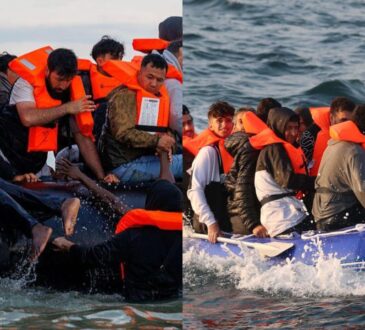
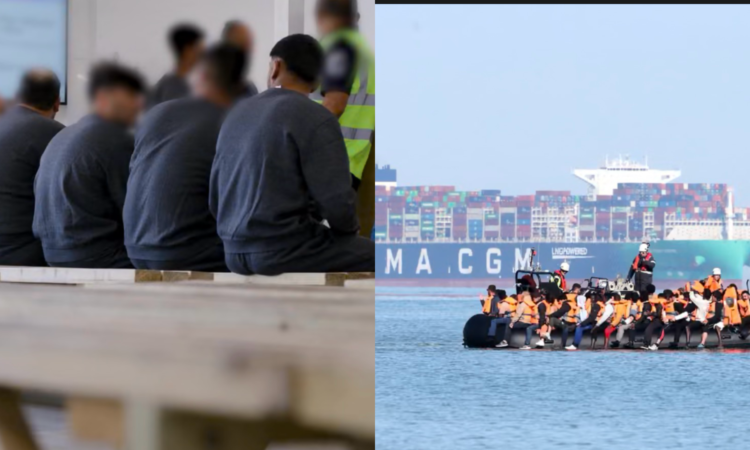
In January 2026, they boarded the same overcrowded small boat heading towards Britain.
Aso described the journey as one of the most frightening experiences of his life. He said people smugglers had beaten his legs with a pipe the night before the crossing.
During the eight-hour journey, there was so little space inside the boat that he had to remain on his knees while waves crashed around the passengers.
When they finally reached Britain, both men were taken to an immigration detention centre. It was there that they met properly and became friends.
Aso said Baran remained calm and kind despite the difficult conditions they faced. He explained that they sometimes spent up to 12 hours locked inside their cells without knowing what would happen to them.
Their biggest fear was being sent back to France.
At the time, the UK government was operating a trial immigration agreement with France known as the “one in, one out” scheme.
The arrangement was announced by then Prime Minister Sir Keir Starmer and French President Emmanuel Macron. It was designed to discourage asylum seekers from crossing the Channel illegally.
Under the agreement, some people who arrived in Britain on small boats could be returned to France. In exchange, other eligible asylum seekers who had not attempted the dangerous crossing could be brought legally to the UK from France.
The government hoped the policy would reduce the number of people paying smugglers to reach Britain.
However, Aso and Baran said the scheme left them facing further danger and uncertainty.
When Baran discovered that he might be sent back to France, he begged British immigration officials to allow him to remain.
Documents from his detention showed that he refused food and water in protest against his possible removal.
He told officials that he would rather die than return to France.
Despite his protests, Baran was sent back to Paris in February.
After arriving in France, he went to hospital because he was still suffering from the injury caused by the rubber bullet in Iran.
But his problems became worse when people smugglers allegedly discovered where he was staying.
Baran claimed that his family had not paid the smugglers the full amount because he had been returned to France instead of being allowed to remain in Britain.
According to him, the smugglers became angry and decided to punish him.
He said they found him at his accommodation, took him to an informal migrant camp near Dunkirk and attacked him.
Baran claimed the men beat him with sticks, threatened him with guns and forced him to work for them.
He said he was made to wash dishes and clothes for between eight and ten hours every day, sometimes without being allowed to take breaks or use the toilet.
Whenever he failed to follow their instructions, he said they beat him again.
Meanwhile, Aso was also returned to France in March.
He described the journey as frightening and humiliating because immigration officers accompanied him on the flight.
Aso said he felt as though he was being treated like a dangerous criminal, even though he had travelled to Britain seeking protection.
When he arrived in Paris, he was placed in temporary accommodation that he described as extremely cold and uncomfortable.
He complained about poor food and the lack of proper facilities, including hot water for showers.
In messages sent to a Guardian journalist, Aso repeatedly expressed fear about his future.
He said he had lost contact with his mother in Iran and was worried about what might happen if he was forced to return to his home country.
He also feared that the smugglers who had helped him travel through Europe could find him again.
After spending a short period in accommodation in Paris, Aso said he was asked to leave and became homeless.
With nowhere else to go, he returned to the migrant camps around Dunkirk, where he lived in wooded areas alongside other asylum seekers.
He described his life there as frightening and said he was constantly worried about being attacked.
By May, Aso said he could no longer cope with the situation.
He explained that he felt much older than his actual age because of the stress, fear and suffering he had experienced.
He said he had no money, no proper clothes and nobody to support him.
Aso eventually decided that he would try to return to Britain, despite knowing that he could be arrested again.
His friend Baran had already made the same decision.
In early March, Baran managed to travel back to the UK by hiding inside a lorry. However, he was discovered when the vehicle reached Dover and was arrested.
He was taken back into immigration detention, where he spent several months waiting for a decision about his future.
Aso also returned to Britain in June, using a lorry to make the journey.
He was detained immediately after arriving.
Aso explained that he would never have taken such a dangerous risk if he had felt safe in France.
He believed Britain was the only place where he could escape the Iranian authorities and the criminal gangs he feared.
Their experiences were not isolated.
The Guardian reported that it had followed the cases of more than 30 asylum seekers who had been returned to France under the scheme.
Many complained that they received very little support after being sent back. Some said they faced homelessness, threats and difficulties accessing essential services.
Others travelled to different European countries, including Germany, Italy, Sweden, Spain and the Netherlands, hoping to find somewhere they could live safely.
Some eventually returned to Britain despite having already been removed.
Asylum seekers estimated that around 200 people who had been sent back to France had managed to return to the UK. This was their estimate rather than an officially confirmed figure.
The Home Office acknowledged that approximately 50 people who had previously been returned to France had been detained again after coming back to Britain.
The situation raised concerns that some migrants might stop reporting themselves to immigration officials when they arrive in the UK.
Instead, they could attempt to remain hidden, making it more difficult for authorities to know who had entered the country.
For Baran, returning to Britain did not bring the outcome he had hoped for.
He spent more than four months in detention after his second arrival.
During that period, he was told that he needed surgery to remove the rubber bullet still lodged in his body.
However, according to the report, the Home Office declined to arrange the operation and said it could be carried out in France.
In July, French authorities agreed to accept Baran again.
Before his removal, he wrote a short message to British immigration officials, explaining that he did not feel safe in France and begging them not to send him back.
His request was unsuccessful, and he was returned to France for a second time.
After arriving, Baran said he struggled to access medical treatment, housing and other support.
He eventually found himself living outdoors near Lille, sleeping under a tree in a public park.
When the Guardian journalist met him, he had very few belongings. His clothes were worn, and he carried his Home Office documents wrapped in black plastic.
He explained that some people living nearby occasionally gave him food and allowed him to use their showers.
However, he remained frightened that the smugglers who had previously attacked him might find him again.
He said he had no friends, no clear plans and very little hope for the future.
His greatest wish was to find another way back to Britain, although he did not know how he could make the journey.
Aso’s situation took a different turn.
While he was detained in Britain for the second time, a friend living in Swansea offered to provide him with accommodation and support.
Aso was eventually granted immigration bail and allowed to leave detention.
For the first time in months, he began to feel safe.
In a message sent in August, he said his health and emotional wellbeing were improving.
He was happy to be living somewhere he no longer felt constantly threatened.
However, he remained deeply worried about Baran.
Aso said he could not understand why he had been allowed to remain in Britain on bail while his friend had been returned to France again.
The two continued communicating through WhatsApp, although Baran sometimes struggled to charge his phone while living outdoors.
Their different experiences highlighted the uncertainty faced by asylum seekers caught up in the immigration system.
The government introduced the “one in, one out” arrangement as a way to discourage dangerous journeys across the Channel and reduce the influence of people smugglers.
However, the experiences described by Aso, Baran and other asylum seekers suggested that some people remained determined to reach Britain regardless of the possibility of being returned to France.
The Guardian reported that Channel crossings during the period covered by its investigation were around 40% lower than during the same period the previous year.
However, it was unclear how much of that reduction could be attributed to the agreement.
Fewer asylum seekers were also arriving in Europe overall, while strong winds had made some Channel crossings more difficult.
There were also concerns that people travelling secretly inside lorries might not appear in the official small-boat arrival figures.
For those who supported the scheme, returning asylum seekers to France was intended to send a clear message that crossing the Channel without permission would not guarantee the right to remain in Britain.
Critics, however, questioned whether the arrangement was effective when some of those removed were willing to risk another dangerous journey to return.
They also raised concerns about the treatment of vulnerable asylum seekers and the difficulties some faced after being returned to France.
For Baran, the situation remained particularly difficult.
When the journalist offered to buy him some food during their meeting in Lille, he appeared too distressed to show much interest.
He eventually selected a few basic items, including fruit, nuts and crackers.
He explained that he was living in constant fear and did not know what would happen to him next.
Despite everything he had experienced, Baran still hoped to return to Britain.
He believed that staying in France exposed him to further danger, particularly from the smugglers he accused of attacking and exploiting him.
The last time Baran contacted the Guardian was shortly before midnight on 24 August 2026.
At the time the article was published, his whereabouts and condition were unknown.
His story, alongside Aso’s, shows why some asylum seekers continue trying to reach Britain even after being deported. For these two men, the decision was driven by their stated fears of persecution, violence and homelessness rather than simply a desire to live in another country.
Their experiences also leave an important question about the UK’s approach to Channel crossings: whether returning people to France will discourage dangerous journeys or whether some will continue risking their lives because they believe they have nowhere else to go.