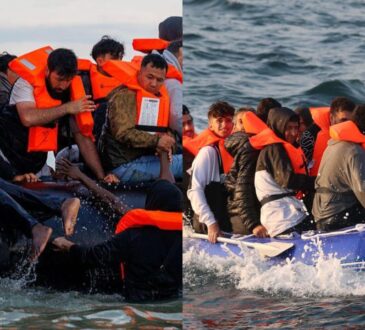
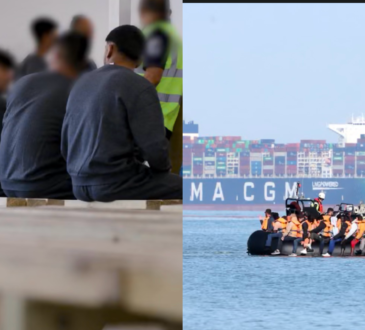
Asylum Seekers Sent Back to France Reveal Why They Are Still Determined to Return to Britain Despite Being Deported

The Home Office is still sending asylum seekers back to France on special flights, even though the controversial agreement between Britain and France officially ended several weeks ago.
The arrangement, known as the “one in, one out” scheme, was introduced in July 2025 by French President Emmanuel Macron and former British Prime Minister Keir Starmer. It was designed to reduce the number of migrants making dangerous journeys across the English Channel in small boats.
Under the agreement, some asylum seekers who arrived in Britain by small boat were sent back to France. In return, Britain agreed to accept a similar number of asylum seekers from France through a legal process.
The government hoped the arrangement would discourage people from paying smugglers to take them across the Channel. However, the scheme quickly became controversial, with questions raised about its effectiveness, cost and treatment of asylum seekers.
Although the agreement officially ended on 1 October, reports suggest that the Home Office has continued to hold dozens of asylum seekers in immigration detention centres while preparing to send them back to France.
According to information obtained by the Guardian, officials arranged a special flight to France on Wednesday to return a group of asylum seekers believed to have entered Britain before the agreement ended. Another flight is reportedly scheduled for 17 November.
Home Office sources explained that the government was continuing to return people who had already been included in the scheme before its closure.
This means that although no new cases are being added under the agreement, some people who were detained while it was still operating could still face removal.
New figures have also raised questions about how the scheme was managed.
Information released under freedom of information rules shows that seven out of 23 planned deportation flights were cancelled between July and September 2026. This means almost one-third of the flights arranged during that period did not go ahead.
The number of cancelled flights was more than twice the total recorded for deportation flights to France during the first six months of the year.
Campaigners have criticised the continued detention of asylum seekers, particularly those who may have experienced violence, abuse or other serious difficulties during their journeys.
Emma Ginn, director of Medical Justice, said vulnerable people were still being held in detention centres despite the agreement having ended.
She expressed concern that people already suffering from difficult experiences were facing further distress because they did not know when they might be sent back to France.
According to Ginn, some asylum seekers have reported being attacked or mistreated by smugglers while living in France. She argued that the possibility of being returned to those conditions was causing additional suffering.
Another major concern is whether the agreement actually stopped people from trying to reach Britain.
Although small boat arrivals have reportedly fallen by approximately 40% compared with the same period last year, there has also been a similar reduction in irregular migration across Europe.
This has raised questions about whether the fall in Channel crossings was directly caused by the agreement or whether wider changes in migration patterns played a part.
Recent Home Office figures also show that people are continuing to make the journey whenever conditions allow.
After three weeks without any recorded small boat crossings, 263 people arrived in Britain aboard three boats on Thursday. Another 671 people crossed the Channel in nine boats the following day.
These arrivals have added to concerns that returning asylum seekers to France may not prevent them from trying to enter Britain again.
The Guardian reported that at least seven asylum seekers who were returned to France under the agreement have managed to come back to Britain since 1 October.
Several others are reportedly waiting in northern France for suitable weather conditions so they can attempt another crossing.
Two asylum seekers who spoke to the newspaper described how they returned to Britain after previously being removed to France.
One man, originally from Syria, said he was detained again by the Home Office after arriving back in the UK.
According to him, immigration officials initially considered sending him to another country where his asylum application could be handled. However, when no suitable country was found, he was released from detention.
His asylum application is now being considered in Britain.
The Syrian man said he felt relieved that he was no longer being held in detention and could remain in the UK while his case was examined.
Another man, from Iran, described a much more frightening experience after being returned to France.
He said he had spent months planning how to get back to Britain because of the treatment he experienced while living in France.
According to his account, smugglers had beaten and tortured him, leaving him frightened to move around freely.
He explained that life had become extremely difficult and that he wanted to escape the situation as soon as possible.
The Iranian man eventually returned to Britain shortly after the agreement ended. His asylum application is also being processed by the Home Office.
Their experiences have raised further questions about what happens to asylum seekers after they are returned to France.
Campaigners argue that sending people back without addressing the conditions they face may simply encourage them to attempt the dangerous journey again.
Maddie Harris, from Humans for Rights Network, criticised the amount of British taxpayers’ money spent on efforts to prevent Channel crossings.
She said large sums had been transferred to the French government while migrants continued to gather along the northern French coast.
Harris also raised concerns about the treatment of people living in makeshift camps, including reports of police using tear gas and force during operations to clear temporary settlements.
She argued that these measures had failed to stop people from trying to reach Britain.
In her view, providing safer and more accessible ways for people to apply for asylum would be a better approach than relying heavily on detention and forced returns.
The financial cost of the scheme has also attracted criticism.
According to evidence Home Secretary Shabana Mahmood gave to Parliament’s Home Affairs Committee, the cost of removing asylum seekers to France has reached at least £78 million.
The figure has raised questions about whether the money spent has produced the results the government expected.
There have also been cases involving asylum seekers who were returned to France, travelled back to Britain and were subsequently removed to France for a second time.
Such cases have created additional costs because the authorities have had to arrange detention, transport and removal procedures more than once.
Meanwhile, conditions in northern France remain difficult for many people hoping to reach Britain.
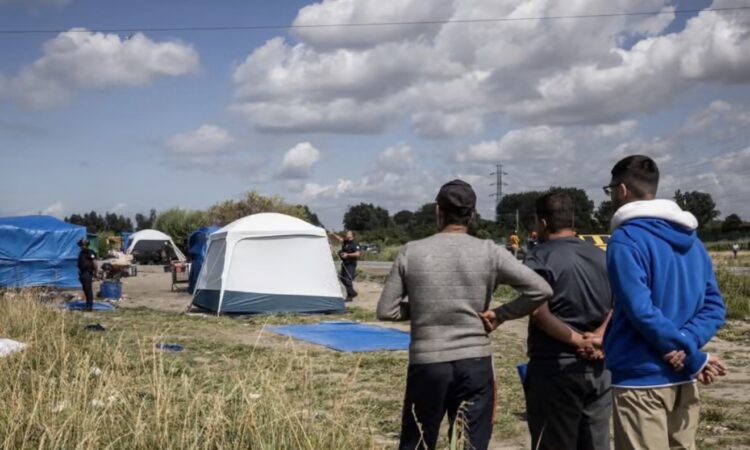
In Dunkirk, some asylum seekers are living in temporary camps while waiting for an opportunity to cross the Channel.
One man who was previously returned to France under the scheme told the Guardian that several others who had also been removed from Britain were now staying in the area.
He estimated that at least five or six people affected by the agreement were preparing to make another attempt to reach the UK.
The man described the camp as extremely overcrowded, saying there were so many people waiting to cross that some struggled to find enough space to lie down and sleep.
He also questioned whether the British government’s approach had achieved anything meaningful, arguing that people were still determined to make the journey despite the risk of being returned.
Another asylum seeker, who said he was 17 years old, explained that French police had recently stopped him while he was attempting to board a lorry travelling towards Britain.
Despite being caught, the teenager said he had no intention of giving up.
He acknowledged that the journey was dangerous but said he believed he had little choice other than to continue trying.
His account reflects the determination of some migrants who remain in northern France, even after experiencing repeated setbacks.
The situation has created a difficult challenge for the British government.
Ministers want to reduce dangerous small boat crossings and demonstrate that people who enter Britain without permission may be returned to another country.
However, the reported return of previously removed asylum seekers has raised concerns about whether the policy can achieve lasting results.
Critics believe that sending people back to France without addressing the reasons they continue trying to reach Britain will do little to stop repeated crossings.
Supporters of tougher border controls, on the other hand, argue that the government must maintain effective removal arrangements to discourage dangerous journeys and prevent criminal smuggling networks from profiting.
For now, the Home Office is reportedly continuing with the removal of people who were already covered by the agreement before it ended.
With another flight scheduled for 17 November, more asylum seekers could still be sent to France in the coming weeks.
The continued removals, the cost of the agreement and reports of people returning to Britain have left serious questions about the future of cooperation between the two countries.
Although the original scheme has ended, the problems it was introduced to address remain unresolved, with people still gathering along the French coast and attempting to cross the English Channel in search of a new life in Britain.