Residents of a Quiet UK Village Left Shocked After Discovering How Many Asylum Seekers Will Be Housed in Their Community, But What a Home Office Minister Said Has Sparked Even More Outrage

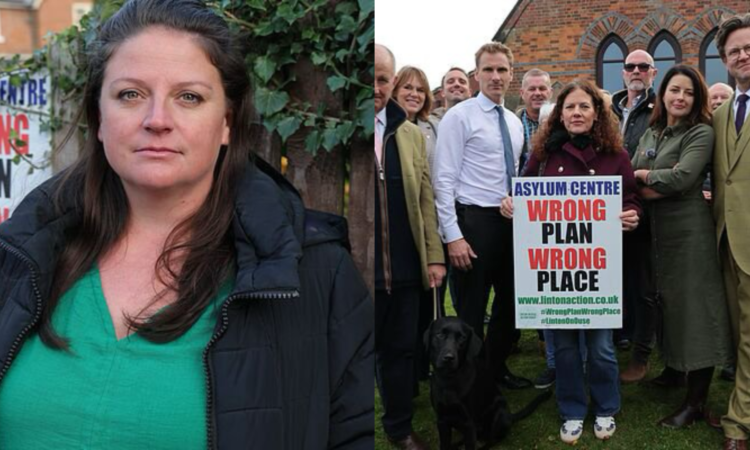
Residents of a small village in North Yorkshire have expressed anger and concern over government plans to house more than 1,200 asylum seekers at a former military base near their homes.
The proposed asylum centre is in Linton-on-Ouse, a quiet village with around 600 adult residents. If the plans go ahead, up to 1,250 asylum seekers could eventually be accommodated at the former RAF base, more than twice the village’s adult population.
Many people living in the area say they are worried about how such a large number of new arrivals could affect their daily lives, especially when it comes to safety, local services and the future of their community.
The disagreement became more serious after Home Office minister Anna Turley suggested that large asylum accommodation sites are separate from nearby communities.
Speaking to MPs during discussions about the Government’s Immigration and Asylum Bill, Turley explained that asylum seekers living at large centres would have their basic needs provided on-site.
She said the accommodation would be self-contained and away from residential communities, with transport available to take residents to larger towns and cities when necessary.
However, people living in Linton-on-Ouse strongly disagreed with this description.
They said the former RAF base is not far away from their village but is actually surrounded by homes, with some residential properties standing directly beside the proposed accommodation.
According to residents, only a fence separates part of the site from a children’s play area used by local families.
One mother, Alice Sizer, said she could not understand how the Government could describe the location as separate from the community when her five-year-old daughter’s playground shares a boundary with it.
She explained that her family moved to the village three years ago because they wanted their daughter to enjoy a peaceful childhood in the countryside.
Her husband had previously lived in the area, and his father had served in the Royal Air Force. They had always hoped to return and raise their family in the same quiet environment.
But the proposed asylum centre has now left her worried about what the future might look like.
She said her daughter currently enjoys playing outside with friends after school, either in the street or at the local park.
However, she fears the changes could make her family feel uncomfortable allowing their child to continue doing these things.
Alice also raised concerns about walking her daughter to school and whether she would feel confident allowing her to travel independently when she gets older.
She said the uncertainty has become so serious that her family, like others in the village, has considered selling their home and moving somewhere else.
Other residents have complained that the Government has failed to properly explain its plans or listen to the concerns of people who will be directly affected.
Martin Sanderson, a member of the Linton-on-Ouse Action Group, said residents have been asking the Home Office for clear information since 2022.
He explained that the lack of communication has created fear, uncertainty and disagreements within the community.
According to him, residents simply want the Government to be open about what it intends to do and explain how the proposed centre would operate.
He questioned why officials had not visited the village to see how close the former military buildings are to people’s homes.
Sanderson also rejected suggestions that the asylum accommodation would be located away from residential areas.
He said the proposed centre would be right in the middle of the village rather than somewhere outside it.
He warned that creating a large, fenced-off accommodation centre could cause problems for both asylum seekers and the people already living nearby.
Another resident, Laura Harman, who has two children, also criticised the minister’s comments.
She said anyone who visited the village would immediately understand why residents were unhappy with the description of the site.
Laura explained that the buildings intended for asylum accommodation can clearly be seen from streets where families live.
She accused the Home Office of giving a misleading picture of the location and urged government officials to visit before making further statements.
The concerns are not limited to the distance between the proposed centre and nearby homes.
Some families are worried about the effect on local facilities, including roads, schools and other services.
Residents have also raised questions about whether the village has the infrastructure needed to cope with such a large accommodation centre.
The former military buildings stand close to White Rose Close, a residential street containing three-bedroom and four-bedroom family homes.
People living there are concerned about privacy because some of the proposed accommodation buildings overlook nearby houses and gardens.
The report also claims that some families have already decided to leave parts of the village because of the uncertainty surrounding the plans.
There are also concerns about the future of the local primary school, with reports that some parents are choosing not to enrol their children there.
However, these concerns are based on residents’ fears about what might happen if the centre opens, rather than evidence that asylum seekers at the proposed site have caused problems.
The wider disagreement comes as the Government prepares to spend more money on large accommodation centres for asylum seekers.
Officials have set aside £150 million to support the development of additional large sites across the country.
Some of the money could be used to identify new locations and convert existing buildings into accommodation.
The Government believes these centres could help reduce the country’s dependence on hotels, which have become a major source of public concern because of their cost.
Campaigners in Linton-on-Ouse have questioned whether this approach will provide a long-term solution.
They estimate that dozens of similar centres would be needed if the Government wanted to accommodate large numbers of asylum seekers using the same model.
They also argue that moving people from hotels into large sites does not automatically solve the wider problems facing the asylum system.
Despite the criticism, Anna Turley has defended the Government’s approach.
She said large accommodation centres are intended to provide basic but safe housing for people seeking asylum while their applications are being considered.
According to the minister, these sites can offer important services, including healthcare and safeguarding support, without placing unnecessary pressure on nearby communities.
She argued that making accommodation centres more self-sufficient could help reduce the impact on local residents.
Turley also said the Government believes large sites can support a fair and humane asylum system.
However, people in Linton-on-Ouse remain unconvinced.
For many residents, the biggest problem is not simply the number of asylum seekers who could arrive but the feeling that major decisions are being made about their community without properly involving them.
They want ministers to visit the village, speak directly with families and explain how their concerns will be addressed.
The disagreement has now raised wider questions about how the Government chooses locations for asylum accommodation and whether local communities are being given enough opportunity to express their views.
While ministers insist that large centres could help manage asylum accommodation more effectively, residents in Linton-on-Ouse say they deserve clear answers before any final decision is made.
For now, the village remains uncertain about its future, with families waiting to discover whether the former RAF base will eventually become home to more than 1,200 asylum seekers.