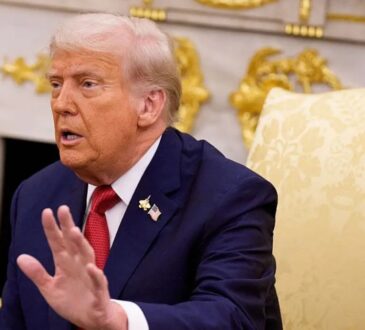
Never-before-used rule could strip Donald Trump of presidential powers without impeachment

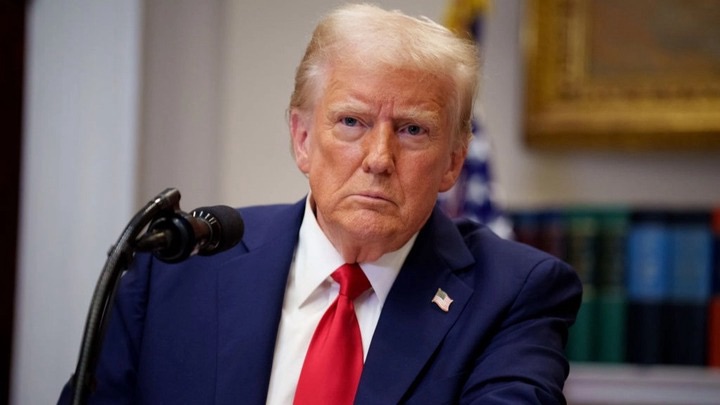
Donald Trump could face fresh attempts to take away his presidential powers after Democrats won control of both the House of Representatives and the Senate in the 2026 midterm elections.
The election results mean Democrats are set to take charge of both parts of Congress when newly elected members begin their work in January 2027. This will give them more power to challenge Trump’s decisions, investigate his administration and influence new laws, even though he will remain president.
There are now questions about whether Democrats could try to impeach Trump for a third time. However, impeachment is not the only way a US president could lose his powers.
Political expert Dr Daniel Schatz told UNILAD that another attempt to impeach Trump is a realistic possibility, but it is not guaranteed.
He explained that Democrats may decide to investigate Trump’s actions before making any move to remove him from office.
According to Dr Schatz, simply losing seats in Congress is not enough to start impeachment. Democrats would need evidence of wrongdoing and enough support within their party to bring formal charges against the president.
But there is another part of the US Constitution that could become important if serious concerns arise about Trump’s ability to carry out his duties.
It is called Section 4 of the 25th Amendment, and it allows a president’s powers to be temporarily transferred to the vice president under certain circumstances.
The amendment was proposed in 1965 and became law in 1967. Although it has existed for almost 60 years, Section 4 has never been used to transfer presidential powers.
Under Section 3 of the same amendment, a president can voluntarily hand over power when they are temporarily unable to work. This could happen during a medical operation, serious illness or another situation that prevents them from carrying out their responsibilities.
Section 4 works differently because it can be used when a president is unable or unwilling to admit that they cannot perform their duties.
For this to happen, Vice President JD Vance and a majority of the Cabinet would need to agree that Trump is unable to carry out his presidential responsibilities.
They would then send a written declaration to the leaders of Congress. Once that happens, the vice president would immediately take over the president’s powers as acting president.
This could apply in situations where a president suffers a serious physical or mental condition that makes it impossible to carry out the job. It could also apply if the president becomes unconscious or cannot communicate important decisions.
However, the Constitution does not provide a complete list of medical conditions or situations that would qualify.
One important difference between impeachment and the 25th Amendment is what happens to the president.
If a president is impeached by the House and convicted by the Senate, they can be removed from office completely.
But under Section 4 of the 25th Amendment, the president does not automatically lose the position. Instead, the vice president temporarily takes over presidential duties.
Congress also has an important role, although Democrats cannot simply use their control of the House and Senate to activate Section 4 themselves.
Only the vice president, together with a majority of the Cabinet or another body established by law, can begin the process.
Members of Congress can raise concerns, hold investigations and encourage the vice president to consider taking action, but they cannot directly activate the amendment under the current arrangements.
If Section 4 were used against Trump and he challenged the decision, Congress could become responsible for deciding whether he should regain his powers.
In that situation, both the House and Senate would need a two-thirds majority to keep the vice president in charge as acting president. Otherwise, Trump would regain his presidential powers.
This means Democrats controlling Congress would not automatically have enough votes to prevent Trump from returning to his duties.
For now, there has been no confirmed move by JD Vance or Trump’s Cabinet to use the 25th Amendment against him.
However, with Democrats preparing to take control of Congress in January 2027, the possibility of new investigations, another impeachment attempt and questions about the president’s ability to remain in power could become major political issues in Washington.
The final decision would depend on what evidence emerges, whether Trump’s own administration supports any action and whether enough members of Congress agree that such a serious step is necessary.