
Here Are the Benefits UK Communities Hosting the Highest Numbers of Asylum Seekers Could Receive

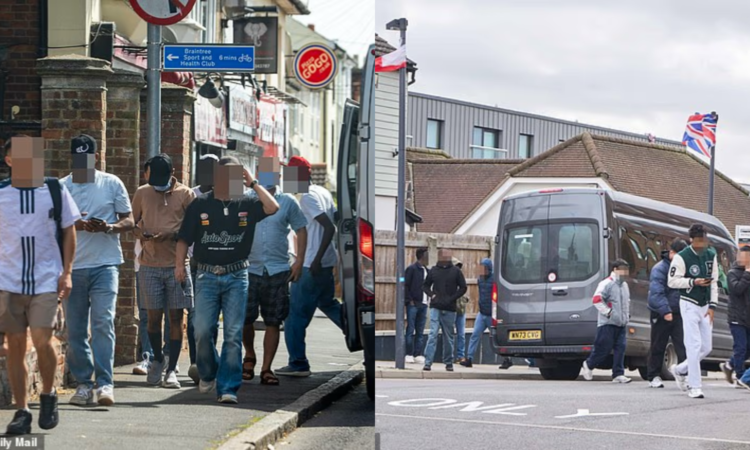
A council in Essex is facing serious criticism after it was revealed that millions of pounds given by the Home Office to help communities affected by Britain’s largest asylum seeker camp have still not been spent.
Braintree District Council received more than £3.8 million from the Home Office between July 2023 and June 2026. The money was meant to help the local area deal with the impact of RAF Wethersfield, a former military base that was turned into accommodation for asylum seekers in July 2023.
However, new information obtained by the Daily Mail shows that the council still has around £2.7 million sitting in its accounts, despite growing concerns from residents about safety in their communities.
RAF Wethersfield currently has space for 1,245 asylum seekers, although it can accommodate up to 1,700 people if needed.
The council has been criticised for failing to spend more of the money on measures that could help local people feel safer.
According to the report, only £40,000 was given to Essex Police to provide extra patrols and improve community relations in Braintree town centre, which is about eight miles from the asylum accommodation site.
This has raised questions because some residents have repeatedly complained about feeling unsafe, particularly when groups of asylum seekers visit the town.
Some local people have reported concerns about harassment, theft, violence and feeling intimidated. However, these are residents’ reported experiences and do not mean everyone living at the asylum centre has been involved in wrongdoing.
Police records obtained through Freedom of Information requests show that officers received 232 emergency and non-emergency calls linked to the Wethersfield site between 2020 and the period covered by the report.
Of those calls, 192 were made after asylum seekers began living at the former military base.
The calls included 31 reports of assault, three reports of rape, two reports of other sexual offences, nine reports of theft, one report of stabbing and two reports linked to human trafficking and slavery.
Police records also showed that residents of the accommodation centre were recorded in connection with 62 crimes, with 13 resulting in a charge or caution.
However, a police call or crime report does not automatically mean that an offence was committed or that an asylum seeker was responsible.
Robert Bates, from the Centre for Migration Control, criticised the situation and questioned why so much money had been left unused.
He argued that people living in Braintree were dealing with the impact of the asylum centre while funding that could potentially help their community remained unspent.
He also criticised the government’s handling of residents’ concerns and suggested that the Wethersfield site should operate as a detention facility if it continues to be used.
Braintree District Council has defended itself, saying the Home Office is largely responsible for the delay in spending the money.
The council explained that the funding comes with strict conditions and cannot simply be used for anything local officials believe is necessary.
According to the council, the Home Office must approve certain spending plans before the money can be released.
Council officials said they had repeatedly asked the government to explain which projects would qualify for funding but had not received clear guidance.
They also claimed that it took more than a year of submitting different applications before they were finally allowed to spend a small amount of the money on community projects.
The council said it was extremely frustrated because it wanted to do more but could not spend the funds without the necessary approval.
Conservative MP for Braintree, Sir James Cleverly, has also criticised the situation.
He called on the Home Office to clearly explain what the council is allowed to spend the money on and give local officials more freedom to protect residents.
The controversy comes as some women in Braintree have spoken publicly about feeling uncomfortable and unsafe in parts of the town.
When the Daily Mail visited the area in August, a charity shop volunteer called Hannah said she was frightened about working alone.
She claimed that Thursdays were particularly uncomfortable because buses brought asylum seekers from Wethersfield into the town centre.
According to her, the town looked very different on those days, with large groups of men gathering in public areas.
Another business owner, Susan Doan, who runs a beauty salon in Braintree, also shared her concerns.
She claimed that some men had been standing outside her shop and making unwanted gestures towards female workers.
Susan said she and her colleagues sometimes felt uncomfortable leaving the salon after dark.
She also described an incident involving a female customer who allegedly became frightened after being followed by a group of men.
According to Susan, the woman returned to the salon because she was too scared to continue walking alone.
She questioned what was being done to make women and children feel safe in their own town.
As concerns continued, Essex County Council introduced a new security scheme called Operation Vanguard.
The scheme involves private security officers patrolling town centres, including Braintree, Colchester and other areas covered by the operation.
The security officers are employed by a private company called My Local Bobby.
Although they do not have the same powers as police officers, they can monitor public areas and make citizens’ arrests where the law allows.
The scheme is being tested for three months and is expected to cost around £118,000 plus VAT.
The money is coming from a £150,000 council fund intended to support community improvements.
Essex County Council said the scheme was introduced partly because of concerns about people travelling from the Wethersfield asylum accommodation centre into nearby towns.
Officials said the aim was to provide a visible security presence throughout the week and help residents feel safer.
Police figures also show that the number of emergency calls linked to Wethersfield increased after the site began housing asylum seekers.
Before the accommodation centre opened, police reportedly received around two emergency calls a year connected to the site.
However, during the first full year after asylum seekers moved in, that number increased to 82.
Chief Inspector Martin Richards, who oversees policing in Braintree, confirmed that officers have a presence at Wethersfield.
He said that so far in 2026, police had arrested 23 people living at the centre.
Four of those arrests involved incidents in the wider Essex community, five involved incidents outside Essex, and 14 were connected to alleged offences at the accommodation site itself.
Most of the incidents at the site reportedly involved disputes between residents.
However, the police chief also pointed out that overall crime in Braintree had actually fallen.
He said Braintree recorded the biggest reduction in crime among all 14 districts in Essex over the previous 12 months.
According to him, the town now experiences less crime than it did when the asylum centre first opened three years ago.
This means that although police have dealt with incidents connected to Wethersfield, the wider town has not experienced an overall rise in recorded crime during that period.
Meanwhile, documents obtained by the Daily Mail revealed how Braintree District Council spent some of the Home Office money.
Around £960,000 was used for safeguarding, care services, translation support and staff costs.
This included a reported £139,000 payment for a communications officer.
The council had also faced criticism earlier in the year after it emerged that £50,000 of Home Office funding had been spent on activities including gardening, art classes, dance lessons and cricket coaching for asylum seekers.
Some critics questioned why money was being used for those activities while residents continued asking for more security and police patrols.
The Home Office did not directly answer the Daily Mail’s questions about why so much of the funding remained unspent.
Instead, a spokesman said the government remained committed to closing asylum hotels and moving people into other types of accommodation, including former military bases.
The department also said additional money was being provided to Essex Police to cover policing costs connected to the Wethersfield site.
The future of RAF Wethersfield has also become another major source of disagreement.
Home Secretary Shabana Mahmood had previously pledged that the site would close by 2027, but the government has since announced plans to extend its use.
Sir James Cleverly said that when he was Home Secretary, the number of people allowed to stay at Wethersfield was limited and a closure date was agreed.
He criticised Labour’s decision to extend the site’s use and increase its capacity from 800 to 1,245 residents.
According to him, the decision shows a lack of respect for people living in the surrounding communities.
He has repeatedly argued that Wethersfield is not a suitable place to accommodate asylum seekers and has continued calling for its closure.
Braintree District Council also said it had opposed the asylum centre since the plans were first announced in March 2023.
The council claimed that the government went ahead with the project despite local opposition and used special planning powers to bypass the normal local planning process.
For many residents, the biggest concern is why millions of pounds intended to help their community remain unused while they continue asking for more support.
The council insists that strict Home Office rules are preventing it from spending the money more freely, while critics argue that more should have been done to address local concerns.
The disagreement has left questions about how the funding is being managed, what it can legally be spent on and whether the government will allow more of it to be used to support the communities around RAF Wethersfield.