Desperate Illegal Migrants Who Dreamed of Coming to the UK Took a Dangerous Route to Be Smuggled Into the Country, But What Officials Discovered About Them Was Shocking


Two men accused of running a major people-smuggling gang have spent years fighting to stay in Britain, despite having their British citizenship taken away. Their long legal battle is believed to have cost UK taxpayers more than £1 million, and the case is still not over.
The two men, originally from Iraq, are accused of helping large numbers of migrants enter the UK illegally by hiding them inside lorries travelling from Europe.
Their activities came to light when officers from the National Crime Agency (NCA) caught them handing a shopping bag containing £16,000 in cash to a Romanian lorry driver in Reading.
The driver had allegedly helped four migrants enter Britain the previous day by hiding them inside his truck on a ferry travelling to Dover.
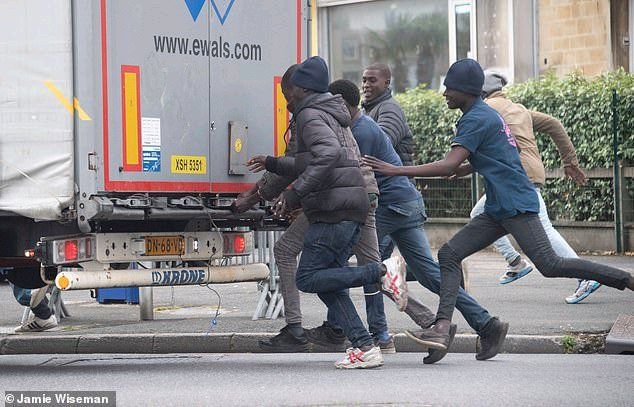
However, what appeared to be a major success for the police soon turned into a legal battle that has continued for almost ten years.
The two men, now aged 49 and 50, have repeatedly challenged attempts to remove them from Britain. Despite losing their latest appeal, they are continuing their fight to remain in the country.
According to court documents, both men arrived in Britain illegally in 2001 and applied for asylum. Their applications were initially rejected, but they were later allowed to remain permanently under a Home Office programme designed to clear old asylum cases.
They eventually became British citizens.
However, their situation changed when the NCA began investigating a large people-smuggling network in 2016.
The investigation, known as Operation Dahoon, involved around 350 officers from several police forces and law enforcement agencies in Britain, France, Belgium and the Netherlands.
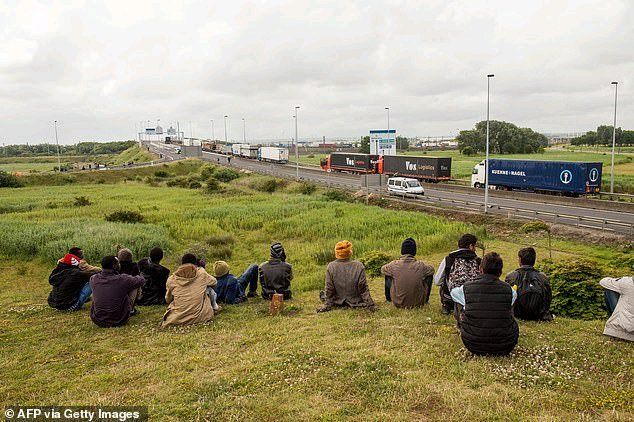
Officers discovered that the gang was operating around migrant camps in northern France, including the former Jungle camp near Calais.
Investigators believed the group had helped large numbers of migrants enter Britain by arranging for them to hide inside lorries.
According to evidence presented in court, the gang charged migrants thousands of pounds for the journey.
A notebook discovered during the investigation suggested that migrants were charged around £8,000 each.
One entry showed that four migrants had paid £38,000, while another suggested that eight people had paid £58,000.
The gang allegedly worked with lorry drivers, many of whom came from Eastern Europe, and paid them to transport migrants into Britain.
One driver told French police that he had been offered between £2,500 and £3,000 for every migrant he successfully brought into the country.
The two men accused of leading the operation have been allowed to keep their identities secret because of a court order.
They are known publicly only as G4 and G5.
Investigators described G4, aged 49, as someone who played a leading role in controlling the operation, while G5, aged 50, was accused of helping organise the activities.
Both men were arrested in February 2017 and again in February 2018.
However, in March 2019, the Crown Prosecution Service decided not to bring criminal charges against them.
That decision was later strongly criticised by judges.
High Court judge Mr Justice Jay said prosecutors had made the wrong decision and that the men should have faced criminal proceedings.
He suggested that if they had been prosecuted, they could have received lengthy prison sentences.
Instead, the men remained in Britain.
In August 2020, G4 even had his British passport renewed.
However, the NCA continued investigating the pair and began looking at whether their British citizenship could be removed.
The Home Secretary eventually approved the decision, and both men lost their British citizenship on August 30, 2022.
At the time, they were visiting Iraq.
But the decision did not stop them from returning to Britain.
G5 returned less than two weeks after losing his citizenship. He travelled through Germany and Ireland before reaching Belfast.
G4 returned in February 2023, around five months later.
Investigators believe he used his cancelled British passport to travel to Ireland before taking a ferry from Belfast to Scotland.
Their return meant the Home Office had to continue its efforts to remove them from the country.
During a hearing before the Special Immigration Appeals Commission, both men tried to challenge the decision to take away their citizenship.
They also denied responsibility for the people-smuggling operation and blamed each other.
However, the judges rejected their explanations.
The court found that both men had given unreliable evidence and could not be trusted.
G4 was accused of giving unclear and dishonest answers, while the judges said they could not rely on G5’s evidence.
The Home Office also accused the pair of repeatedly lying to public authorities since arriving in Britain.
According to the authorities, the men had been involved in other offences, including insurance fraud, cigarette duty evasion and benefits fraud.
One of the men and his wife had previously been convicted of benefits fraud.
Despite these concerns, both men have continued living in Britain with their families.
They have seven children between them.
The Home Office argues that removing them from Britain is necessary because of their alleged involvement in organised crime.
Investigators have also raised concerns that the people-smuggling operation may have continued even after the original arrests.
The NCA’s lead investigator, Graeme Chisholm, told the court that G5 was believed to be still involved in people smuggling.
Authorities also raised concerns that some people brought into Britain through the network may have included supporters of the Islamic State terrorist group.
However, these concerns were presented as intelligence assessments rather than separate criminal convictions against the two men.
The pair have used human rights arguments to challenge their removal.
They claim that returning to Iraq would affect their family lives and could leave them facing serious difficulties.
They also argued that they might struggle financially or face imprisonment in the Kurdish region of Iraq.
However, the court rejected these arguments.
Judges said that most people living in the Kurdistan region of Iraq were not facing the dangers described by the men.
G4 claimed he could not remember relatives who might be able to help him if he returned.
He later suggested that he was an orphan.
But the court found that he had several relatives in Iraq, including brothers, sisters, uncles, aunts and cousins.
G5 admitted that he had family members who could provide accommodation but questioned what his standard of living would be.
The court also heard that large amounts of money allegedly made through people smuggling had been sent to Iraq.
Investigators found business cards belonging to Iraqi estate agents at G4’s home, raising questions about whether he had plans to buy property there.
He denied having such plans, but the judges did not believe his explanation.
The legal battle has involved a large number of lawyers.
At one hearing, 13 publicly funded barristers were involved, including four King’s Counsel.
Five lawyers represented the two men, four worked for the Home Office, and another four acted as special advocates during private hearings involving sensitive security information.
The Daily Mail estimates that the legal proceedings, together with the lengthy NCA investigation, have cost British taxpayers more than £1 million.
However, the exact amount has not been officially confirmed.
The newspaper has submitted Freedom of Information requests to establish how much public money has been spent.
Another person connected to the smuggling operation, Muhammad Zada, 43, from Middlesbrough, was sentenced to 20 years in prison in 2024.
However, he had fled before his trial and was sentenced in his absence.
According to the report, he is the only member of the gang who has been successfully prosecuted.
The Special Immigration Appeals Commission rejected G4 and G5’s latest challenge and ruled that removing them from Britain was in the public interest.
The judges said the pair had been motivated by making large amounts of money and had shown little concern for others.
Despite that ruling, the two men are continuing their legal fight.
Their latest appeal is expected to be heard in the coming weeks.
The case has raised serious questions about how people accused of organised immigration crime can remain in Britain for years while legal proceedings continue.
It has also renewed concerns about the amount of public money spent on lengthy deportation and citizenship cases.
For now, the two men remain in Britain, and the Home Office is still trying to remove them.
After nearly ten years of investigations, court hearings and appeals, the case remains unresolved, with taxpayers potentially facing further legal costs before a final decision is reached.