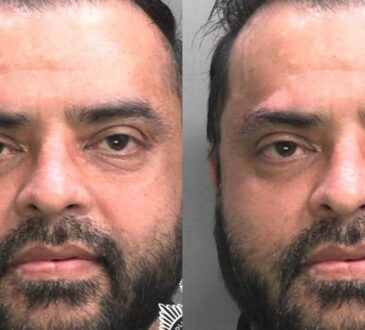
Vickrum Digwa, Who Stabbed 18-Year-Old Henry Nowak to Death, Makes Shocking New Demand After Being Jailed for Life

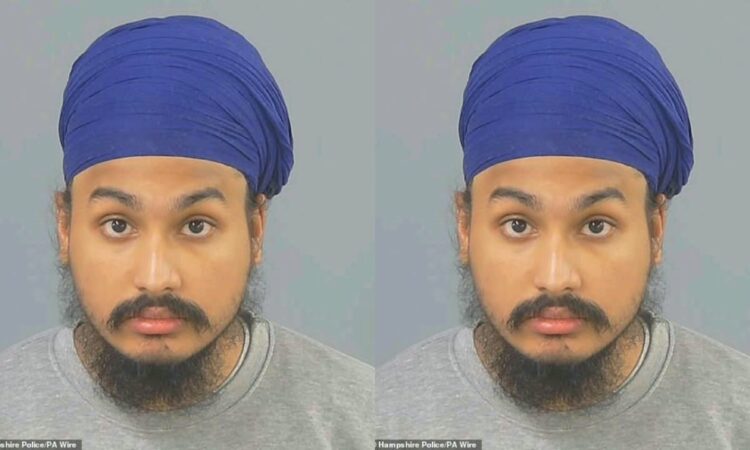
Vickrum Digwa, who was convicted of murdering 18-year-old student Henry Nowak, has officially applied to appeal against his conviction after stabbing the teenager to death in Southampton.
The 23-year-old used a Sikh ceremonial dagger to attack Henry on December 3, 2025. After stabbing him several times, Digwa filmed the teenager as he lay dying and falsely told police that Henry had racially abused him.
His claims led officers to handcuff the badly injured teenager instead of immediately recognising that he needed urgent medical help.
Digwa is now trying to have his murder conviction overturned, arguing that mistakes were made during his trial and that the conviction may not be safe.
He has also asked the Supreme Court to review his prison sentence.
His latest legal action comes after the Court of Appeal increased his minimum prison sentence from 21 years to 25 years. The increase followed a challenge by the Attorney General, who argued that the original punishment was too lenient for such a serious crime.
Although Digwa had previously made it clear that he wanted to challenge his conviction, his lawyers have only recently submitted the official application.
His legal representatives, Imran Khan and Partners, confirmed to the BBC that an application had been made to appeal against his conviction. They explained that the challenge concerns whether the conviction was legally safe and is separate from the case involving his prison sentence.
The murder caused widespread anger after police body camera footage showed how officers treated Henry during his final moments.
Henry, who came from Chafford Hundred in Essex, had been seriously injured when officers arrived at the scene.
Instead of immediately treating him as the victim of a stabbing, police initially believed Digwa’s claims that Henry had racially abused him.
The footage showed officers placing Henry in handcuffs while he repeatedly tried to explain that he had been stabbed.
At one point, Henry could be heard saying, “I’ve been stabbed.”
However, one officer responded by saying, “Don’t think you have, mate.”
The footage later sparked public protests and serious questions about how police handled the situation.
Digwa was found guilty of murder and sentenced at Southampton Crown Court in June 2026. He was initially ordered to serve at least 21 years in prison before being considered for release.
However, that minimum term was increased to 25 years earlier this month.
Digwa’s lawyers now argue that the judge made mistakes during the murder trial.
One of their main complaints concerns WhatsApp messages that Henry reportedly sent when he was around 13 years old.
Police discovered the messages after examining Henry’s mobile phone following his death.
Digwa claims the messages showed that Henry had previously used racist language and believes the jury should have been allowed to see them.
However, the trial judge ruled that the messages, which were sent about five years before the murder, were not relevant to what happened on the day Henry was killed.
The judge also concluded that Digwa had lied when he tried to portray Henry as someone who had racially abused him.
Another part of Digwa’s appeal concerns a secret police recording in which he admitted stabbing Henry.
His lawyers argue that the recording should not have been presented to the jury because they believe it broke the rules governing evidence in criminal trials.
However, submitting an appeal application does not automatically mean Digwa will receive another hearing or that his conviction will be overturned. The courts must first decide whether there are sufficient legal grounds for the challenge to proceed.
Henry’s family have already expressed their anger over the possibility of Digwa challenging his conviction.
His father, Mark Nowak, previously described the news as shocking.
The family have also been left upset by developments involving Digwa’s mother, Kiran Kaur.
The 53-year-old was sentenced to three years in prison in July after being convicted of helping an offender.
The court heard that she had hidden the dagger her son used to murder Henry.
However, reports suggest that Kaur could be released from prison in December 2026 under the Government’s early release arrangements, despite receiving a three-year sentence.
Henry’s father has strongly criticised the possibility of her being released so soon.
He questioned how someone convicted in May and given a three-year sentence could be allowed to leave prison by December.
Mark said the situation was especially painful because Kaur could spend Christmas outside prison while his own family would never get to celebrate another Christmas with Henry.
Henry’s mother, Lucy Ross, also spoke about the emotional pain the family continues to experience.
She explained that once Kaur leaves prison, she may be able to arrange visits to see her son.
Lucy said Kaur would still have the opportunity to see her child, while she could only visit Henry’s grave.
The case has continued to attract public attention because of the circumstances surrounding Henry’s death, the way police treated him after the stabbing, and the legal challenges that have followed.
For Henry’s family, the latest appeal application means another period of uncertainty as they continue to seek justice for their son.
Digwa remains convicted of murder and subject to a life sentence with a minimum term of 25 years unless a court changes that decision.