Shocking Report Reveals How Some Small Boat Migrants Were Treated Before Being Sent Back to France

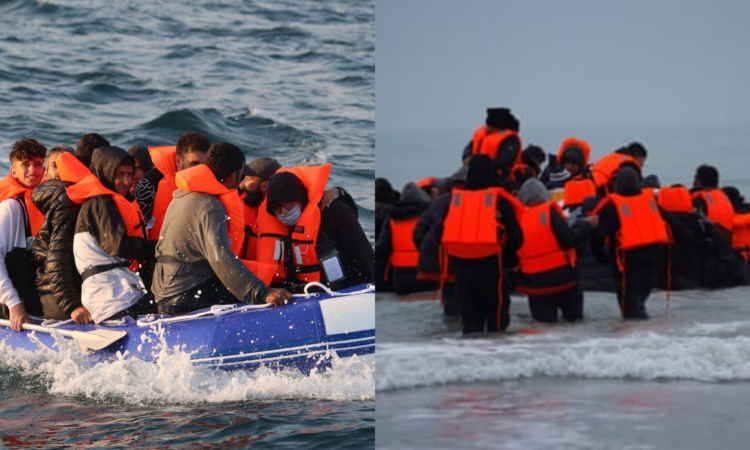
A new official report has raised serious concerns about how asylum seekers were treated while being deported from the UK to France under the government’s controversial “one in, one out” agreement.
Inspectors found that some asylum seekers were subjected to unnecessary force and intimidating behaviour, including a vulnerable man who was carried onto a plane while wearing restraints around his waist, legs and ankles.
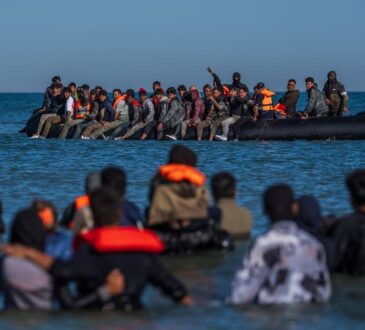
The agreement allowed the UK to send asylum seekers who arrived by small boats back to France. In return, another asylum seeker waiting in northern France could legally enter Britain to apply for asylum.
Many of those affected by the scheme had escaped war and violence in their home countries. Some were also survivors of torture or human trafficking.
According to information obtained by The Guardian, there were 26 recorded incidents involving the use of force on Home Office deportation flights between July and September 2026.
These incidents happened across 26 charter flights, including 21 flights to France and others to Albania, Lithuania and Romania. However, not every flight involved the use of force.
Inspectors from HM Inspectorate of Prisons also reviewed body camera footage from four earlier deportation flights to France. They identified nine incidents involving force, including at least one that had not been officially recorded by escort officers.
The latest report, published on Monday, 23 November, focused on a deportation flight to France that took place on 4 September.
One of the most concerning cases involved a man described as physically and emotionally fragile.
Inspectors said the man had not been eating properly and had no history of violence or resisting officers. Despite this, staff wearing helmets and carrying riot shields entered his cell and placed restraints around his waist and legs.
The inspectors said the force used against him was unnecessary and excessive because he had not resisted.
They also criticised the way officers carried him out of his cell.
During the flight, the man remained slumped in his seat and did not communicate with anyone.
Another incident involved a man who was being closely monitored because he was considered at risk of suicide.
Despite his condition, officers carried him onto the aircraft while he was restrained around his waist, legs and ankles.
In a third case, a man was placed in waist restraints after telling officers he would not cooperate with his deportation.
The findings have raised further questions about how vulnerable asylum seekers are treated during deportations.
Earlier reports had already raised concerns about the physical and mental condition of people returned to France from Britain.
A French healthcare organisation, Samusocial de Paris, which provides medical support to returned asylum seekers, reported finding signs of possible recent physical and psychological violence.
Its medical staff also identified problems linked to long periods of detention, with some asylum seekers describing the conditions they experienced as degrading.
The organisation said the physical and mental health problems it documented were directly connected to the implementation of the agreement between Britain and France.
Although inspectors said they witnessed many officers treating asylum seekers with care and respect, they also found examples of behaviour they described as unnecessary and intimidating.
The report criticised some team leaders for failing to step in quickly enough when officers behaved inappropriately.
Inspectors also discovered problems with communication.
A body camera system designed to help officers communicate with asylum seekers in different languages was not working properly.
As a result, many people facing deportation could not get proper interpretation services or access to lawyers who could represent them.
Another concern was that officers sometimes referred to asylum seekers by numbers instead of using their names.
Inspectors also found that people being transported to aircraft in vans were given bags to urinate into.
The findings have led to criticism from organisations supporting asylum seekers and people held in immigration detention.
Emma Ginn, director of the charity Medical Justice, said the findings were not surprising.
She accused the government of causing serious and avoidable harm to vulnerable people during immigration enforcement.
According to Ginn, independent medical professionals working with her charity found that most of the clients they assessed under the “one in, one out” scheme showed medical evidence of torture.
She said it was shameful that people who had already survived torture were being subjected to further distress while held in UK immigration removal centres and during deportation flights to France.
Ginn also argued that the treatment of vulnerable asylum seekers could not simply be dismissed as accidental.
The controversial agreement officially ended in October, but The Guardian reported that some people were still being removed in November.
The latest findings have added to concerns about the government’s handling of deportations, particularly when dealing with people who have experienced serious trauma or are struggling with their mental health.
The Home Office has been contacted for a response to the report.