Desperate Boat Migrants Hoping to Reach the UK Receive a New Offer From People-Smuggling Gangs That Could Help More of Them Cross the English Channel into Britain

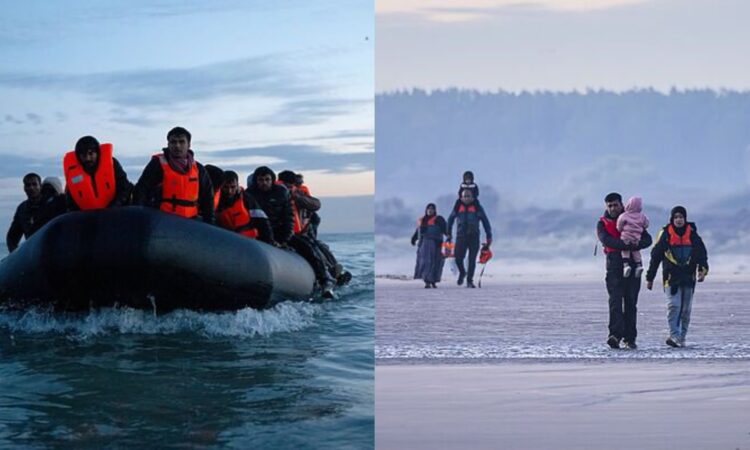
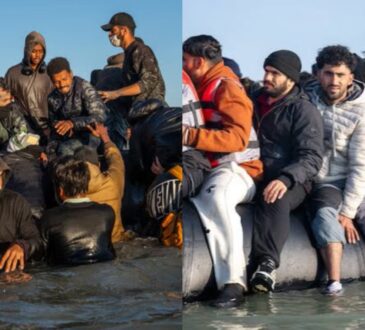
People-smuggling gangs operating across the English Channel are now charging migrants much less money than before as stronger police operations make it harder for them to transport people illegally from France to the United Kingdom.
The gangs, which previously charged migrants as much as €3,000 (£2,500) for a place on a small boat, have reportedly reduced their prices to between €1,000 (£840) and €2,000 (£1,700). This is one of the lowest price levels reported in recent years and comes as British and French authorities increase their efforts to stop illegal Channel crossings.
The new information was shared with MPs during a meeting of the House of Commons Home Affairs Committee, where senior border security officials explained how the situation is changing.
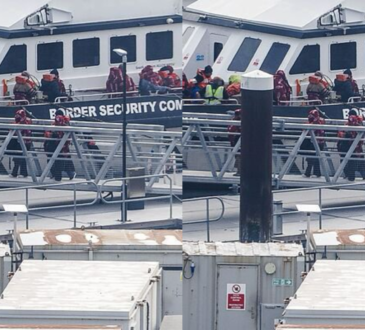
Duncan Capps, the Home Office’s Border Security Commander, told MPs that people-smuggling gangs are finding it increasingly difficult to continue their operations because police are arresting suspected smugglers, seizing boats and confiscating engines and other equipment.
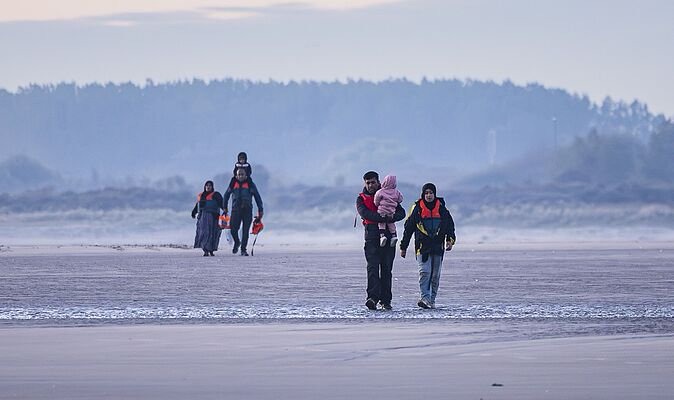
According to him, French police have also increased patrols along the northern French coastline, making it much harder for migrants to launch small boats into the Channel.
Previously, migrants attempting to cross into Britain faced an average of three unsuccessful attempts before managing to leave France. However, that number has now increased to seven failed attempts because of stronger security measures.
Despite these efforts, there is still a major problem. Under current French procedures, migrants who are stopped by police on beaches are generally not detained simply for attempting to cross. This means many can return to their camps and try again on another day.
As a result, thousands of migrants are now waiting along the French coast, hoping to find another opportunity to reach Britain.
Officials revealed that the number of migrants staying in temporary camps across northern France has increased to almost 4,000, which is around twice the usual number.
Many of those waiting are single men from countries including Eritrea, Sudan, Somalia, Ethiopia and Afghanistan.
The growing number of people in these camps has raised concerns about overcrowding, poor living conditions and the possibility that smuggling gangs could use more dangerous methods to move migrants across the Channel.
However, British border officials say their latest figures suggest that stronger enforcement measures are beginning to have an effect.
According to information presented to MPs, the number of migrants arriving in Britain by small boats has fallen by 43% compared with the same period last year, with just under 21,000 arrivals recorded.
Officials believe this reduction shows that the operations of people-smuggling gangs are coming under increasing pressure.
Mr Capps explained that the Government’s main objective is not simply to stop individual boats but to make the entire people-smuggling business too expensive and risky for criminal gangs to continue.
He said the authorities want to reach a point where the cost of buying boats, obtaining engines, avoiding police and facing possible imprisonment becomes greater than the money smugglers can make.
If that happens, officials hope more gangs will decide that the business is no longer worth the risk.
Rob Jones, the National Crime Agency’s director general of operations, also told MPs that the fall in crossings suggests the business model used by criminal gangs is beginning to weaken.
He explained that officers are closely watching how smugglers respond to the new security measures and are preparing to stop any new methods they introduce.
However, officials warned that the situation remains dangerous because some gangs are already changing their tactics.
Instead of using the usual launching points along the northern French coastline, some smugglers are reportedly moving their operations further away, including to Normandy.
This means migrants could be forced to travel much longer distances across the sea, with some journeys beginning around 60 nautical miles from the British coast.
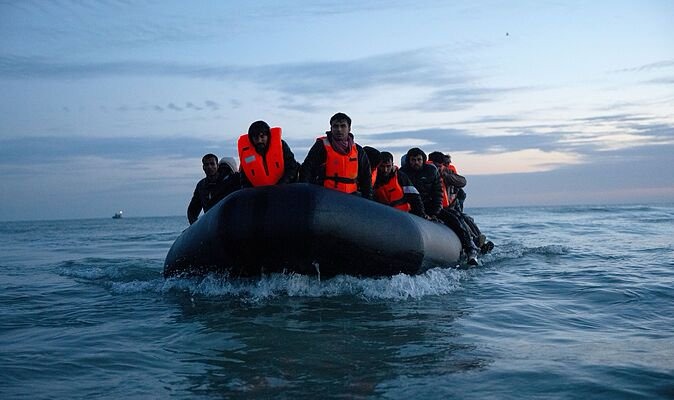
Such journeys are particularly dangerous because the small inflatable boats used by smugglers are often unsuitable for long trips across busy and unpredictable waters.
Another worrying development is the increasing number of people being packed into individual boats.
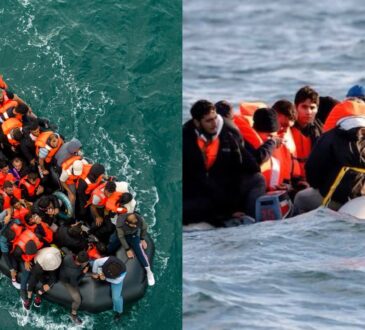
Border officials revealed that some gangs are now using extremely large inflatable boats, sometimes described as “mega-dinghies”, to carry far more passengers than before.
In one particularly alarming case, a boat was found carrying 230 people.
Mr Capps told MPs that the growing size of these boats and the number of passengers being placed inside them are among his biggest concerns.
He described the situation as extraordinary and warned that overcrowding could eventually lead to a major disaster.
According to The Telegraph, Mr Capps said he fears it is only a matter of time before a serious incident involving a large number of deaths happens in the English Channel.
He expressed surprise that such a disaster had not already occurred, considering the dangerous conditions and the number of people being transported in overcrowded boats.
His warning comes after several deadly incidents involving migrants attempting to reach Britain.
More than 50 people reportedly lost their lives while trying to cross the Channel in 2024 alone.
One of the worst tragedies happened in November 2021, when an overcrowded inflatable boat sank off the French coast, killing at least 30 people.
The deaths highlighted the serious dangers faced by migrants who place their lives in the hands of criminal gangs promising to take them to Britain.
Although the latest figures suggest that fewer migrants are successfully reaching the UK by small boats, the growing number waiting in France shows that the pressure on both countries has not disappeared.
Instead, the situation appears to be changing, with more migrants waiting longer, smugglers reducing their prices and criminal networks looking for new ways to avoid police.
British authorities say they will continue working with French law enforcement agencies to arrest suspected smugglers, seize their equipment and prevent dangerous crossings.
For now, the sharp fall in smuggling prices, the growing migrant camps and the increasing use of overcrowded boats show how the Channel migration situation is developing.
Officials believe the pressure on criminal gangs is producing results, but they have also made it clear that preventing another major tragedy at sea remains an urgent concern.