Donald Trump says this fraud should disqualify political candidates. Probe finds he committed it

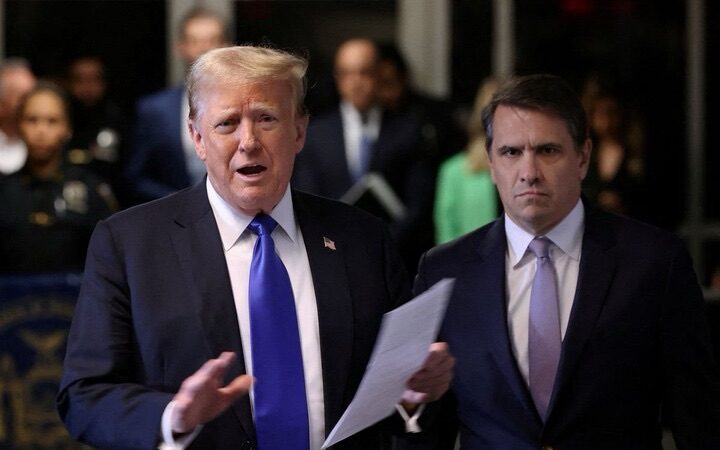
For several months now, people in Donald Trump’s administration have been accusing their political opponents of committing mortgage fraud, especially in cases where someone claims more than one home as their main residence. Trump has spoken very strongly about this, calling one opponent dishonest and possibly criminal, and even labeling another as “crooked” on his social media platform. He also pushed the attorney general to take action against people he believes have done this.
But records from years ago show that Trump himself once did something very similar to what he is now criticizing.
Back in 1993, Trump signed a mortgage for a house in Palm Beach, Florida, stating that it would be his main home. Then, just seven weeks later, he took out another mortgage on a nearby property, also claiming that this second home would be his main residence too. Both houses were close to his well-known Mar-a-Lago estate.
However, there is no clear evidence that Trump ever actually lived in either of those homes. At the time, he was mainly based in New York, and reports suggest that both properties were used as rental investments instead. In fact, his real estate agent at the time told a local newspaper that Trump planned to decorate the homes nicely and rent them out every year. Another person who later managed rentals for the properties also confirmed that they were always meant to be rented and that Trump never lived there.
Experts in mortgage law looked at these records and found the situation quite ironic. They explained that having more than one mortgage listed as a primary residence is not always illegal and is rarely prosecuted. Sometimes it happens for valid reasons, like when someone is moving for work, or even due to simple paperwork errors. What really matters in proving fraud is whether the person intended to deceive the lender.
Still, these experts pointed out that Trump’s case appears to go beyond the standard that his own administration is now using to accuse others. One law professor even said that based on Trump’s current stance, he would have to hold himself to the same standard he is applying to others.
The reason this issue matters is because mortgages for a main home usually come with better benefits, like lower interest rates, compared to loans for second homes or rental properties. That’s why lenders care about how a property is classified.
More recently, officials in Trump’s administration have taken a much stricter view. The head of the Federal Housing Finance Agency has said that claiming two main residences is not appropriate and could be referred for criminal investigation.
When a reporter asked Trump directly about his own past mortgages in Florida, he ended the conversation abruptly. The White House later responded by saying that both loans were from the same lender and argued that it would not make sense for a lender to allow fraud against itself. They also dismissed the report as an attempt by the media to attack Trump and insisted that he has never broken the law.
At the time Trump bought those properties, he was going through financial struggles linked to problems with his casinos and hotels. Around that same period, he was also making big personal and business moves, including getting married and working to turn Mar-a-Lago into a private club.
The two homes he bought were on the same road, just north of Mar-a-Lago, and the mortgages were taken out within weeks of each other. Both loan agreements included a standard condition stating that he had to move into the property within 60 days and live there for at least a year, unless the lender agreed to something different.
But public records from that time show Trump’s main address as Trump Tower in New York, and there is no sign that he ever moved into those Florida homes. Instead, the properties were advertised for rent in local newspapers, with one of them even listed at one point for $3,000 per day.
Even if there had been any legal issue, it would no longer be actionable today because so much time has passed and the loans have already been paid off.
Interestingly, the situation is very similar to cases the Trump administration has brought against some of his political rivals. For example, New York Attorney General Letitia James was accused of misrepresenting how she would use a property, although she has denied any wrongdoing and her case was dismissed for procedural reasons.
Another example involves Lisa Cook from the Federal Reserve. Trump criticized her for signing two mortgage documents close together that both listed different homes as her main residence. He questioned her judgment and suggested her actions could be criminal.
Trump’s administration has made similar claims against other political figures as well, although they have all denied any wrongdoing. Reports have also suggested that some members of Trump’s own cabinet may have had similar mortgage arrangements.
Despite all this, the head of the housing agency has insisted that their investigations are not politically motivated and that they would look into any case, whether it involves a Republican or a Democrat. So far, however, there have been no known criminal referrals involving Republicans.