Expert Reveals Heartbreaking Reason Why Stopping Illegal Migrants From Crossing to the UK Could Be Very Difficult

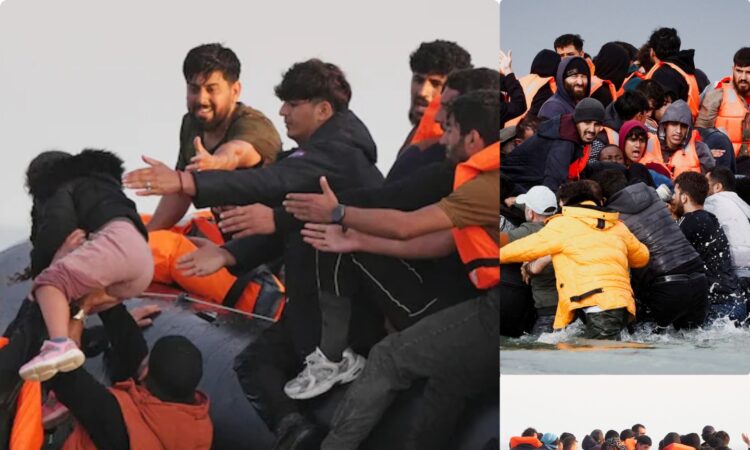
Criminal barrister Audrey Mogan has questioned the Government’s approach to stopping small boat crossings after representing a young asylum seeker who was jailed for helping to steer an overcrowded boat across the English Channel.
Mogan has seen how the Government’s tougher immigration laws are being used inside UK courts. She believes the authorities are prosecuting vulnerable asylum seekers instead of focusing enough attention on the organised smuggling gangs that arrange the dangerous journeys and make money from them.
In August, Mogan represented 19-year-old Chan Mathok Atak, who was sentenced to two years and three months in prison after helping to pilot a huge inflatable boat carrying 165 people to Britain. The crossing, which took place in July, involved one of the largest numbers of migrants seen on a single small boat in recent years.
Atak admitted an offence of endangering the lives of other people at sea. However, Mogan argues that his case shows a serious problem with the Government’s crackdown.
She said there is a large difference between what ministers say the new laws are designed to achieve and the type of people who are actually ending up in court.
According to Mogan, the Government says its main target is the criminal gangs that organise Channel crossings. But she believes many of the people being prosecuted are asylum seekers who were passengers on the boats themselves.
She described these people as the “low hanging fruit”, meaning they are easier for the authorities to identify, arrest and prosecute than the organised criminals operating behind the crossings.
Mogan has represented several migrants accused of offences connected with small boat journeys. She said she has become increasingly worried about the way tougher border laws are being used against individual asylum seekers.
When new legislation was announced in 2025, former home secretary Yvette Cooper said the Government wanted to tackle criminal smuggling and trafficking gangs.
Home Secretary Shabana Mahmood has also spoken strongly against the gangs, saying they have no concern for human life. The Government says its actions are making it more difficult for smugglers to launch boats and forcing criminal networks to change the way they operate.
However, Mogan said what she has witnessed in court does not always match that message.
She believes some people are effectively being prosecuted because of what happened while they were trying to reach Britain and seek asylum.
Mogan argued that instead of reaching the people making large amounts of money from smuggling operations, authorities can more easily prosecute someone who was filmed holding the tiller of a dinghy during a crossing.
She said this risks punishing vulnerable people while those higher up in the smuggling networks remain harder to reach.
After Atak was jailed, border security and asylum minister Anna Turley described him as an “evil criminal”. Mogan strongly disagreed with that description and said language like this can unfairly make asylum seekers appear responsible for the wider small boats crisis.
She described Atak as a small and vulnerable teenager who spent much of their time together crying because he had been unable to speak to his mother.
Mogan said Atak had fled South Sudan, where he faced violence and threats during a serious humanitarian crisis. According to his account, armed groups were trying to recruit young men.
He later travelled to Libya, where Mogan said he was captured and forced to work. After escaping, he travelled through Italy and France before eventually attempting to cross the Channel to Britain.
Mogan believes stories like Atak’s help explain why tougher punishments may not stop people from making dangerous journeys.
She argued that many people who get into overcrowded dinghies believe they have very few other choices.
In her view, one of the biggest problems is the lack of enough safe and legal ways for people outside Britain to seek protection in the UK.
She said people would be less likely to put themselves or their children on dangerous boats if there were more safe routes available to them.
The Government argues that its tougher approach is producing results. Since the new laws came into force in January, around 19,135 people have reportedly arrived in the UK by small boat, representing a significant fall compared with the same period in 2025.
But Mogan believes the figures show that deterrence alone has not solved the problem.
She pointed out that small boat crossings were far less common around a decade ago. Despite increasingly tough immigration laws over recent years, thousands of people are still willing to risk their lives crossing the Channel.
For that reason, she questions whether creating more criminal offences and handing out tougher sentences will stop desperate people from attempting the journey.
Mogan also raised concerns about whether prosecuting asylum seekers in these circumstances is consistent with Britain’s responsibilities towards refugees.
She believes the Government can point to arrests and convictions as evidence that it is taking action, while the deeper reasons behind the crossings remain unresolved.
The Refugee Council has raised similar concerns.
Imran Hussain, the organisation’s executive director of external affairs, said the Government is right to pursue organised people-smuggling gangs, but warned against treating refugees themselves as criminals.
He argued that people fleeing conflicts and oppressive governments can be exploited or pressured by smugglers. Sending those people to prison, he said, will not necessarily damage the business model of the criminal networks organising the crossings.
Instead, Hussain said the focus should be on preventing people from needing to enter dangerous boats in the first place, including providing safe and legal ways for eligible people to seek asylum.
Atak’s case has become an important example in this debate.
The boat he helped steer was carrying 165 people, including 31 children. According to the National Crime Agency, the 14.3-metre inflatable vessel was dangerously overcrowded, had only one working engine and did not have enough suitable life jackets.
The offence Atak admitted was introduced as part of the Government’s tougher approach to Channel crossings.
When the offence was announced, ministers said it was intended to discourage overcrowding and prevent further deaths at sea.
Mogan, however, said the way the law is being used raises difficult questions.
She claimed that some asylum seekers have been prosecuted after simply taking control of the tiller for part of a journey.
According to her, this does not necessarily mean those individuals organised the crossing, collected money from passengers or decided how many people should be placed inside the boat.
In some cases, she said, migrants may be threatened or pressured into steering. In others, someone may take control because the boat is in danger and they believe nobody else is safely steering it.
Mogan said a passenger who grabs the tiller because they fear the boat could capsize should not automatically be treated in the same way as a professional smuggler.
In Atak’s case, she argued that the teenager had no control over how many people were placed on the boat or what safety equipment was available.
She therefore believes prosecuting people in such situations can punish individuals who had little influence over how the journey was organised.
The Government strongly defends its wider strategy.
After Atak was sentenced, Turley said arrests for immigration-related crime were increasing while the number of summer small boat arrivals had fallen to its lowest level since 2020.
The Government has also said joint operations have prevented more than 48,000 attempted crossings and resulted in the seizure of around 1,100 boats and engines since the election.
Ministers argue that these figures show pressure on smuggling networks is working and insist they will continue taking action against dangerous and illegal Channel crossings.
But Mogan believes the debate should focus on a bigger question: who should actually be treated as the criminal?
She argues that there is an important difference between organised smugglers who make money from dangerous journeys and asylum seekers who may briefly steer a boat while trying to reach safety.
For her, simply increasing prosecutions will not solve the small boats crisis unless the Government can successfully target the criminal networks behind the crossings while also addressing why people continue to risk their lives making the journey.