
I visited the little UK village getting 1,250 Asylum Seekers – everyone is asking the same thing

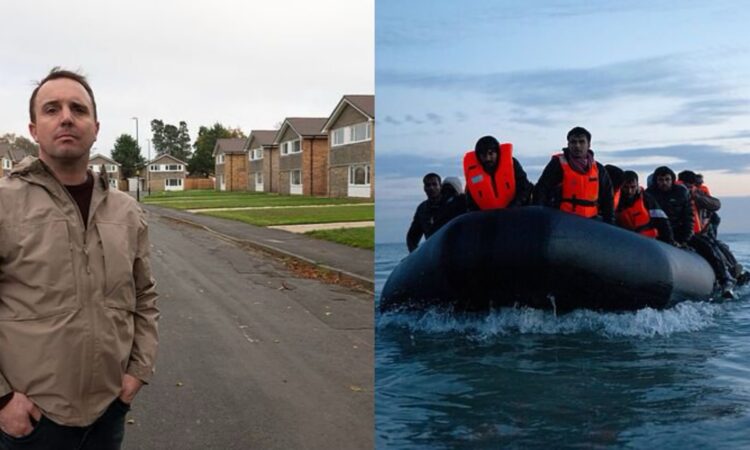
Residents of a quiet village in North Yorkshire are worried about their future after the government announced plans to turn a former military base into accommodation for up to 1,250 asylum seekers.
People living in Linton-on-Ouse say the proposed asylum centre is too close to their homes, and some are already thinking about leaving the village because they are concerned about how the changes could affect their daily lives.
Daily Express reporter Michael Knowles visited the area and spoke to several residents who shared their fears about the government’s plans. According to his report, many villagers are asking themselves the same question: should they stay in their homes or move somewhere else before the asylum centre opens?
During his visit, Knowles discovered just how close the proposed accommodation would be to residential properties. He counted only 20 steps between the pavement beside one family home and the fence surrounding the former military base.
For residents who have lived in the village for many years, the short distance has become a major concern. Some fear they could lose their privacy, while others worry about what might happen to the value of their properties.
One resident reportedly said they were already planning to leave. Others explained that although they would like to move, they were worried they might struggle to find buyers for their homes if the government went ahead with the plans.
The reporter walked around the former military base several times and noticed that some buildings were positioned very close to nearby houses.
One accommodation block overlooked White Rose Close, raising concerns among residents that people staying at the centre could potentially see into their gardens and homes.
A short walk from the entrance of the proposed asylum centre leads directly into a residential area filled with three-bedroom and four-bedroom family houses.
Further along the road is a children’s playground, which also sits close to the military base. According to the report, a small fence separates part of the playground area from the base.
Some parents have expressed concerns about the location, particularly because the playground is one of the few places where children can spend time outdoors in the village.
However, the report did not provide evidence that asylum seekers would pose a danger to children. The concerns described were those raised by local residents about the proposed location and its possible impact on the community.
The reporter also noticed another problem affecting the village. Several houses appeared to be empty, with no curtains or signs that anyone was living inside them.
Some properties had signs advertising them for rent, while others appeared to have been unoccupied for some time.
Residents said the growing number of empty homes was already affecting the village, and they feared the proposed asylum centre could make the situation worse.
Campaigners opposing the plans explained that they were ordinary residents who simply wanted to continue living peacefully in their community.
They argued that the government had failed to properly consider the concerns of people living close to the former military base.
The controversy comes as the government looks for alternative places to accommodate asylum seekers and reduce its dependence on hotels.
Home Secretary Shabana Mahmood has supported the use of larger accommodation sites as part of the government’s approach to dealing with the pressure on the asylum system.
However, critics argue that moving large numbers of asylum seekers into small communities could create additional problems for local residents.
They also question whether spending millions of pounds converting former military buildings would make a significant difference to the wider asylum accommodation situation.
According to the report, the government could spend tens or even hundreds of millions of pounds preparing such sites, while thousands of asylum seekers would still need accommodation elsewhere.
Shadow Home Secretary Chris Philp also criticised the proposal, warning that the number of asylum seekers planned for the site could be twice the population of the village.
His comments have added to concerns among residents who believe the proposed centre would be too large for their small community.
Campaigners also questioned whether the government could realistically continue using similar large sites across the country.
They claimed that dozens of such centres might be needed to accommodate the number of people currently receiving asylum support.
They argued that there were not enough suitable former military bases available and questioned whether the government might eventually consider empty offices, warehouses or other unused buildings.
During the visit, one resident told the Daily Express that he had grown up in Linton-on-Ouse and remembered when the village had a local shop.
He explained that there were not many places for young people to spend their free time, and the shop had once been one of the few places where teenagers could meet.
That shop has since closed, leaving the village with fewer facilities.
Some residents now believe that people staying at the proposed asylum centre might spend time around the children’s playground because there are limited public spaces nearby.
These concerns have added to the growing disagreement between local campaigners and the government.
The reporter also walked with one campaigner from the proposed accommodation site to the village’s primary school, a journey that took around 10 minutes.
During the walk, the campaigner explained that residents wanted the government to properly enforce immigration rules while also considering the needs of local communities.
For many people opposing the plans, the issue is not simply about where asylum seekers should be accommodated. They believe decisions involving large numbers of people should take account of the size of the community, available services and the concerns of those who already live there.
Similar debates have emerged around other locations, including Piddington and Barnham, where proposals involving former military facilities have also attracted attention.
The government faces pressure to find accommodation for asylum seekers while reducing the cost of using hotels and other temporary housing.
At the same time, residents in affected communities want reassurance that their concerns about housing, public services, privacy and local facilities will be properly addressed.
For people living in Linton-on-Ouse, the uncertainty has become one of the biggest problems.
Some residents are considering selling their properties, while others are hoping that public opposition will persuade the government to reconsider its plans.
Those who have spent years building their lives in the village say they do not want to feel forced to leave their homes because of decisions made without sufficient local consultation.
The situation has left many families worried about what the future could look like if the former military base is converted into accommodation for 1,250 asylum seekers.
Although the government sees larger accommodation centres as one possible way to reduce pressure on the asylum system, campaigners in Linton-on-Ouse believe their village should not have to carry such a large responsibility.
For now, residents are continuing to raise their concerns and hoping their voices will be heard before any final changes are made to the area.