Asylum Seeker Told to Leave the UK but Secretly Stayed Behind Because of What He Was Enjoying That He Shouldn’t Have Been Receiving

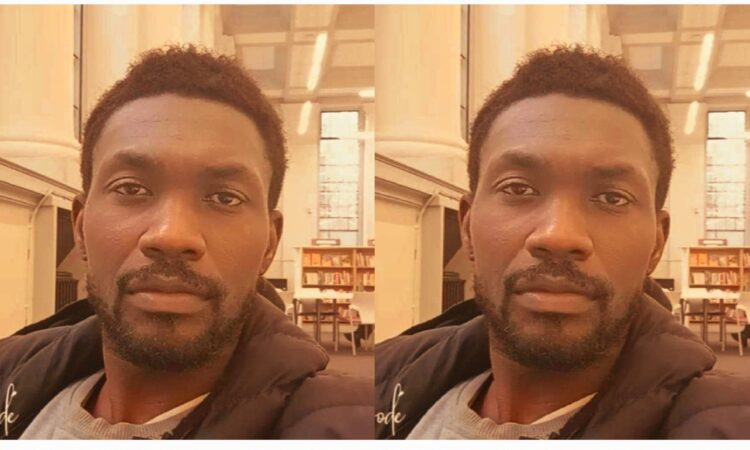
An American asylum seeker who has been living in the UK for more than a year has attracted attention after it was reported that he received around £400 a month in financial support, despite having his asylum application rejected by the Home Office.
Olabode Shoniregun, 27, originally from Las Vegas in the United States, arrived in Britain and applied for asylum in October 2024. He told immigration officials that he feared returning to America because of the treatment he claimed to have experienced because of his race and religious beliefs.
Shoniregun, who described himself as black, Jewish and Mormon, said he had faced persecution in the United States and believed his safety would be at risk if he returned.
After arriving in Britain, he was given accommodation at a Holiday Inn hotel in Wembley, London, where he stayed for several months at taxpayers’ expense while his asylum application was being considered.
However, in June 2025, the Home Office rejected his application. Officials concluded that his claims did not provide sufficient grounds for asylum and informed him that he was expected to leave the country.
According to the report, his asylum and human rights claims were officially described as clearly unfounded under immigration law. This meant he could not appeal the decision from within the UK.
Despite the rejection, Shoniregun remained in Britain and later received further accommodation and financial assistance.
He was reportedly moved into housing in London and given support to cover his daily living expenses. A bank account was also arranged for him, and he began receiving approximately £400.19 each month through arrangements involving Islington Council and St Stephen’s Church in Canonbury.
The money was intended to help him pay for basic needs while he remained in the country.
However, his situation became more complicated in November 2025 when he was removed from his accommodation following reports of aggressive behaviour towards staff. Police were called to deal with the incident.
Following this development, Home Office officials located him on December 10 and offered him an opportunity to return voluntarily to the United States.
Under the voluntary return arrangement, he was offered a flight back to Las Vegas and £1,500 in financial assistance to help him settle after returning home.
The report also revealed that his mother was living in a gated residential community in Las Vegas, in a property estimated to be worth around $500,000.
This detail attracted attention because Shoniregun was receiving public support in Britain while his mother reportedly lived in a relatively expensive property in America. However, the value of his mother’s home does not necessarily mean that he personally has access to her money or property.
Although arrangements were made for him to leave Britain, the journey did not go as planned.
About a week after the voluntary return offer, Shoniregun arrived at Heathrow Airport to travel back to the United States. However, airline staff decided that he was not fit to fly.
As a result, he was unable to board the aircraft, and the planned journey was cancelled.
The report stated that he had handed over his passport but was left in Britain after the flight arrangements failed.
Shoniregun continued to insist that he was afraid of returning permanently to America.
He claimed that police officers in the United States had sexually assaulted him and that he had experienced abuse in several American cities, including Las Vegas, Boston, Reno and parts of Florida.
These were allegations made by Shoniregun, and the report did not establish that the incidents had happened.
He said his experiences had made him fearful of returning to live in the United States and explained that he wanted Britain to provide him with humanitarian protection.
Interestingly, he also said that he would not mind travelling back to America for a visit, provided he was allowed to return to Britain afterwards.
His main concern, according to his own explanation, was being permanently removed from the UK.
Following further unsuccessful attempts to arrange his departure, Shoniregun returned to Islington, where he was treated as homeless.
He was later offered accommodation at a shelter operated by the homelessness charity St Mungo’s.
However, another disagreement reportedly took place, and he was removed from the shelter following a confrontation.
He was subsequently placed in a Premier Inn hotel at public expense. Police were reportedly called again following another incident.
During his time in London, Shoniregun also shared videos of his everyday activities on social media.
Some of the videos reportedly showed him eating at McDonald’s, spending time at Islington library using computers and meeting people around London.
His social media account was later made private.
Speaking to The Telegraph about the financial assistance he had received, Shoniregun thanked British taxpayers for supporting him but made it clear that he believed the amount was not enough.
He said he did not consider £400 a month to be a large amount of money and believed he deserved more financial help.
He also claimed that he had been born in the United Kingdom and questioned why he should not be entitled to benefits.
His comments attracted attention because his asylum application had already been rejected, yet he continued to receive accommodation and other forms of assistance while efforts to return him to the United States remained unsuccessful.
The situation has also raised questions about what happens when an asylum seeker is refused permission to stay in Britain but cannot immediately be removed from the country.
In some circumstances, people who have been refused asylum may continue receiving limited support while arrangements are being made for their departure, particularly when they have nowhere else to stay.
However, the exact type of assistance available depends on their immigration circumstances and the rules governing support.
In Shoniregun’s case, the Home Office maintained that the decision to refuse his asylum application remained in place.
Officials explained that his planned removal had been delayed because airline staff considered him unfit to travel.
A Home Office spokesperson confirmed that the authorities were continuing their efforts to arrange his departure from Britain as soon as possible.
The case highlights the difficulties immigration officials can face when trying to remove someone whose asylum application has been rejected, especially when travel arrangements repeatedly fail.
It also raises wider questions about how much public money may be spent on accommodation and financial support while such cases remain unresolved.
For Shoniregun, however, the main issue remains his desire to continue living in Britain rather than return permanently to the United States.
Despite being offered a flight home and £1,500 in financial assistance, he has continued to express his wish to remain in the UK, where he believes he should receive greater financial support.
As of the report published on January 17, 2026, the Home Office said it was still working to remove him from the country. The report did not establish whether he has since left Britain.