Muslim Organisations Take to the Streets of Britain in Major Marches, Sending a Strong Message to the Government as They Demand Their Concerns Be Heard

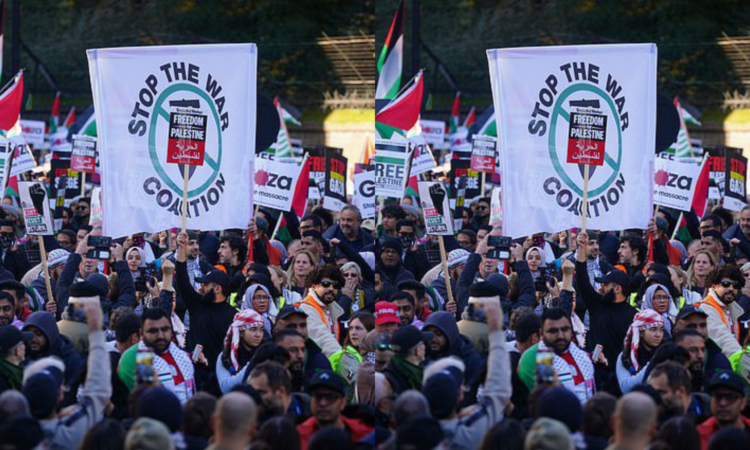
A Muslim organisation that has helped organise major pro-Palestine marches across Britain has been declared a terrorist group in Egypt. However, the organisation is still allowed to operate legally in the UK, raising questions about whether the British Government should take similar action.
The Muslim Association of Britain (MAB) was among 35 organisations added to Egypt’s terrorism list following a decision by the Cairo Criminal Court. Two senior figures connected to the group were also included among 36 people named by Egyptian authorities.
The decision has led to fresh calls for the British Government to investigate the organisation and review its activities.
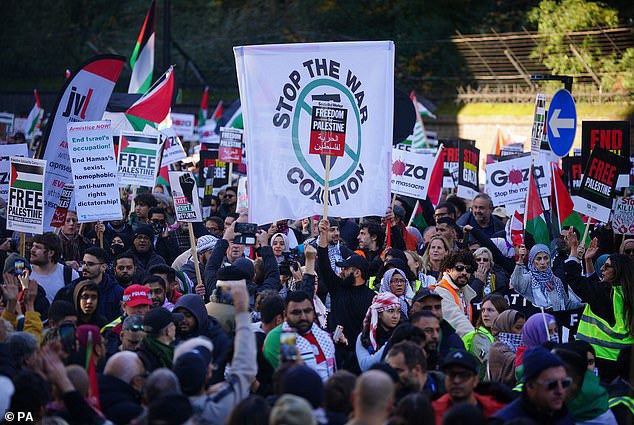
MAB has been involved in organising more than 30 pro-Palestine demonstrations in London and other British cities since Hamas attacked Israel on October 7, 2023.
The group has worked alongside other organisations, including the Stop the War Coalition, to organise marches calling for action over the war in Gaza.
Despite Egypt’s decision, MAB has not been banned in Britain. Being placed on Egypt’s terrorism list does not automatically mean an organisation will face the same restrictions under British law.
Two people named in Egypt’s decision are Dr Anas Altikriti and Ahmed al-Rawi, both of whom have held senior positions within MAB.
Dr Altikriti served as the organisation’s president between 2004 and 2005 and has also been listed as one of its directors.
He previously made controversial comments about the October 7 attacks on Israel, questioning reports of killings and sexual violence and describing the taking of hostages as an important part of resistance.
Ahmed al-Rawi has also faced criticism over comments he made about British soldiers serving in Iraq.
In 2004, he argued that Iraqis had the right to resist foreign military forces occupying their country, including British troops.
He said he preferred peaceful resistance but believed people living under occupation had the right to choose how they responded.
MAB was established in 1997, with Muhammad Kathem Sawalha, a former Hamas leader, among its founders.
Sawalha later settled in Britain and became a British citizen. In 2023, reports revealed that he had purchased a council property in north London after receiving a £112,000 discount through the Right to Buy scheme.
The organisation was also involved in organising a major pro-Palestine march in London on Armistice Day in November 2023.
The timing of that demonstration caused widespread criticism because it took place on a day when Britain remembers members of the armed forces who died in wars.
Some protesters were also accused of displaying antisemitic signs and using offensive language.
Suella Braverman, who was Home Secretary at the time, strongly criticised the demonstration and expressed concern about some of the messages displayed.
Other people connected to MAB have faced controversy over their past statements.
Mohammed Kozbar, a former vice-president of the organisation, previously praised Hamas founder Sheikh Ahmed Yassin during a visit to his grave in 2015.
Kozbar later became an adviser to the Metropolitan Police as part of its work with local communities.
However, the police ended their relationship with him in February 2024 after reviewing a social media post.
Another former senior MAB figure, Azzam Tamimi, previously described himself as a Hamas sympathiser.
Following the London bombings in July 2005, Tamimi said attacks against civilians in Britain were wrong but argued that the situation in Palestine was different because Palestinians were living under occupation.
Egypt’s latest decision also includes the Federation of Islamic Organizations in Europe, an organisation linked to the Muslim Brotherhood and of which MAB was a founding member.
The Muslim Brotherhood itself was also placed on Egypt’s permanent terrorism list a day earlier.
This is not the first time MAB has faced restrictions outside Britain.
In 2014, the United Arab Emirates designated MAB and the Cordoba Foundation as terrorist organisations.
The Cordoba Foundation was established by Dr Altikriti.
Questions about MAB’s activities have also been raised in the British Parliament.
In March 2024, former government minister Michael Gove named the organisation while announcing a new government definition of extremism.
He said the Government had concerns about MAB’s views and its reported links to the Muslim Brotherhood.
Gove explained that organisations suspected of promoting extremism would be examined to determine whether further action was necessary.
MAB has previously denied being associated with the Muslim Brotherhood.
However, a British Government review published in 2015 identified links between MAB, the Cordoba Foundation and the Muslim Brotherhood.
Following Egypt’s latest decision, campaigners have renewed their calls for the UK Government to investigate the organisation.
Alex Hearn, co-director of Labour Against Antisemitism, said the Government should seriously consider taking stronger action against MAB.
He pointed to the organisation’s history, its founders and controversial statements made by people associated with it.
Hearn argued that the Government should not ignore the concerns simply because MAB continues to operate legally in Britain.
Peter Clarke, a former senior counterterrorism officer at Scotland Yard, also commented on Egypt’s decision.
He said British intelligence agencies would likely examine the information that led Egyptian authorities to place MAB on their terrorism list.
According to Clarke, the decision could bring the organisation under closer attention from British security services.
However, he suggested that any action should depend on the evidence available to UK authorities.
The controversy has raised questions about why an organisation designated as a terrorist group in Egypt and the United Arab Emirates remains legally active in Britain.
Critics believe the UK Government should review the group’s activities and decide whether restrictions are necessary.
However, British authorities must make their own assessment under UK law, and a foreign government’s decision does not automatically establish that an organisation has committed terrorism offences in Britain.
The Daily Mail reported that it had contacted both the Muslim Association of Britain and the Home Office for comment.
For now, MAB remains legally active in Britain, while pressure continues to grow on the Government to examine the concerns raised about the organisation.