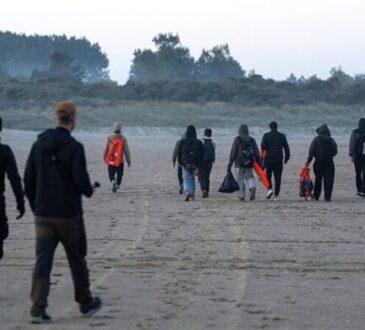
Thousands of Illegal Boat Migrants Arrive on Tiny Island, but What Authorities Have Discovered About the Number of Arrivals Has Left Them Begging for Urgent Help

The leader of Spain’s Canary Islands has made an urgent appeal for help after thousands of migrants arrived on the islands, putting enormous pressure on local authorities and public services.
Fernando Clavijo, the regional leader of the Canary Islands, said the situation had become extremely difficult to manage and warned that the islands could no longer cope with the growing number of arrivals without additional support.
Speaking on X on Wednesday, Clavijo said the Canary Islands were facing a level of migration pressure that had never been experienced in the 32-year history of the Atlantic migration route.
He revealed that he had requested an urgent meeting with European Commission President Ursula von der Leyen, calling on the European Union to take immediate action.
He said it was unfair that the Canary Islands had been left to deal with a humanitarian crisis of such a large scale without enough support from other authorities.
Clavijo also contacted Spain’s Defence Minister, Margarita Robles, asking for military resources to help manage the situation.
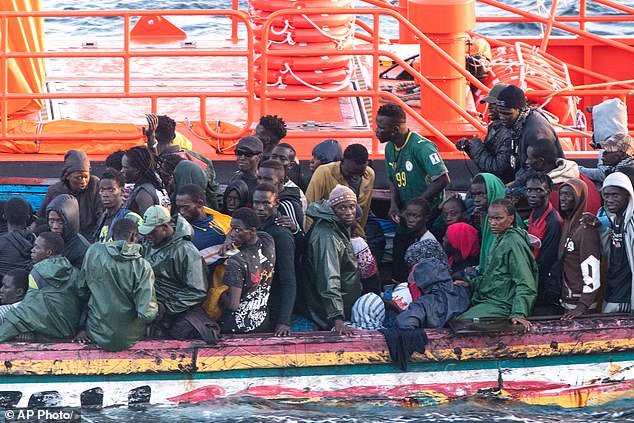
Around 2,000 migrants arrived on the small island of El Hierro on Tuesday alone. Fourteen boats carrying migrants were escorted into the port of La Restinga by rescue services.
El Hierro is home to around 12,000 residents. However, the number of migrants arriving on the island in less than a month has reportedly exceeded its entire local population.
The latest arrivals included nearly 200 women and more than 100 children. Among them was a four-day-old baby who had been born during the dangerous journey across the Atlantic Ocean.
Just days earlier, on November 14, around 1,580 men, women and children arrived in the Canary Islands within 24 hours.
Spain’s Youth Minister, Sira Rego, was expected to visit El Hierro on Thursday to examine how children and teenagers arriving on the island were being received and cared for.
Clavijo described Tuesday as a sadly historic day for the Canary Islands, explaining that the region had never experienced so many arrivals within such a short period.
He said he had held several meetings with senior government officials in Madrid to discuss possible solutions, but many important questions remained unanswered.
He also questioned whether the African countries from which the boats were departing were doing enough to cooperate with Spanish authorities.
The Canary Islands are a popular holiday destination for millions of European tourists because of their warm weather throughout the year. However, they have also become a major entry point for migrants attempting to reach Europe from Africa.
The journey across the Atlantic Ocean is extremely dangerous. Thousands of people have lost their lives over the years while attempting to reach the Spanish islands.
Although the Canary Islands are relatively close to the African coastline, some migrants travel much longer distances to avoid border patrols.
These journeys can last several days or even weeks. Some boats run out of supplies, lose their direction or drift into the open ocean, leaving passengers in life-threatening situations.
The growing number of deaths has also created another heartbreaking problem for local authorities.
Magaly Gonzalez, the acting mayor of El Pinar, a municipality on El Hierro, revealed that burial spaces were becoming increasingly limited because of the number of migrants dying during the crossing.
Speaking to BBC Radio, she explained that the local cemetery had already been expanded two years earlier because there was not enough space to bury those who had lost their lives.
Most of the boats that arrived on Tuesday reportedly departed from Senegal and Gambia.
Despite efforts by the European Union to reduce irregular migration from West Africa, many people continue to risk their lives because they believe travelling to Europe will give them better employment opportunities and living conditions.
Spanish Prime Minister Pedro Sanchez said his government had been working with authorities in Senegal and Gambia to strengthen border controls and prevent more dangerous boat journeys.
However, increased patrols along parts of the West African coastline have reportedly led some migrants to depart from countries further south, making their journeys even longer and more dangerous.
The growing number of arrivals has also sparked a heated political debate across Spain ahead of the country’s general election.
Santiago Abascal, the leader of the right-wing Vox party, described the situation in the Canary Islands as an invasion during a recent speech in Tenerife.
Immigration has become one of the biggest political issues in Spain, alongside corruption, the rising cost of living and difficulties finding affordable housing.
Spanish authorities are also dealing with irregular migration in Ceuta, a Spanish territory in North Africa.
Police recently intercepted a group of 13 migrants who were allegedly attempting to reach mainland Spain by boat. Two suspected members of a people-smuggling organisation were arrested in connection with the incident.
Police said the migrants had paid around €6,500 (£5,440) for the unsuccessful journey.
According to figures from Spain’s Interior Ministry, 24,364 migrants reached the Canary Islands between the beginning of the year and November 15, compared with 14,690 during the same period in 2025.
More than 11,000 of those arrivals were recorded during the first 15 days of November alone.
The situation has become so serious that El Hierro declared an emergency earlier this month as local authorities struggled to manage the increasing number of arrivals.
Regional leaders are now calling on the Spanish government and the European Union to provide additional resources, warning that the small island cannot continue dealing with the situation alone.