UK Town ‘Locked Down’ After Illegal Migrant Arrivals — Angry Locals Say This Is No Longer Democracy Because Of This Shocking Reason

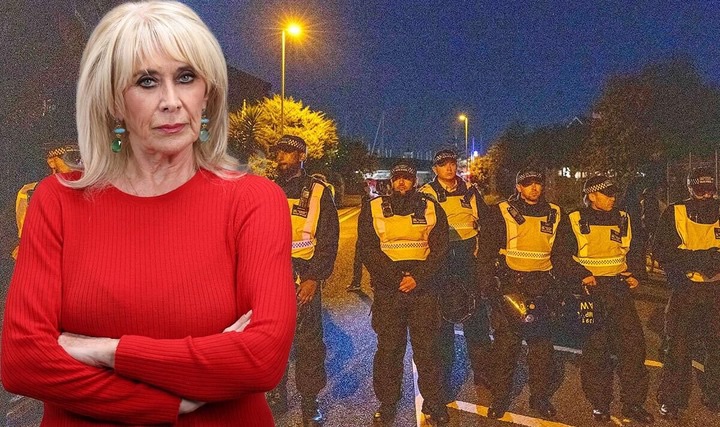
Carole Malone has strongly criticised the police restrictions introduced in Gosport, Hampshire, arguing that local people are being treated unfairly for protesting about migrant arrivals.
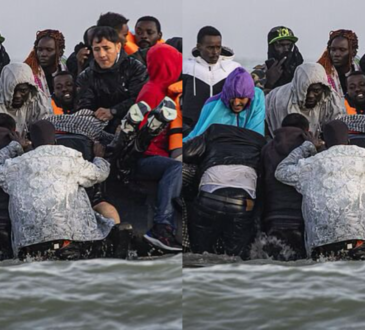
Writing in an opinion piece, Malone said she was angry that residents faced restrictions while around 150 migrants were being moved from the area to processing centres.
She questioned why people living in a quiet coastal town should face limits on where they can gather and protest because of the arrival of migrants who had crossed the English Channel in small boats.
According to Malone, police introduced restrictions after hundreds of people gathered in Gosport to protest following recent migrant arrivals in the area.
Residents were told that protests had to take place in a designated location. Police also warned that people who refused instructions to leave certain areas could be arrested. Restrictions on face coverings were also introduced.
Malone argued that the measures went too far and compared them to the type of restrictions people might expect to see in an authoritarian country rather than Britain.
She said most people involved in the protest were peaceful, although arrests were made and a police officer was reportedly assaulted. Malone condemned the assault but argued that the actions of a small number of people should not be used to judge everyone who attended.
She also pointed out that protesting is a legal and long-established part of British democracy.
In her view, there appears to be a double standard over which demonstrations are tolerated. She compared the response in Gosport with the policing of large pro-Palestinian and other demonstrations that have taken place across Britain.
Malone argued that people should have the right to peacefully express concerns about immigration without automatically being described as racist, hateful or far-right.
She said many residents are frustrated because they believe the Government has failed to control illegal migration while placing increasing restrictions on people who complain about it.
Malone also criticised the amount of police and emergency-service resources used during the migrant operation in Gosport.
She pointed to the number of police vehicles, buses, ambulances and other emergency vehicles involved and questioned why such resources appeared to be readily available when the public is regularly told that emergency services are under pressure.
In her view, this creates a feeling of unfairness among some members of the public, particularly people who have struggled to get a quick police or ambulance response when they needed help.
Malone said many of those protesting in Gosport were ordinary working people and families who were worried about what repeated migrant arrivals could mean for their community.
She argued that their concerns should be heard rather than dismissed simply because immigration is a sensitive subject.
She also raised concerns about crimes committed by some asylum seekers and migrants. However, crimes committed by individuals do not show that migrants as a whole are criminals or dangerous.
Malone nevertheless argued that high-profile criminal cases involving some migrants have increased public fear and anger, especially in communities where asylum seekers are being accommodated or where small boats are arriving.
She also criticised government efforts to provide new arrivals with information about British laws and acceptable behaviour. In her view, the fact that guidance about violence, sexual offences, discrimination and female genital mutilation may be provided raises questions about integration and cultural differences.
Her wider argument is that many British people increasingly believe their own needs are being pushed aside while the Government spends large amounts of money dealing with asylum and immigration.
She said pressures on housing, healthcare, policing and other public services have made that feeling stronger.
For Malone, the situation in Gosport represents something bigger than one protest or one group of migrants arriving on the coast.
She believes it reflects growing frustration over the Government’s handling of the small-boats crisis and a feeling among some members of the public that they are no longer being listened to.
She said people in Gosport should be allowed to peacefully protest if they are unhappy about their town being affected by repeated migrant arrivals.
Malone strongly criticised any suggestion that peaceful protesters should face arrest simply for expressing their concerns.
She argued that Britain should be able to protect its borders while also protecting people’s democratic right to protest.
In her view, trying to control public anger through tough police restrictions will not solve the underlying problem. Instead, she believes it could make people even more frustrated and distrustful of the Government.
Malone concluded that restrictions of this kind should not become normal in Britain.
She described the situation as deeply worrying and argued that the Government should focus on controlling illegal Channel crossings rather than making ordinary residents feel that they cannot speak out about them.
For her, the central issue is simple: people should be able to peacefully question government immigration policy without feeling threatened with arrest or being automatically labelled as extremists.