111 Migrants Who Thought They Could Secretly Make Their Way Into Europe Without Being Caught Were Left Surprised After Authorities Stopped Them in an Unexpected Way

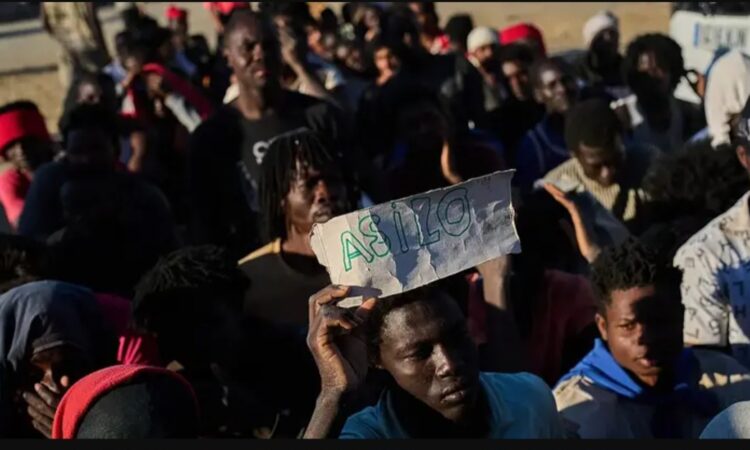
Moroccan authorities have arrested at least 111 people who were allegedly trying to enter Ceuta, the Spanish territory located on the North African coast, following calls on social media for another large group of migrants to head towards the border.
The arrests came as Morocco and Spain increased security around the area because of fears that another mass crossing could take place. Authorities had been watching messages circulating online that encouraged people to gather near the border and try to enter Ceuta together on August 15.
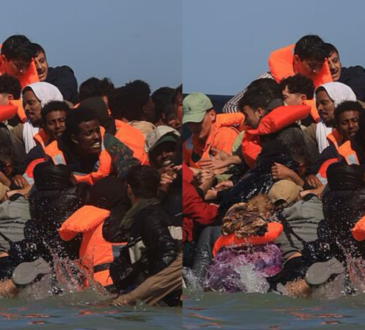
The latest situation came just two weeks after more than 72,000 migrants reportedly surged towards Ceuta in a huge attempt to reach Spanish territory. That incident created chaotic scenes around the border and increased concerns about migration in Spain and across the European Union.
At least 96 people reportedly lost their lives during that earlier attempt to reach European territory. The scale of the crossing also increased political arguments about immigration and border security across Europe.
Following that incident, authorities were determined to prevent similar scenes from happening again.
A Moroccan Interior Ministry official said the latest group detained included 109 migrants from countries in sub-Saharan Africa and two Moroccan citizens. They were arrested in and around Fnideq, a Moroccan city located close to the border with Ceuta.
Security forces were sent into the area in large numbers as authorities tried to stop groups from getting close enough to make another attempt at crossing the border.
Spanish news agency EFE reported that Moroccan police used tear gas to disperse groups of people who had gathered on hills around three kilometres from the border.
The operation involved a large number of security officers. Hundreds of police officers were seen in the area, including riot police and officers wearing ordinary clothes.
Police vehicles were also positioned around important routes leading towards the border.
Moroccan authorities were not only checking areas immediately around Fnideq. Security measures were also introduced much further away in an attempt to stop people from travelling north and joining the planned crossing.
Groups of people were reportedly prevented from boarding buses and trains heading towards northern Morocco from cities including Casablanca, Fez and Kenitra.
However, the increased security did not stop everyone from trying to reach Fnideq.
Witnesses said some migrants from sub-Saharan Africa avoided official checkpoints by travelling through mountain routes instead. This allowed them to continue moving towards the border without using the main roads where police were carrying out checks.
The security operation became so large that local schools in Fnideq were reportedly turned into temporary accommodation for officers who had been sent to the border area.
Moroccan authorities had already warned earlier in the week that they were monitoring messages spreading across social media.
Officials said posts and messages from unknown sources were encouraging people to gather and attempt a mass crossing into Ceuta on August 15.
The authorities warned that people involved in organising or taking part in such an attempt could face prosecution.
Security was also increased around Melilla, Spain’s other territory on the North African coast, as officials tried to make sure people did not simply move their efforts to another border.
During the operation in Fnideq, journalists from Spanish news agency EFE and Spanish state broadcaster TVE were reportedly ordered by Morocco’s Interior Ministry to leave the area immediately.
No explanation was given for why the journalists were told to leave.
On the other side of the border, Spain was also taking major steps to prevent another large crossing.
Spanish soldiers were deployed around supermarkets in Ceuta, while heavily armed police officers patrolled some of the city’s main roads.
The atmosphere in Ceuta was reportedly much quieter than during the chaotic period following the July 30 crossing, but the large security presence showed that authorities remained concerned about the possibility of another attempt.
Spain has also put a maritime barrier in place to make it more difficult for people to reach Ceuta through the sea.
More than 500 additional police officers were sent from mainland Spain to strengthen security in the territory. This brought the total number of security personnel in Ceuta to more than 1,600.
Spanish Interior Minister Fernando Grande-Marlaska said the extra officers would remain for as long as necessary.
He said the government would continue providing whatever security personnel were required to bring the situation back to normal and prevent another incident like the one that happened on July 30.
Despite the increased security, thousands of migrants who entered during the earlier crossing were still inside Ceuta.
Grande-Marlaska said around 5,000 migrants remained in the territory.
Some were seen living in difficult conditions because of the extremely hot weather. Hundreds reportedly sheltered from the heat underneath temporary structures made from bamboo along El Trampolin beach.
Spanish authorities have made clear that entering Ceuta irregularly does not automatically mean someone will be allowed to remain there or continue travelling into mainland Spain.
Grande-Marlaska said people who entered irregularly would generally not be allowed to remain in Ceuta, move to mainland Spain or receive legal status.
There could be exceptions in a small number of cases involving people considered to be extremely vulnerable.
Those who have no legal right to stay could eventually be returned to Morocco.
The situation has left many migrants who successfully reached Ceuta uncertain about what will happen to them.
Some of those who made the earlier journey have now warned others about how dangerous and difficult the experience can be.
Among them is 22-year-old Driss Sadik from Fez.
Sadik said he reached Ceuta after swimming for around five hours. Although he successfully made it across, he warned other people thinking about attempting the same journey not to do it.
He said people considering the crossing should understand that they could face serious suffering along the way.
His warning showed that successfully getting across the border does not necessarily mean the difficulties are over.
Another young migrant, 17-year-old Adil Jamil, also spoke about the situation.
He warned that people who manage to enter Ceuta might not get what they were hoping for. He said that as more people arrive, it becomes increasingly difficult for authorities to find a solution for everyone.
Jamil also explained how some of the mass crossings are organised.
According to him, people choose a particular date and then gather in Fnideq before attempting to cross together.
The idea is that moving in very large numbers could give people a better chance of getting through the border than attempting the journey individually.
However, the method also carries serious risks, particularly when thousands of people gather in one area and attempt to cross at the same time.
Despite those dangers, Jamil explained why some young people are still prepared to take the risk.
He said he felt that remaining where he was offered little hope for his future. From his point of view, risking the dangerous journey and reaching Europe gave him a chance to try to build a different life.
The experiences of the young migrants show the difficult situation facing people who are prepared to risk their lives in an attempt to reach European territory.
At the same time, Spain and Morocco are facing growing pressure to control the border and prevent another deadly mass crossing.
The latest arrests of at least 111 people show how seriously authorities are treating calls for new attempts.
Police checkpoints, riot officers, road controls and additional Spanish security forces have all been put in place as both countries try to stop another huge movement towards Ceuta.
Authorities are also paying close attention to social media because messages posted online can quickly encourage large numbers of people from different areas to travel towards the same border point.
For now, the border around Ceuta remains under heavy security, while thousands of migrants already inside the Spanish territory face uncertainty about their future.
The events have also shown that even after the deaths reported during the previous crossing, some people are still prepared to make dangerous journeys in the hope of reaching European soil, while authorities on both sides of the border are increasing their efforts to prevent another mass attempt.