Trump Fumes at Reporter for Basic Question, But She Corners Him, Flips His Go-To Power Move on Him -Then He Completely Unravels When She Refuses to Back Down

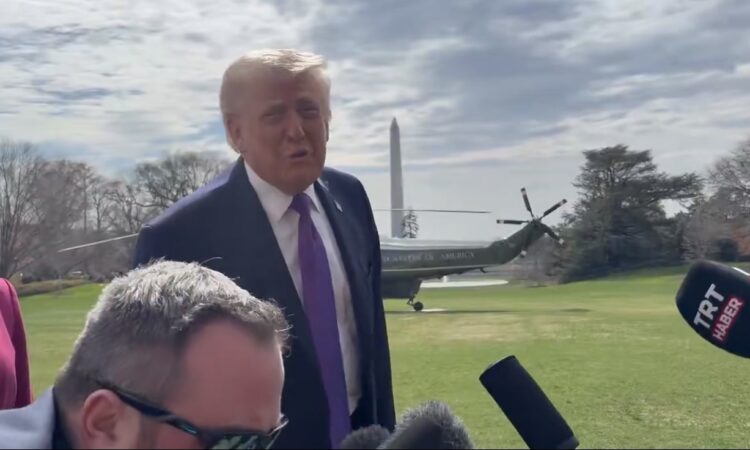
President Donald Trump has often been described as someone who never lets go of a grievance once he believes he has been treated unfairly. When he feels wronged, he tends to hold on to the issue and bring it up again and again. Over the years he has repeatedly attacked political opponents, journalists, immigrants, and even people within his own party. His list of complaints seems endless, but nothing has remained as central to him as the 2020 presidential election, which he still insists was taken from him.
Trump continues to say that the election was “stolen,” repeating the claim many times despite the fact that courts across the United States rejected allegations of widespread voter fraud. Numerous legal challenges were filed after the election, but judges at different levels, including the U.S. Supreme Court, dismissed those claims due to lack of evidence. Even so, Trump has never stopped arguing that the results were illegitimate.
His attempts to remain in power after the 2020 election became one of the most dramatic political episodes in modern American history. On January 6, 2021, a violent mob of his supporters stormed the U.S. Capitol while Congress was in the process of certifying Joe Biden’s victory. The riot temporarily halted the certification process and shocked the country. Critics say Trump’s words and actions in the weeks leading up to that day helped fuel the anger that led to the attack.
Trump also personally pressured officials in several states where the election was closely contested. In Georgia, he famously asked state officials to “find” more than 11,000 votes, which would have been enough to overturn Biden’s victory in that state. Recordings of the conversation later became widely known and sparked strong criticism from both Democrats and some Republicans.
In addition to that, some of Trump’s allies in key swing states attempted to create alternate groups of Electoral College electors. The plan, according to investigators, was meant to challenge the official election results and potentially keep Trump in power. However, these efforts ultimately failed and Biden was sworn in as president.
Even years later, the controversy surrounding the 2020 election continues to surface in public discussions. Recently, Arizona Attorney General Kris Mayes said that the Department of Homeland Security’s investigative unit had opened a probe related to the state’s 2020 election outcome. According to reports, officials were looking into certain election records, although Mayes herself appeared skeptical about the seriousness of the investigation.
On the same day the news broke, Trump was speaking to reporters as he headed toward the Marine One helicopter. Among the reporters was PBS White House correspondent Liz Landers, who asked him about the seizure of election records in Arizona.
“Sir, in Arizona, why did the FBI seize election records in that state?” Landers asked.
Trump quickly responded by suggesting the reason was obvious. “Well, they probably thought the election was rigged, right?” he said, sounding irritated.
But Landers pushed back and told him directly that the election had not been proven to be rigged. Trump reacted angrily and challenged her, asking who told her that and how she knew.
Landers continued pressing the issue. She reminded Trump that his own attorney general at the time had publicly stated that there was no evidence of widespread voter fraud that could have changed the outcome of the election.
Trump dismissed the comment and insisted that he believed the election had been rigged. When Landers asked him again to provide evidence, the exchange became heated. Trump called her a “rotten reporter,” while she continued asking him where the proof was.
The tense exchange quickly spread across social media, where many users criticized Trump for the way he handled the questioning. Some people said it showed a lack of professionalism and respect toward journalists. Others pointed out that Trump often responds with insults when reporters ask questions he does not like.
One social media user commented that Trump frequently calls reporters “rotten” or other names, especially when they challenge him publicly. The user added that this kind of behavior, particularly toward female reporters, does not make him appear strong but rather defensive.
Trump has a long history of clashing with journalists. In the past he has insulted several reporters during press events or on social media. For example, he once told Bloomberg reporter Catherine Lucey to be quiet during a press exchange. He also criticized New York Times reporter Katie Rogers with harsh personal remarks. CNN’s Kaitlan Collins has also faced repeated attacks from Trump during both his presidency and afterward.
Another person online pointed out that Trump often has aides standing close by when he speaks with the media, suggesting that the presence of staff may influence how those interactions unfold. Some critics said reporters should push back more strongly during such moments instead of letting heated comments go unanswered.
Meanwhile, Arizona Attorney General Mayes said she was willing to provide election records if investigators requested them. However, she also described the renewed investigation into the 2020 election as “unserious,” suggesting she did not believe it would uncover anything significant.
A similar situation has unfolded in Fulton County, Georgia. Earlier this year, the FBI seized certain voting records from the 2020 election there as part of an unusual move that surprised local officials. Authorities in the county have asked a judge to order the return of those records, arguing that federal agents did not have a legitimate reason or probable cause to take them.
Despite years having passed since the election, the political and legal battles surrounding it continue to resurface. Trump’s refusal to accept the results remains a central part of his public messaging, and it continues to spark heated debates between supporters, critics, politicians, and journalists across the country.