Judges done giving Donald Trump DOJ benefit of the doubt after massive errors caught

A surprising detail in a recent report by Bloomberg gives a deeper look into why the U.S. Department of Justice has been making a growing number of mistakes in federal court.
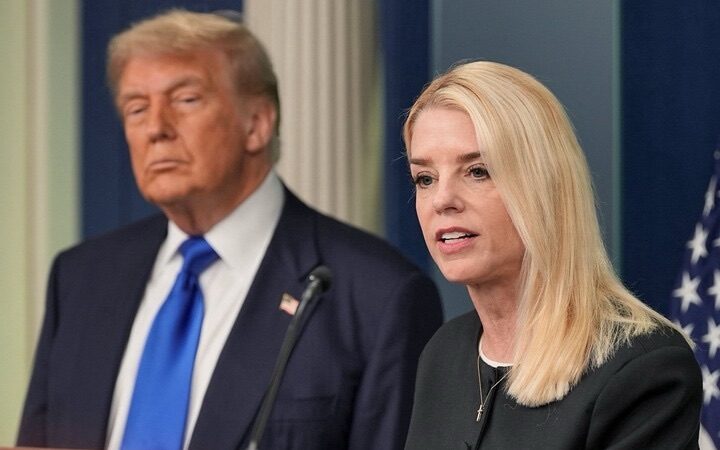
At the center of it is a decision by Pam Bondi, who reportedly told government lawyers to treat the president as their direct client. That one shift appears to have quietly changed how many lawyers inside the department do their jobs.
In a memo from February 2025, Bondi told DOJ attorneys to strongly defend the policies of Donald Trump and described them as “his” lawyers. On the surface, that may sound like a call for loyalty, but insiders say it has had a deeper effect.
Lawyers are now said to feel that questioning information from federal agencies, or even asking basic follow-up questions, could be seen as going against the president himself. Because of that, many have become more cautious, choosing to accept what they are given instead of double-checking it carefully.
Over time, this has started to show in very real ways inside courtrooms. In March alone, there were several incidents that raised concerns. DOJ lawyers admitted they had used incorrect information while trying to defend migrant arrests in Manhattan.
In another case in Rhode Island, they gave wrong statements about voter records during a hearing. In Washington state, they even missed an important legal deadline simply because they were not familiar enough with local court procedures. These are not small slip-ups—they are the kind of errors that can weaken cases and damage the government’s credibility.
Judges have started to take notice. A federal judge in Manhattan has already ordered the government to keep all internal communications related to one of the cases.
This kind of order is often a warning sign that the court is seriously considering whether misconduct or negligence took place. It also opens the door for possible sanctions, which could further damage the department’s reputation. At the same time, migrant support groups are now actively trying to gather evidence to understand exactly what went wrong and whether these mistakes had a real impact on people’s lives.
Former officials are also raising alarms. Stacey Young, who once held a senior role at the DOJ, said the situation has shifted from a normal level of trust in the department to what she described as “deep skepticism.
In simple terms, where courts and observers once assumed the DOJ was getting things right, they are now starting to question its accuracy more often. She pointed out that it is extremely unusual to see this many corrections and misstatements coming from a department that is supposed to set the standard for legal precision.
Another major factor behind the problem is staffing. The department reportedly lost about a quarter of its lawyers in the past year. That kind of loss puts huge pressure on those who remain.
Many are now handling heavier workloads, dealing with more cases than before, and trying to keep up with complex legal demands under tight deadlines. When people are stretched that thin, mistakes become more likely. On top of that, sources say the current environment makes lawyers less willing to speak up, even when they notice something might be wrong.
Philip Pro, who was appointed by Ronald Reagan, did not hold back in his assessment. He said these kinds of repeated errors do more than just affect individual cases they slowly weaken trust in the entire justice system. When courts, lawyers, and the public begin to doubt the accuracy of the government’s legal arguments, it can damage the foundation that the system relies on.
Taken together, the situation paints a picture of a department under pressure, dealing with internal changes, fewer staff, and a culture that may be discouraging open discussion.
What started as a directive to strongly defend the president’s policies may now be contributing to a wider problem one that is playing out in courtrooms and raising serious questions about accountability, accuracy, and trust.