Donald Trump Only Refers To Obama In This Specific Way. Experts Say It’s Telling.

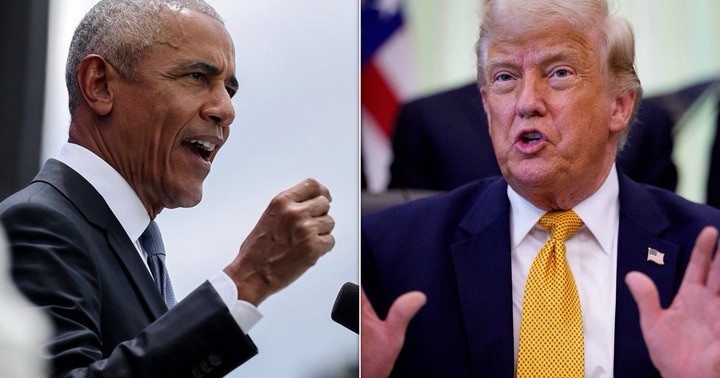
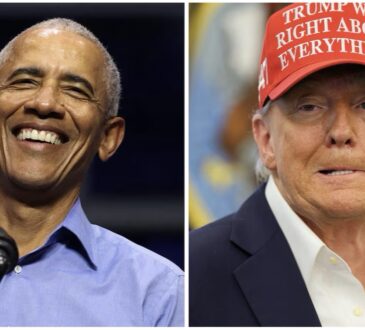
President Donald Trump recently sparked attention after making comments about former President Barack Obama while discussing problems with the Lincoln Memorial Reflecting Pool in Washington, D.C.
The pool, which has recently turned green with algae and has been compared to split pea soup, has faced criticism following renovation work carried out during Trump’s administration. When reporters asked Trump about the project’s costs and ongoing problems, he quickly pointed the finger at previous administrations.
Trump responded by saying, “Barack Hussein Obama. Have you ever heard of him?” before blaming Obama and former President Joe Biden for the current condition of the pool. He argued that earlier administrations had already spent millions of dollars trying to repair the landmark but failed to solve the problems.
According to Trump, Obama spent more than $100 million over two years trying to fix the site. However, public records show that the major renovation completed during Obama’s presidency cost around $34 million, not the much larger amount Trump claimed.
While the debate over the reflecting pool itself drew attention, many people focused on something else: Trump’s continued habit of referring to Barack Obama by his full name, especially emphasizing his middle name, Hussein.
Obama’s middle name is Hussein, a common Arabic name that carries no negative meaning. In fact, the name has a long history and is widely used throughout the Middle East and many Muslim communities around the world.
However, political experts say Trump’s repeated use of Obama’s full name may be sending a message to some of his supporters.
Karrin Vasby Anderson, a professor who studies political communication at Colorado State University, said that while Trump can argue he is simply using Obama’s real name, the context suggests something more.
She explained that Trump’s use of “Barack Hussein Obama” appears designed to trigger certain reactions among some listeners. According to Anderson, research has shown that some conservative voters react differently when Obama’s middle name is emphasized, while many moderates and liberals do not respond the same way.
She pointed out that Trump first gained major political attention years ago by promoting doubts about whether Obama was actually born in the United States. Because of that history, Anderson believes Trump’s continued use of Obama’s middle name is significant and should not be viewed in isolation.
She argued that these comments often appear alongside criticisms or disputed claims about Obama’s presidency, making the choice of words appear intentional rather than accidental.
Another academic, Kari Winter from the University at Buffalo, shared a similar view. She said the repeated emphasis on Obama’s middle name can serve as a signal that encourages negative attitudes toward Muslims, immigrants, or people viewed as outsiders.
Winter explained that throughout history, certain names, accents, and cultural backgrounds have often been portrayed negatively in popular culture, films, and television. As a result, some audiences may develop unconscious biases without even realizing it.
Experts also noted that political communication has changed significantly in recent years. In the past, political messages were often delivered indirectly through what analysts call “dog whistles” — coded language that sends one message to the general public and a different message to a specific audience.
According to Anderson, some communication researchers now argue that modern political rhetoric has moved beyond dog whistles. Instead of using subtle hints, politicians sometimes use much more direct language that openly appeals to certain fears, frustrations, or prejudices.
She said this style of communication is no longer hidden or difficult to recognize. Rather, it is repeated openly and frequently, often without causing significant backlash among core supporters.
Anderson argued that such tactics can be harmful because they encourage people to blame certain groups for society’s problems instead of focusing on facts and constructive solutions. She noted that similar communication methods have been used by political leaders throughout history because they can be effective in mobilizing supporters.
The discussion also highlights how political attitudes within the Republican Party have changed over time.
During Obama’s first presidential campaign, Republican leaders such as Senator John McCain publicly rejected attempts by some political activists to use Obama’s middle name to question his identity, religion, or citizenship. At that time, many party leaders insisted that political disagreements should remain respectful.
Anderson said the fact that similar language continues to be used today shows how much the political environment has evolved over the years.
Experts say responding to this type of rhetoric can be difficult because it has become so common in modern politics. Simply criticizing the speaker may not be enough to change public attitudes.
Instead, Anderson believes society as a whole plays a role in determining what behavior is acceptable from political leaders. She argues that voters, viewers, readers, and social media users all influence political culture through the attention and support they give to public figures.
In her view, meaningful change requires a broader commitment to respectful discussion, fact-based debate, and accountability from leaders across the political spectrum.
Ultimately, the controversy surrounding Trump’s comments is not just about a reflecting pool or even about Barack Obama’s name. It is part of a larger debate about political language, public discourse, and the messages leaders send to their supporters through the words they choose to use.