Muslim Former Green Party Deputy Leader Sends a Serious Warning About the Growing Influence of Islamism in Europe and Reveals What He Believes People Need to Know and Be Prepared For

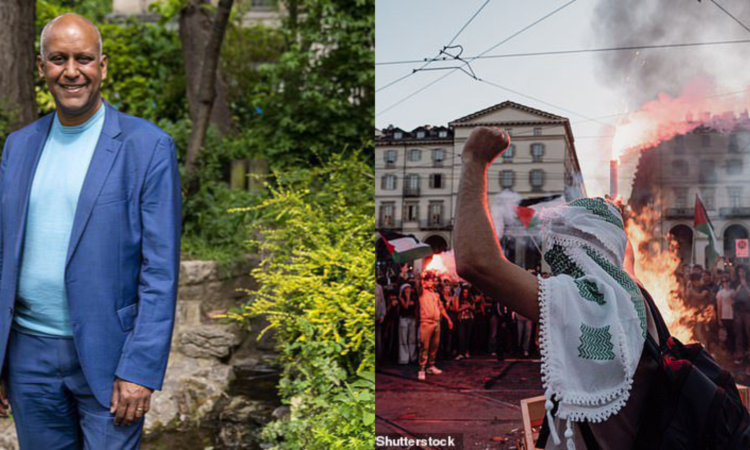
A former deputy leader of the Green Party has warned that some left-wing politicians are failing to understand what he believes is a growing threat from political Islamist groups across Europe.
Dr Shahrar Ali, who served as deputy leader of the Green Party between 2014 and 2016, made the comments after the European Parliament voted in favour of a new resolution aimed at tackling Islamist political influence and the activities of groups linked to the Muslim Brotherhood.
The resolution received strong support from European lawmakers, with 381 voting in favour, 167 voting against and 15 choosing not to vote either way.
The proposal was put forward by the European People’s Party (EPP), a major centre-right political group in Europe.
Speaking to the Daily Mail, Dr Ali criticised some politicians on the Left who opposed the resolution. He accused them of failing to recognise what he considers a serious problem.
According to him, some left-wing politicians do not fully understand the dangers associated with political Islamist movements and the influence such groups could have on European society.
He described their opposition as showing a lack of understanding and accused them of allowing themselves to be used by groups whose political aims they may not fully recognise.
The resolution calls for stronger action against organisations and individuals connected to the Muslim Brotherhood. It also proposes that groups meeting the relevant legal requirements should be considered for inclusion on the European Union’s terrorist list.
Another proposal involves creating an EU-wide list of religious preachers who promote hatred or encourage violence.
However, the European Parliament made an important distinction between Islam as a religion and Islamism as a political ideology.
The resolution explained that Islam itself is not a threat to democracy and that the overwhelming majority of Muslims reject violence against innocent people.
Instead, the concerns raised in the resolution focus on political movements that seek to place their own religious rules above the laws of democratic countries.
Dr Ali, who is himself a Muslim, supported this distinction.
He argued that people should be free to practise their religion, but religious beliefs should not be used to undermine the laws that protect everyone in society.
He also said that protecting democracy means defending equal rights for women, religious freedom and the rights of gay and lesbian people.
According to Dr Ali, these rights should not be weakened because of pressure from religious or political organisations.
He also raised concerns about the growing influence of Sharia councils in Britain.
These councils offer religious advice and help settle certain disputes within Muslim communities, particularly involving marriage and family matters.
Although they do not have the same legal powers as British courts, Dr Ali believes their influence deserves closer examination.
He argued that separate religious systems of authority could sometimes create problems for individual freedom and equality, particularly when women feel pressured to accept decisions made by religious leaders.
He insisted that raising these concerns should not automatically be seen as an attack on Muslims.
Instead, he said the purpose should be to protect a society where people of different religions, backgrounds and beliefs are treated equally under the law.
Dr Ali has previously been involved in disagreements with the Green Party.
In February 2022, the party removed him from his position as spokesman for policing and domestic safety after accusing him of breaking its rules.
He later took legal action against the party, arguing that he had been treated unfairly because of his beliefs about biological sex and gender.
The court ruled that the process used to remove him was unfair because the party had not identified any specific breaches of its code of conduct at the time.
He was awarded £9,100 in damages, while the Green Party was ordered to pay £90,000 towards his legal costs.
Dr Ali later launched another legal challenge following his expulsion from the party in September 2024.
Meanwhile, the European Parliament’s resolution has caused serious disagreement among political groups, religious organisations and campaigners.
The European Network Against Racism (ENAR) strongly criticised the decision, describing it as racist and Islamophobic.
The organisation warned that the resolution could increase suspicion towards Muslim communities across Europe.
According to ENAR, the proposals could make ordinary Muslims, Muslim-led charities and organisations fighting discrimination feel unfairly targeted.
The group argued that European institutions should protect equality and religious freedom rather than introduce measures that could make an entire community feel under suspicion.
However, other organisations welcomed the resolution.
Fiyaz Mughal OBE, founder of Faith Matters and co-founder of Tell MAMA, an organisation that monitors anti-Muslim hate incidents in Britain, said the decision was a positive development.
He explained that ordinary Muslim communities should not be confused with political Islamist movements.
According to him, millions of Muslims simply want to live peacefully, work, raise their families and practise their religion without interfering with the rights of others.
He argued that political Islamist extremism is a different issue because it involves movements seeking to change society and government according to their own religious political beliefs.
Mr Mughal said European governments should become more confident in identifying organisations that promote extremism.
He also raised concerns about religious preachers who encourage violence, spread hatred or teach that women should have fewer rights than men.
He said people promoting such beliefs should face greater public scrutiny.
At the same time, Mr Mughal acknowledged that anti-Muslim hatred is also a serious problem.
He argued that governments must deal with both problems rather than ignoring one while concentrating on the other.
The resolution also addresses the wearing of full-face coverings in public places.
It supports national measures restricting clothing such as the niqab and burqa in certain public spaces, arguing that covering the face can create difficulties for security checks and identifying individuals.
Supporters believe such restrictions could help public safety and social integration.
However, critics argue that banning religious clothing could interfere with personal freedom and make Muslim women feel excluded from society.
The proposals have therefore added to an already heated debate about religious freedom, women’s rights and national security across Europe.
The resolution also condemns rising antisemitism and warns against using the conflict between Israel and Palestine to spread hatred against Jewish communities.
European lawmakers have called for stronger action against organisations that promote hatred towards Christians, antisemitism or the mistreatment of women.
They also want the European Commission to examine whether EU funding has been given to organisations suspected of having links to the Muslim Brotherhood or political Islamist networks.
Under the proposals, organisations officially listed as terrorist groups should not receive financial support from European Union funds.
Another expert who commented on the decision was Lorenzo Vidino, director of the programme on extremism at George Washington University.
Speaking to Fox News, he said countries such as France and Austria had been pushing for stronger action against Islamist political influence for several years.
He explained that the vote showed a clear political divide, with many right-wing politicians supporting the resolution while a significant number of left-wing politicians opposed it.
However, he questioned whether the resolution would lead to major changes.
According to him, some organisations accused of promoting Islamist political influence operate through activities that may be legal when examined separately, making their networks difficult to investigate.
He also suggested that European governments have generally taken a different approach from the United States when dealing with the Muslim Brotherhood.
French politician Céline Imart, who helped bring forward the resolution, celebrated the result.
She described it as an important moment for Europe because lawmakers had formally voted on measures specifically addressing Islamist political influence and the Muslim Brotherhood.
She said the vote was only the beginning and called on European institutions to take further action.
Ms Imart also criticised politicians who refused to support the proposal, arguing that the issue should be taken seriously because of its possible impact on European societies and future generations.
Despite the strong support in Parliament, the resolution does not mean all the proposed measures will immediately become law.
Further decisions and legal steps would be needed before many of the proposals could be introduced.
For now, the vote has sparked a major debate across Europe, with supporters arguing that stronger measures are needed to protect democracy and public safety, while opponents warn that the proposals could increase discrimination against Muslims.