Angela Rayner Makes Big Promise to Homeless People Sleeping on UK Streets Before Christmas, but Says There Is One Thing the Government Cannot Force Them to Do

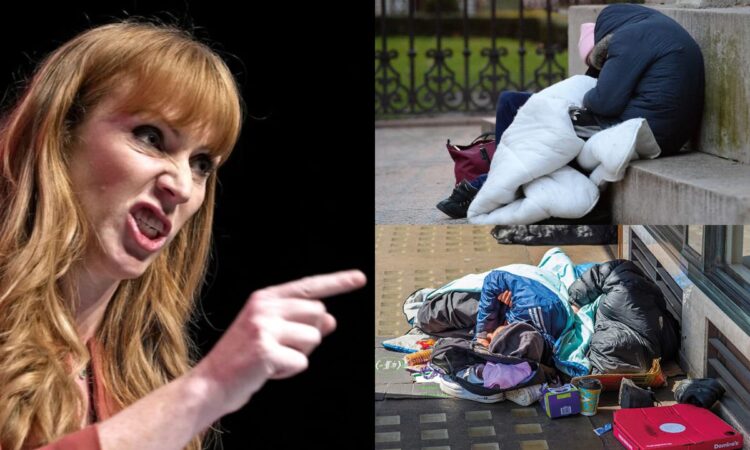
Housing and Communities Secretary Angela Rayner has promised that people sleeping on the streets across Britain will be offered somewhere safe and warm to stay before Christmas.
However, she made it clear that the government cannot force homeless people to accept accommodation if they do not want to leave the streets.
The government has announced plans to spend hundreds of millions of pounds to help people who have nowhere to live. The money will be used to provide emergency accommodation, support services and other help for those struggling with homelessness.
Under the new plans, an additional £432 million will be made available to tackle rough sleeping, bringing the total amount of government funding to £874 million.
The programme is expected to continue until 2029, giving councils, charities and other organisations more time and resources to help people who are sleeping outside.
Angela Rayner explained that although the government wants everyone to have somewhere to stay before Christmas, some homeless people may refuse the help being offered.
She said there are different reasons why someone might choose to remain on the streets, even when accommodation is available.
Some people may be struggling with mental health problems, drug or alcohol addiction, anxiety or other personal difficulties that make it hard for them to accept help.
According to Rayner, the government’s responsibility is to keep reaching out to these people, understand their problems and find ways to support them.
She explained that officials cannot simply pick people up from the streets and force them into accommodation against their wishes.
Instead, the government wants councils and support workers to continue speaking with homeless people and encourage them to accept somewhere safe to live.
Rayner also praised Greater Manchester Mayor Andy Burnham for his efforts to reduce homelessness in the region.
She pointed to Burnham’s A Bed Every Night programme, which was introduced to provide emergency accommodation and support for people sleeping rough.
The programme helped reduce the number of people sleeping on the streets in Greater Manchester, although the figures have started rising again.
Rayner suggested that one of the problems was that Manchester had been offering support that was not available in the same way across other parts of the country.
As a result, some homeless people travelled to Manchester because they believed they had a better chance of receiving help there.
She said the government now wants to introduce a stronger national approach so people can receive support wherever they are in England.
Greater Manchester has already received nearly £17 million from an earlier £442 million funding package to tackle rough sleeping.
However, it is not yet clear how much more money the region will receive from the latest announcement.
Rayner explained that providing money for only a short period can make it difficult for councils and charities to plan ahead.
She said the government had listened to these concerns and decided to provide additional funding that would allow organisations to make longer-term plans.
The housing secretary also stressed that the government’s aim is not simply to move homeless people indoors for Christmas and then leave them without help afterwards.
She said the bigger goal is to provide lasting support that will help people rebuild their lives and avoid returning to the streets.
As part of these efforts, the Prime Minister hosted a meeting at Downing Street, bringing together charities, businesses and local leaders to discuss how homelessness can be reduced.
Several major organisations attended the meeting and agreed to support the government’s plans.
The National Housing Federation said it would work with housing associations to identify at least 2,000 possible homes and bedspaces for people who need accommodation.
Beauty company L’Oréal also announced plans to work with homelessness charities St Mungo’s and Haircuts4Homeless to provide support through a social salon partnership.
Virgin Media O2 promised to provide digital support to organisations helping people who are sleeping rough.
Other organisations involved in the discussions included the Salvation Army, Ikea, the Morrisons Foundation and Comic Relief.
The government hopes that bringing these organisations together will make it easier to provide accommodation and other services to people who need help.
Meanwhile, homelessness charity Crisis has warned that the problem cannot be solved by simply giving people somewhere to sleep during the Christmas period.
Matt Downie, the charity’s chief executive, said homelessness remains a serious problem in Britain and more needs to be done to protect vulnerable people.
He pointed out that people experiencing homelessness often die much younger than the general population.
According to figures he highlighted, the average age of death among people experiencing homelessness is just 43 for women and 47 for men.
Downie said helping people leave the streets permanently could save lives, especially when accommodation is combined with healthcare, personal support and opportunities to rebuild their future.
He believes the government must make sure homeless people receive help not only during the winter months but also throughout the years ahead.
For now, the government’s promise means that people sleeping rough should be offered somewhere indoors before Christmas, although accepting that offer will remain their choice.
The challenge will be making sure enough accommodation is available and that people who accept help receive the support they need to avoid becoming homeless again.