Nigel Farage rages over ‘outrageous cover up’ on migrant crime – reveals a bombshell

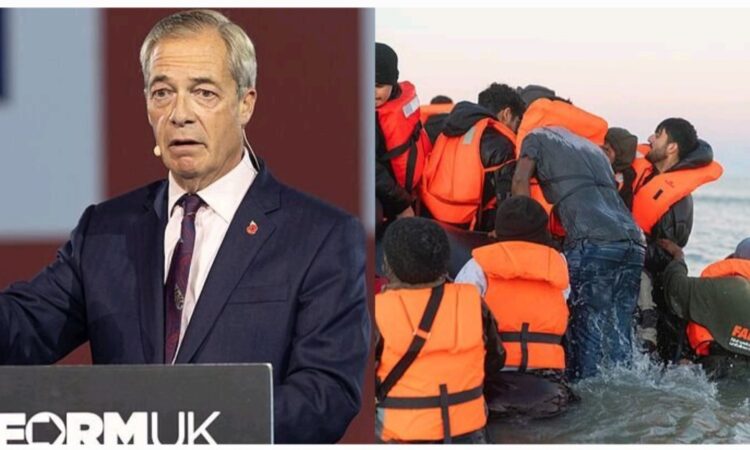
Nigel Farage has accused the Labour Government of hiding important information about crimes committed by migrants in Britain after officials refused to release new figures showing how many foreign nationals were convicted of crimes last year.
The Reform UK leader described the decision as an “outrageous cover-up” and questioned why the Government was refusing to make the information public.
The controversy began after the Centre for Migration Control requested figures showing the number of criminal convictions recorded in 2025, including the nationalities of those convicted and the types of offences they committed.
However, the Ministry of Justice rejected the request, arguing that releasing the information could make it possible to identify some of the people involved and put their personal privacy at risk.
Farage reacted angrily to the decision, accusing Labour of deliberately keeping the information away from the British public.
He said the Government had blocked the release of the 2025 figures while also spending taxpayers’ money fighting an earlier order to publish similar information covering 2018 to 2024.
Farage questioned what the Government was trying to hide and insisted that the public deserved to know the truth.
The latest disagreement follows an earlier ruling by the Information Commissioner’s Office, which ordered the Government to release information about crimes committed by migrants between 2018 and 2024.
Despite that ruling, the Ministry of Justice refused to publish the figures, initially arguing that gathering and releasing the information would be too expensive.
Officials later raised concerns about privacy, saying that publishing detailed information could make it possible to identify certain individuals.
Former Justice Secretary David Lammy also agreed to take legal action to challenge the Information Commissioner’s decision.
The disagreement became even more serious over the weekend when the Ministry of Justice rejected another request for the figures.
An official from the department’s Analysis Directorate explained that protecting the personal information of those involved was considered more important than the public interest in releasing the data.
The decision has angered campaigners who believe the Government should be more open about the number of foreign nationals being convicted of crimes in Britain.
Robert Bates, from the Centre for Migration Control, strongly criticised the refusal.
He argued that the Government was putting the privacy rights of foreign criminals ahead of the safety and interests of British people.
According to Bates, members of the public have a right to understand how migration affects crime and public safety.
He also suggested that the Government’s efforts to prevent the release of the figures raised serious questions about whether ministers were trying to avoid public criticism.
Bates claimed that the lengths officials were going to in order to keep the information private suggested they might be more worried about the public discovering a problem than taking action to address it.
However, the Government maintains that its decision is based on protecting personal information rather than hiding criminal activity.
The controversy comes at a time when Labour is already facing criticism over its handling of immigration, deportations and foreign criminals living in Britain.
A previous Sunday Express investigation claimed that the Government’s controversial one-in-one-out migrant agreement with France had contributed to a shortage of spaces in immigration detention centres.
Under the agreement, some migrants who arrive in Britain by small boat can be returned to France, while the UK accepts an agreed number of eligible migrants through a legal route.
According to the newspaper’s investigation, the pressure to make the arrangement work affected the availability of detention spaces.
Border Force insiders reportedly warned that the situation had resulted in more foreign criminals being released into British communities while waiting for immigration decisions or deportation.
They claimed that some of those released included people convicted of extremely serious crimes, including murder and rape.
The insiders warned that allowing dangerous offenders to remain in the community could put families at greater risk.
However, the Home Office strongly rejected the suggestion that detention shortages were responsible for decisions to release foreign offenders.
Officials insisted that decisions about whether someone should be granted immigration bail were not based on the number of available detention spaces.
Despite that response, further concerns emerged after the independent borders watchdog examined the Government’s immigration arrangements.
The watchdog confirmed that the agreement with France had been given such a high priority within the Home Office that it had limited some immigration enforcement activities.
This finding added to criticism from those who believe the Government is focusing too heavily on its migrant agreement with France while other immigration enforcement work is being affected.
The wider debate has also raised questions about the thousands of foreign criminals who remain in Britain despite being eligible for deportation.
According to Home Office figures cited in the report, 21,294 convicted foreign offenders were living in the community because they had not been deported.
The number has caused concern among campaigners and politicians who believe foreign criminals should be removed from the country more quickly.
Officials linked the sharp increase to changes in sentencing arrangements, although the Government insists it is taking stronger action to remove foreign offenders.
The Ministry of Justice defended its record, saying deporting foreign criminals remains a major priority.
According to the department, nearly 12,000 foreign national offenders have been removed from Britain since July 2024.
It said this represented a 41% increase and showed that the Government was making progress in removing foreign offenders.
The department also said changes to the law now allow foreign prisoners to be deported earlier than was previously possible.
Ministers argue that these measures demonstrate their commitment to tackling foreign criminality and protecting the public.
However, Farage and other critics remain unconvinced, arguing that the Government should release the requested conviction figures so people can see the information for themselves.
The dispute has now become part of a wider political argument over immigration, crime, public safety and government transparency.
For Farage, the refusal to release the figures raises questions about what ministers are willing to tell the public.
For the Ministry of Justice, the central issue is whether publishing detailed conviction information could breach the privacy rights of individuals.
As the disagreement continues, pressure is growing on the Government to explain why the information cannot be released in a way that protects personal identities while still allowing the public to understand the figures.
For now, the requested figures remain unpublished, leaving the Government and its critics divided over how much information about foreign national offenders should be made available to the British public.