Royal Navy Chief Sends Serious Warning to Labour Government Over What Britain Must Do Before It Is Too Late

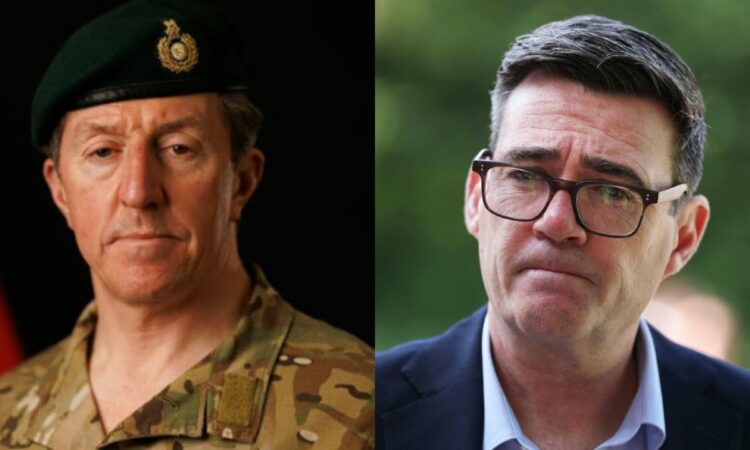
The head of the Royal Navy has sent a serious warning to Britain and other European countries, saying they must prepare for the possibility of war if they want to protect peace.
General Sir Gwyn Jenkins, the First Sea Lord, delivered the warning while speaking at the International Sea Power Conference aboard HMS Prince of Wales in Oslo, Norway.
His message was simple: “Prepare for war if you want peace.”
He warned that Britain must take urgent action to strengthen its Navy and improve its ability to defend the country against growing threats.
“We have set out our vision to rebuild the Royal Navy – now is the time for action,” he said.
His warning has increased pressure on the Labour Government, which is already facing questions about whether Britain is spending enough money on defence.
The Government has promised to increase defence spending to 3% of the country’s economic output, but detailed plans have been delayed until next year’s spending review.
This comes as British officials have warned that the country may need to prepare for the possibility of war within the next 1,000 days. There have also been calls for households to keep essential supplies at home in case of a major emergency.
Critics believe the Government is not moving quickly enough to prepare Britain for possible military threats.
One of the biggest concerns is the condition of the Royal Navy.
Reports suggest that Britain’s Navy is now at its smallest size in around 500 years. Some of its most important warships and submarines are also facing problems that affect their availability.
These include the Vanguard-class submarines, which carry Britain’s Trident nuclear weapons.
At the same time, Russian military activity near British waters is reportedly increasing.
Defence Secretary Wes Streeting has warned that Russian naval activity close to the UK has risen by 41% this year.
The increase has raised fresh concerns about Britain’s ability to protect its coastline, important sea routes and underwater infrastructure.
The Royal Navy has also been losing some of its older warships.
Several vessels, including HMS Iron Duke, HMS Richmond and HMS Chiddingfold, have been taken out of service this year.
However, there are plans to introduce new warships and modern technology to strengthen Britain’s naval forces.
General Sir Gwyn said two new Type 26 frigates are expected to enter service within the next five years. Efforts are also being made to bring them into service sooner.
The Royal Navy has also introduced its first squadron of uncrewed vessels, which can carry out operations without sailors on board.
Plans have also been announced for three new ships designed to support operations that detect and deal with underwater mines.
Although these developments are expected to improve Britain’s naval strength, concerns remain about whether the country is ready to deal with threats that could arise before the new equipment arrives.
Britain has also reached a new agreement with its allies in northern Europe to improve security and strengthen cooperation in protecting their waters.
However, defence experts believe Britain still needs enough of its own warships to respond quickly to threats.
They argue that protecting British waters from Russian military activity must become a major priority for the Labour Government.
Meanwhile, another senior British security figure has suggested that NATO should consider taking stronger action against Russia rather than simply waiting to defend itself.
Lord Mark Sedwill, a former UK national security adviser, made the comments during the Atlantic Future Forum in Oslo.
He argued that NATO should consider ways to put pressure on Russia and make its leaders think carefully about the consequences of their actions.
“Sometimes the most effective form of defence is to cause a dilemma, it is to go on the offensive,” he said.
He also questioned how NATO could create situations that would make Russia feel threatened and force it to reconsider its military decisions.
His comments have attracted support from some British politicians and military experts.
Liberal Democrat MP Mike Martin, who chairs the All-Party Parliamentary Group on Rearmament, supported the suggestion.
He said Britain should consider taking stronger action to make countries that threaten others face serious consequences.
“Offence is often the best defence,” he added.
However, it remains unclear whether NATO leaders or other European governments will support such an approach.
In another development, the Ministry of Defence has announced a £90 million investment to protect important underwater infrastructure from possible Russian threats.
The money will be used to introduce new underwater drones, sensors and artificial intelligence technology to help the Royal Navy detect and track Russian submarines.
These systems will work alongside traditional naval vessels to protect important underwater cables and pipelines.
The new technology, known as Atlantic Net, is the first stage of a wider Royal Navy programme called Atlantic Bastion.
The programme aims to combine traditional warships with modern technology to improve Britain’s ability to monitor and defend the North Atlantic.
British officials have previously accused Russian submarines of operating near important underwater cables and other infrastructure, raising concerns about possible spying or attempts to identify vulnerable targets.
The Government hopes the new technology will make it easier to detect suspicious submarine activity before it becomes a serious threat.
However, the wider question remains whether Britain is doing enough to prepare for the growing security challenges facing Europe.
With Russian naval activity increasing, older British warships leaving service and new military equipment still years away, pressure is growing on Labour to take faster action.
For General Sir Gwyn Jenkins, the message is clear: Britain cannot afford to wait until a war begins before strengthening its defences.
His warning is that preparing for war now may be one of the most important ways to prevent it from happening in the future.