
Chilling Reason Why Andy Burnham Expects Us to Cheer for His Asylum Policy, Which Is Sickening Because No One Voted for It- Leo McKinstry Reveals

George Orwell once wrote that political language is often used to make lies sound truthful and give weak ideas the appearance of strength. In my view, his words perfectly describe the way Britain’s political leaders now talk about immigration.
Politicians regularly send the public mixed messages. On one hand, they promise tougher border controls, fewer illegal arrivals and stronger action against people-smuggling gangs. On the other hand, they continue to celebrate mass immigration and repeat that diversity makes Britain stronger. This creates confusion because their words about reducing immigration often do not match their wider policies or actions.
The repeated promise to “smash the gangs” is one example. Despite these strong words, the criminal networks organising dangerous Channel crossings are still operating. The Government has not introduced some of the tougher measures demanded by its critics, such as processing asylum applications outside Europe or reconsidering Britain’s relationship with the European Convention on Human Rights.
Supporters of those ideas believe they would make it harder for people who enter Britain illegally to remain in the country through lengthy legal appeals. However, such proposals would also raise serious legal, humanitarian and practical questions.
Critics are also angry about the role of Border Force boats in the Channel. These vessels are used to rescue people from overcrowded and unsafe dinghies, which is necessary when lives are at risk. But opponents argue that the system can appear more like a transport service because those rescued are usually brought to Britain instead of being returned to France.
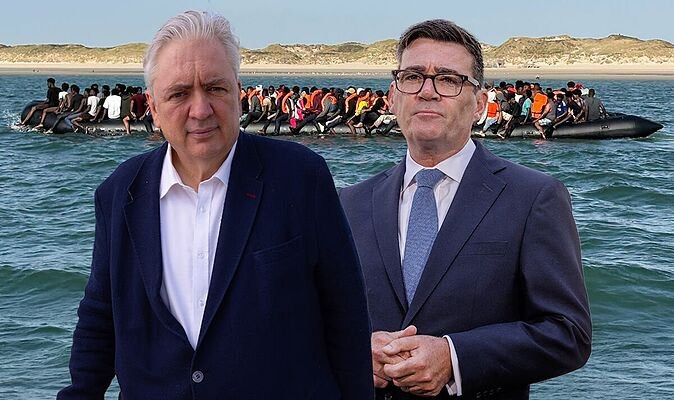
People-smuggling gangs seem increasingly confident, and the boats they use are becoming larger. On Tuesday, a huge inflatable boat measuring about 49 feet reportedly reached the English coast carrying 230 migrants. It was said to be the largest number of people ever recorded arriving on a single small boat. The dangerous overcrowding showed how willing smugglers are to risk people’s lives in order to make money.
There is also little evidence that Andy Burnham has produced a genuinely new solution to the immigration crisis. Although he is often described as a skilled communicator, his response to concerns about new taxpayer-funded accommodation for asylum seekers appeared out of touch with public feeling.
Plans to place asylum seekers in new homes and large accommodation centres, including in rural communities, have caused anger in several areas. Residents are worried about pressure on housing, public services, local infrastructure and community safety. Some also feel major decisions are being made without properly consulting the people who already live there.
In Thetford, 15 people were arrested during protests outside properties reportedly intended to house asylum seekers. There has also been strong opposition to a proposed centre for around 1,200 asylum seekers near Piddington in Oxfordshire. The nearby village has a population of only about 400, meaning the proposed centre would hold roughly three times as many people as the village itself.
Burnham promised that the proposal would be examined again. However, he also said every part of the country would have to “play its part.” That statement may have been intended as a call for shared national responsibility, but many residents saw it as patronising. They believe they are being ordered to accept decisions over which they have had little control.
It is understandable for the Government to argue that responsibility should not fall only on poorer communities. However, ministers must also recognise that small towns and villages may not have the housing, healthcare, policing or transport services needed to accommodate hundreds or thousands of additional people.
There are also genuine concerns about security checks. Many people arriving across the Channel are young men from countries in Asia, Africa and the Middle East. The public deserves clear information about how their identities and backgrounds are checked. It would be wrong to assume that every migrant is dangerous or involved in crime, but it would also be irresponsible to ignore possible risks when people arrive without reliable documents.
Politicians should discuss these concerns honestly without accusing worried residents of lacking compassion. Most people understand that some asylum seekers are escaping war, persecution or serious danger. At the same time, they want firm border controls, proper security checks and a fair asylum system that quickly distinguishes genuine refugees from people who have no legal right to remain.
The Prime Minister’s suggestion that communities must “do their bit” has therefore angered many people. They did not create the Channel crisis, invite the smugglers or design the asylum system. Yet they are being asked to accept the financial and social consequences while criminal gangs continue to profit.
For decades, successive governments allowed immigration to rise without clearly asking the public whether they supported such a major change. No leading political party openly campaigned for uncontrolled borders, and voters were never directly asked to approve a rapid transformation of the country.
That is why many people no longer trust political promises on immigration. They have repeatedly heard tough speeches, patriotic slogans and announcements of new crackdowns, but the boats continue to arrive and accommodation costs continue to rise.
Britain needs an immigration system that is controlled, fair and honest. It should protect genuine refugees, remove people who have no right to stay, punish people-smuggling gangs and listen seriously to affected communities. Until politicians match their words with effective action, public anger and distrust will continue to grow.