Day to Remember Britain’s Fallen Heroes ‘Hijacked’ by Protesters Who Came to Show Support for Something That Left Many People Shocked

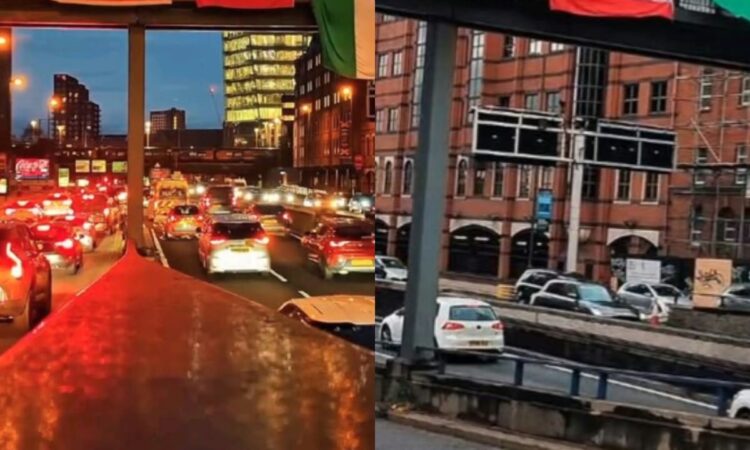
A protest in Birmingham has caused anger after demonstrators waved Iranian and Palestinian flags, set off flares and shouted slogans supporting Iran’s government on Armistice Day, when Britain remembers soldiers who died serving their country.
The demonstration took place on Wednesday, November 11, just hours after people across Britain observed a moment of silence to remember fallen servicemen and women.
Protesters gathered on a bridge above a busy road in Birmingham city centre. They displayed pictures of Iranian leaders, waved flags and set off flares. Organisers described the event as a show of support for Iran and Palestine.
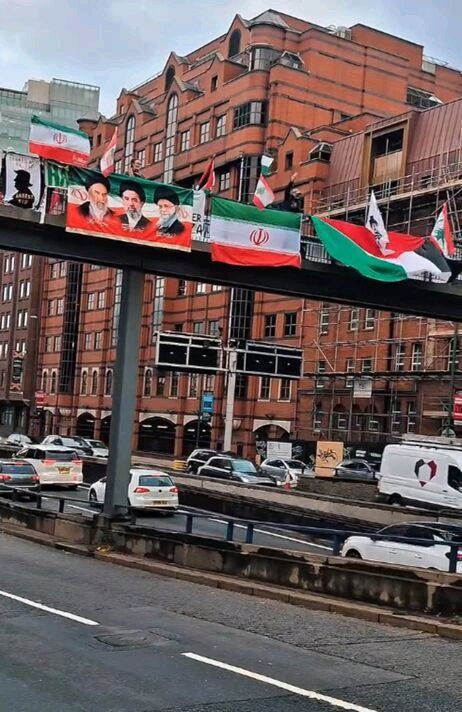
However, the protest has been strongly criticised by politicians, former soldiers and local councillors, who believe it was disrespectful to hold such a demonstration on a day dedicated to remembering those who lost their lives in war.
Iran’s government has faced serious criticism over its treatment of protesters, including the killing of thousands of people who demonstrated against its leadership. Iranian authorities have also been linked to attacks involving British military personnel and bases, as well as alleged plots targeting Jewish communities in Britain.
Despite the anger surrounding the demonstration, West Midlands Police said no crimes had been committed and there was no reason for officers to take further action.
Conservative shadow foreign minister Alicia Kearns condemned the protest, saying Armistice Day should be a time when the country comes together to remember and thank those who sacrificed their lives for Britain’s freedom.
She said holding a demonstration celebrating Iran’s government on such an important day was deeply offensive, particularly because of the country’s alleged involvement in attacks against British armed forces.
Conservative MP Bob Blackman also raised concerns about how the police handled the situation.
Blackman, who was due to lay a wreath in memory of Holocaust victims at the Cenotaph during a parade organised by the Association of Jewish Ex-Servicemen and Women, said the police must apply the law fairly to everyone.
He explained that while people should respect the police, officers must enforce the law without treating different groups differently.
He also criticised West Midlands Police, suggesting the force had previously failed to meet that standard.
Former British soldier Paul Rees, who served with the 1st The Queen’s Dragoon Guards and now hosts the Rebel Reverend podcast, said the scenes in Birmingham were particularly upsetting to him.
Rees explained that remembering fallen soldiers was something very personal for veterans and their families.
For him, remembrance means thinking about loved ones who never returned home, empty seats at family tables and letters that never arrived.
He said he was deeply saddened that protesters were allowed to gather on a bridge in Birmingham on the same day Britain remembered the end of the First World War.
According to Rees, demonstrators spent hours waving Iranian flags, displaying pictures of Ayatollah Khomeini and setting off flares.
He also claimed the protesters blocked the bridge during the demonstration.
Rees argued that the gathering was not about standing against oppression but about showing support for a government accused of killing its own citizens, punishing people who disagree with it and restricting freedom of speech.
He also pointed to concerns raised by British security services about threats linked to Iran against military sites and personnel in the UK.
Martin Brookes, who leads the independent councillors’ group in Birmingham, also criticised the protest.
He said Armistice Day was meant to honour people who gave their lives to protect freedom, and using that day to support a government accused of killing thousands of its own citizens was shameful.
Conservative councillor Robert Alden raised another concern, saying the demonstration above a busy main road could have put people in danger.
He argued that both West Midlands Police and Birmingham City Council should have stepped in.
Alden also questioned why the council had taken action against British flags being displayed in public places while apparently allowing Iranian and Palestinian flags to be displayed during the protest.
He described the timing of the demonstration as insulting to British soldiers and their families, especially given reports of attacks involving Iran and British military facilities.
The controversy comes shortly after Birmingham City Council voted to stop financial dealings with Israel and Israeli businesses.
During that council meeting, some councillors reportedly shouted “Free Palestine” as the decision was made.
Jex Parkin, leader of Birmingham’s Reform UK group, claimed the council’s decision had encouraged the November 11 demonstration.
He accused the council of treating different groups unfairly.
According to Parkin, the council had been willing to take legal action against people displaying British flags and St George’s Crosses but had not shown the same determination to stop the demonstration supporting Iran.
He described the situation as an example of different rules being applied to different people.
The disagreement over flags has already reached the courts.
The High Court was expected to announce a decision on Wednesday concerning Birmingham City Council’s request for a legal order to stop people displaying flags on roads, bridges and other public structures across the city.
Meanwhile, West Midlands Police defended its handling of the protest.
A police spokesperson said officers had assessed the gathering and found no evidence of criminal behaviour.
The force also said there had been no violence, no disruption to pedestrians or vehicles and no reports of other offences.
Police explained that because no crimes had been identified, there was no reason to take further action.
The spokesperson added that officers would continue listening to different communities across the West Midlands and would enforce the law fairly.
According to the force, its main responsibility is to protect people, prevent harm and maintain public trust.
The demonstration has also brought renewed attention to an earlier controversy involving West Midlands Police.
Last year, the force faced criticism over its decision to ban Jewish football supporters from attending Aston Villa’s match against Israeli club Maccabi Tel Aviv.
Critics have now used that earlier decision to question whether the police are treating all communities equally.
However, police have maintained that their decisions are based on public safety and the law, rather than favouring any particular group.
Birmingham City Council was contacted for its response to the latest criticism, but no statement from the council was included in the report.
The protest has continued to divide opinion, with critics arguing that supporting Iran’s government on Armistice Day showed disrespect towards British military personnel and their families.
At the same time, West Midlands Police has maintained that the demonstration did not break the law and that officers had no legal reason to intervene.