Home Office Hands Asylum Seekers a Booklet Explaining What They Must and Must Not Do While Living in the UK

The Home Office has faced strong criticism after producing posters and booklets aimed at asylum seekers in the UK. The materials explain some of the basic laws and rules people are expected to follow while living in Britain.
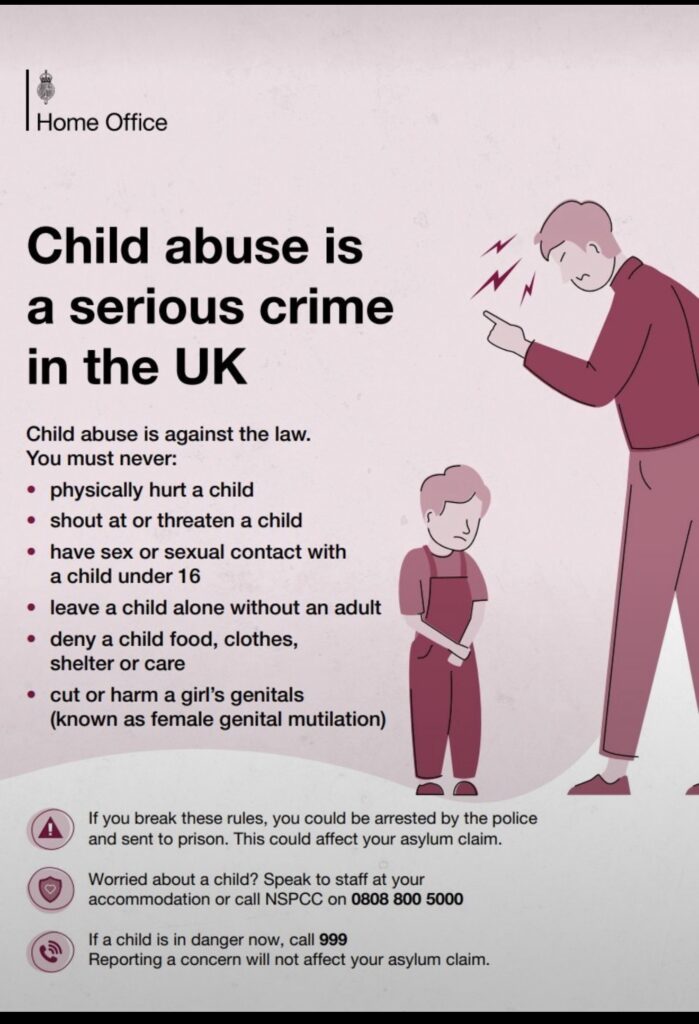
The posters cover subjects such as sexual consent, child protection, equality between men and women and other types of behaviour that are against the law. But some politicians and campaigners have questioned why the government needs to explain these basic rules to adults and why taxpayers should pay for the materials.
One of the posters explains that both people must agree before having sex. It also makes clear that sex without consent is rape. The guidance says that a person can change their mind at any time and that being married or being in a relationship does not mean someone automatically agrees to sex.
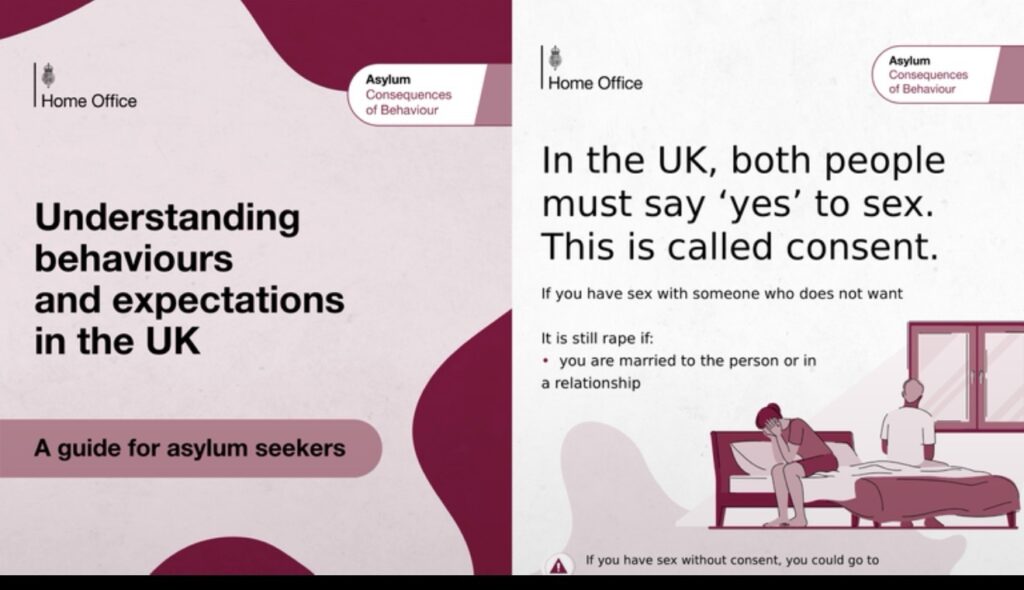
Another poster explains that hurting children, having sexual contact with children and female genital mutilation are serious crimes in the UK. The government has also produced a booklet called “Understanding Behaviours and Expectations in the UK: A Guide for Asylum Seekers”.
The materials have caused anger among some politicians, who say the information should not need to be explained to adults. Reform UK leader Nigel Farage criticised the decision and questioned why taxpayers’ money was being used to produce the posters.
Farage’s comments were challenged by politics producer Jack Parker, who pointed out that public money is also used for elections and other political activities. The argument quickly became part of the wider political debate about immigration and government spending.
Conservative MP Katie Lam also criticised the Home Office campaign. She argued that people should already understand that rape, child abuse and violence against women are wrong. She questioned whether simply giving people posters after they arrive in Britain is the right way to deal with the problem.
There has also been a demand for the government to reveal exactly how much the posters and booklets cost. Lewis Brackpool, investigations director at Restore Britain, said he had asked the Home Office for the full cost of producing them.
Other critics have also questioned the message behind the campaign. They say it gives the impression that the government believes some people arriving in Britain need to be taught basic rules that should apply to everyone.
Conservative MP Gareth Davies also criticised the wording on some of the posters. He pointed to warnings saying certain actions “could” lead to arrest or “could” affect an asylum claim. He argued that serious crimes should be treated seriously regardless of whether the person involved is British or a foreign national.
However, supporters of the Home Office guidance could argue that the purpose of the posters is to make sure everyone understands British law. Asylum seekers come from many different countries and backgrounds, so the government may believe that clearly explaining UK laws can help prevent people from breaking them.
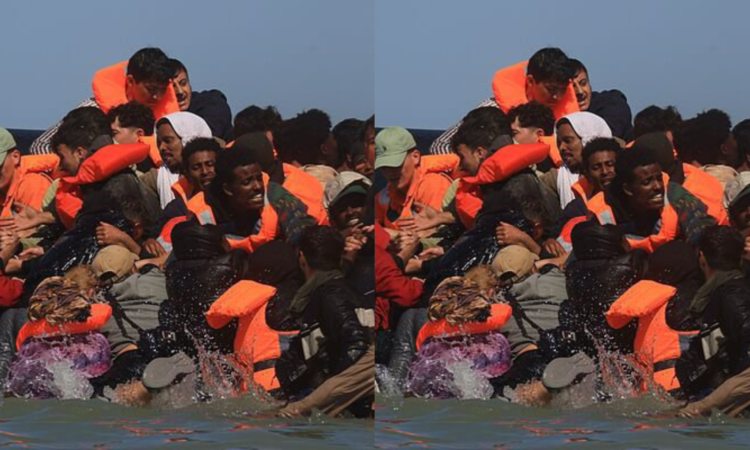
The issue has become part of the much bigger argument over immigration in Britain. Government figures cited in the report say more than 100,000 people claimed asylum in the UK in 2025. Around 41 percent were recorded as arriving by small boats, while about 39 percent entered through a visa or electronic travel authorisation.
The controversy is therefore not only about a few posters. It has become another argument over how Britain deals with asylum seekers, how much the government spends on supporting them and what people should be expected to know before or after arriving in the country.
Critics believe the government should spend more time and money dealing with illegal migration and reducing the number of people making dangerous journeys across the English Channel. They argue that producing posters about basic laws does little to solve the bigger problem.
The Home Office, however, can argue that making people aware of British laws is part of its responsibility. Whatever the intention, the posters have clearly caused a political row, with critics questioning both the need for the materials and the amount of taxpayers’ money being spent on them.