Horror as Dad Beheads His 13-Year-Old Son After the Boy Discovers Disturbing Pictures of Him on His Device

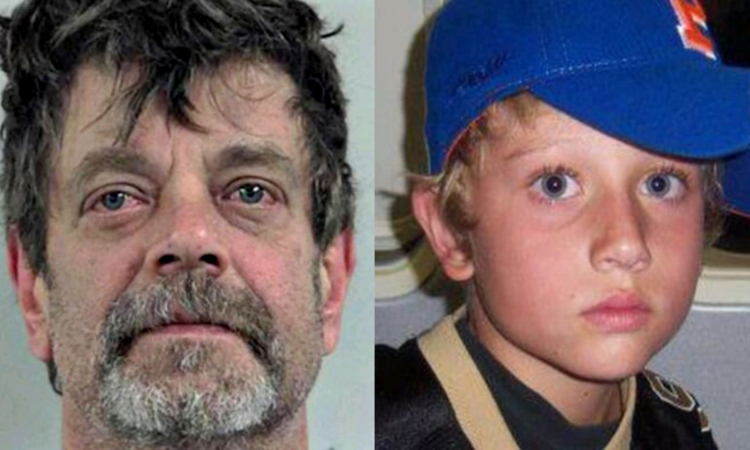
A father in the United States was sentenced to 48 years in prison after killing his 13-year-old son, who had discovered embarrassing photographs of him wearing women’s underwear and appearing to eat human waste from a nappy.
Dylan Redwine was visiting his father, Mark Redwine, in Colorado in November 2012 to spend the Thanksgiving holiday with him. However, what was supposed to be a family visit ended in a heartbreaking tragedy.
The young boy had reportedly wanted to spend the night at his friend’s house, but his father refused to let him go.
Dylan then arranged to meet his friend the following morning. He sent him a text message saying he would arrive at around 6:30am. However, his friend waited for him, and Dylan never arrived.
Concerns began to grow when nobody could establish where the teenager was. He was eventually reported missing, leading to a police investigation into his disappearance.
As officers began looking into the circumstances surrounding his disappearance, they discovered that Dylan and his older brother, Cory, had previously come across some disturbing photographs of their father.
The pictures reportedly showed Mark wearing women’s underwear and appearing to eat human waste from a nappy.
The discovery had left the brothers uncomfortable, and Cory had encouraged Dylan to speak to their father about what they had seen.
Cory explained that his younger brother was getting older and should be able to express his feelings openly. He believed that Dylan had every right to tell his father how the photographs had made him feel.
He also said that a child should be able to speak honestly with their parents without fearing what might happen to them.

However, prosecutors believed that a confrontation over the photographs led to Mark killing his young son.
During their investigation, police discovered traces of Dylan’s blood inside the living room of his father’s house.
Specially trained police dogs were also brought in to search the property. The dogs detected the scent of human remains inside the house and in Mark’s vehicle.
These discoveries raised serious questions about Mark’s explanation of what had happened to his son.
Some of Dylan’s remains were eventually discovered in a remote mountain area approximately eight miles from his father’s home.
His skull was later found around a mile and a half away from the rest of his remains.
Experts who examined the remains discovered injuries caused by a sharp object. Their findings provided further evidence that the teenager had suffered a violent death.
Mark’s lawyers argued that Dylan could have left the house on his own and died after being exposed to harsh weather or attacked by a wild animal.
However, investigators challenged this explanation. They questioned how an animal could have carried the boy’s skull such a considerable distance from the rest of his remains.
The evidence discovered inside Mark’s home and vehicle also raised further doubts about the claims made by his defence team.
In 2017, nearly five years after Dylan disappeared, Mark was charged in connection with his son’s death.
The case eventually went to trial, where prosecutors presented evidence gathered throughout the lengthy investigation.
Mark was found guilty of second-degree murder and child abuse resulting in death.
In October 2021, a judge sentenced him to 48 years in prison, the maximum punishment available under the law for his convictions.
During the sentencing hearing, District Attorney Christian Champagne strongly criticised Mark for refusing to accept responsibility for what he had done.
He told the court that Mark had shown no remorse for killing his own child and argued that he deserved the maximum prison sentence.
The prosecutor also accused Mark of focusing on protecting himself rather than taking responsibility for his son’s death.
He explained that Mark had attempted to clean up evidence of the crime and hide Dylan’s remains.
The court ultimately agreed that Mark should receive the maximum sentence.
For Dylan’s family, the case brought an end to nearly nine years of waiting for justice. His older brother had only encouraged him to speak openly about something that had made him uncomfortable, never expecting that the conversation could end in such a tragedy.
Dylan was just 13 years old when he lost his life. He had travelled to his father’s home to spend Thanksgiving and was looking forward to seeing his friend.
Instead, the teenager was killed by the very person who was supposed to love, protect and keep him safe.