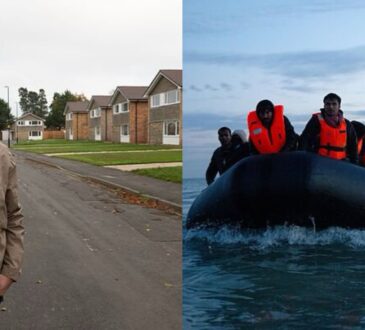
Inside Secret Migrant Camp in France Where Hundreds Are Desperate to Reach the UK as Aid Workers Reveal Disturbing Things Happening Behind the Scenes

Aid workers have raised serious concerns about the terrible living conditions inside a migrant camp in northern France, where hundreds of people hoping to reach the United Kingdom are struggling to survive. Many are living on just one meal a day, while diseases are spreading because of poor hygiene and a lack of proper facilities.
The camp, located near Dunkirk in an area called Loon-Plage, became one of the main places where migrants gathered after the famous Calais Jungle camp was closed in 2016. At its busiest, the Calais camp was home to around 10,000 migrants before French authorities cleared the area.
However, closing the camp did not stop migrants from coming to northern France. Instead, smaller camps began appearing in different locations, with many people continuing to wait for an opportunity to cross the English Channel and enter Britain.
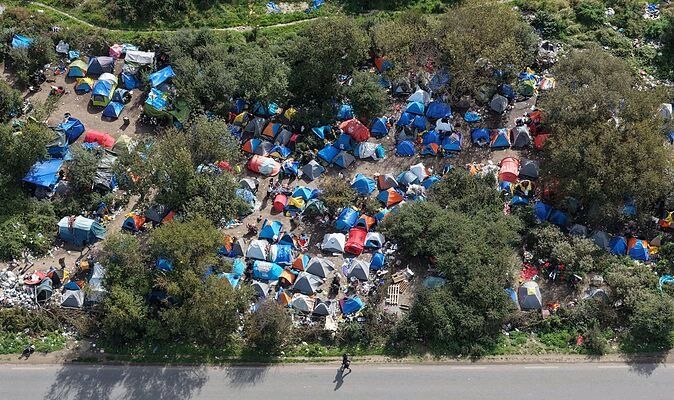
According to reports, the situation at Loon-Plage has become increasingly difficult, with aid workers warning that many people are going hungry and living in unsafe conditions.
When volunteers from the charity Salam arrived to distribute food in October, large crowds quickly gathered around them. Many had not eaten anything since the previous afternoon and were desperate to receive a meal.
Claire Millot, a retired teacher who works with the charity, explained that hunger has become a serious problem in the camp. She said some migrants had gone almost an entire day without food before the volunteers arrived.
The charity prepares enough food for between 1,000 and 1,200 people, although the number of migrants staying in the area changes regularly. Some leave when the weather improves because they believe it gives them a better chance of crossing the English Channel in small boats.
Since the Calais Jungle was closed, French authorities have regularly removed tents and other belongings to prevent new migrant camps from becoming permanent settlements.
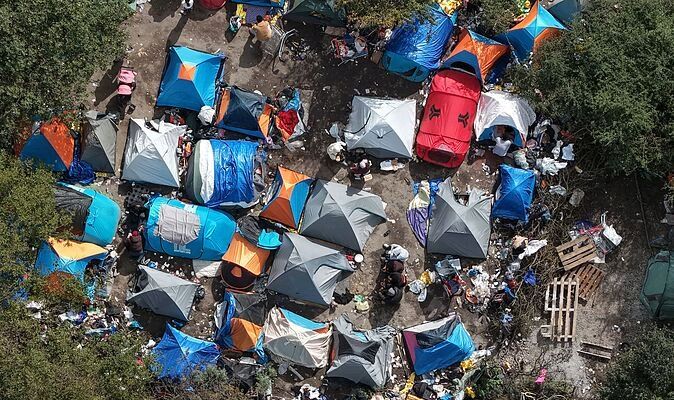
However, the authorities temporarily stopped removing people from the Loon-Plage camp in September following a death linked to diphtheria, a serious infectious disease.
Despite this decision, living conditions remain extremely poor. Many migrants sleep in small tents or shelters made from whatever materials they can find. Rubbish is piling up around the camp, and there are not enough toilets or washing facilities.
Some migrants have also set up small makeshift shops inside tents, where they sell everyday items such as milk, coffee, socks and shampoo.
Although many of the people living in the camp are men, there are also women and children who are hoping to reach Britain.
One woman, identified as Fatma, travelled from Somalia through Italy before arriving in northern France with her 11-month-old baby. She has reportedly been waiting for two and a half months for an opportunity to cross the Channel.
Fatma explained that making the journey is particularly difficult for women travelling with young children. She said they often have to walk long distances, run while carrying their belongings and deal with the cold sea.
She also pointed out that while some men manage to reach Britain, women with children face additional difficulties because they cannot move as quickly or easily.
Health workers visiting the camp have also reported a growing number of people suffering from different illnesses.
Doctors of the World, a medical charity providing healthcare to vulnerable people, said its mobile clinic treated around 50 patients in a single day.
Some were suffering from breathing problems, while others had scabies, infected wounds and other health conditions linked to their difficult living environment.
Diane Léon, a regional coordinator for the charity, said the situation facing migrants in northern France has become worse over the past decade.
She explained that after witnessing what has happened since the closure of the Calais Jungle, she believes migrants are now living in even more difficult and uncertain conditions than before.
Another major concern is the increasing number of women living in the camps.
Doctors Without Borders reported that the number of women in the Dunkirk area has doubled in less than a year.
The charity also raised concerns about violence and sexual abuse affecting women travelling through Europe in search of safety.
According to its initial assessment, 49% of the women it supported had sought help following rape, either during their journey or after arriving in France.
Medical workers said many of these women had experienced serious trauma but had never previously spoken about what happened to them.
A midwife working with the charity explained that providing medical care is not only about treating injuries and illnesses. It also gives women an opportunity to speak about their experiences and receive support.
Meanwhile, concerns remain about the activities of people-smuggling gangs operating around the camps.
Many migrants have already travelled thousands of miles from their home countries, often paying large amounts of money to smugglers who promise to help them reach Europe or Britain.
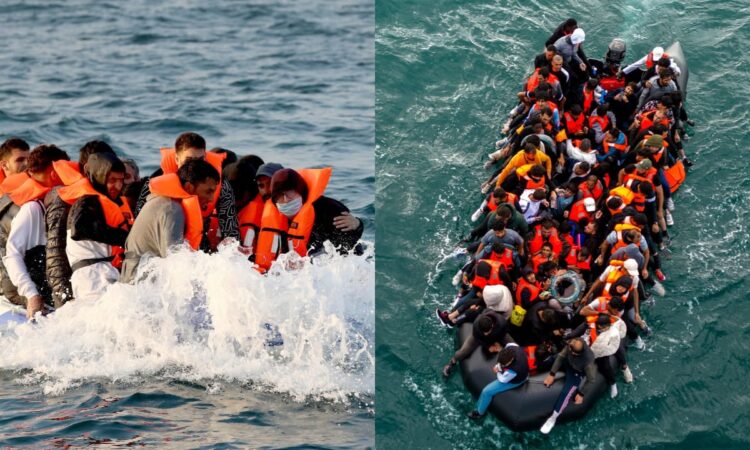
Some are then encouraged to attempt the dangerous journey across the English Channel in overcrowded inflatable boats, sometimes without enough life jackets or other safety equipment.
The journey can be extremely dangerous, particularly when the weather changes suddenly or boats become overcrowded.
Figures compiled by the Migration Observatory at the University of Oxford show that 162 people died while attempting to cross the English Channel between 2018 and 2025.
Despite these dangers, many migrants continue to wait in northern France, hoping they will eventually find a way to reach the UK.
For some, the journey has already taken months or even years, and they remain unwilling to give up after travelling so far.
The situation has raised fresh questions about what should happen to the growing number of migrants living in temporary camps along the French coast.
While French authorities have continued efforts to prevent permanent camps from forming, charities argue that repeatedly removing tents and shelters does little to solve the problems facing the people living there.
Aid organisations are now calling for better access to food, clean water, healthcare and safe accommodation, particularly for women and children.
For those still living in Loon-Plage, everyday life remains a struggle. Many wake up without knowing when they will next eat, where they will sleep safely or whether they will ever complete their journey to Britain.
The continued existence of the camp, ten years after the closure of the Calais Jungle, shows how the problems surrounding migration across the English Channel remain unresolved, with both migrants and authorities facing difficult challenges.