Muslim Women Protest Against Reform UK’s Proposed Burqa Ban and Warn What Could Happen if the Ban Goes Ahead

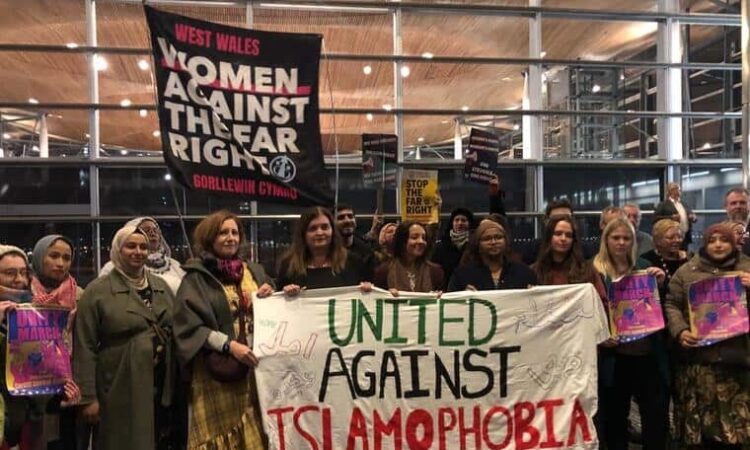
Protesters gathered outside the Welsh Parliament, known as the Senedd, in Cardiff on Wednesday to speak out against a proposed ban on burqas put forward by Reform UK.
The proposal was introduced by Jason O’Connell, Reform UK’s deputy leader in Wales. He described the burqa as “anti-British” and said it represented an “alien culture”. His comments sparked criticism from campaigners who believe the proposal unfairly targets Muslim women and could increase discrimination against them.
Several anti-racism groups joined the protest, including Stand Up To Racism (SUTR), which helped organise the demonstration.
One of the activists, Thamsin, told Socialist Worker that many Muslim women in Cardiff already feel unsafe, particularly those who wear face coverings for religious reasons.
She explained that the debate had made the situation worse because it placed more attention on Muslim women and increased their fears about being targeted in public.
According to Thamsin, the discussion was not simply about clothing but about how Muslim women are treated in British society.
This is not the first time Reform UK has attempted to introduce restrictions on burqas. Just two weeks earlier, the party supported a similar proposal in the Scottish Parliament, calling for a ban on burqas and other face coverings.
That proposal also faced opposition, with anti-racism campaigners gathering in Edinburgh to protest against it.
Speaking about the debate in Wales, Thamsin said she was particularly concerned about how the discussion developed.
She explained that it initially focused on criminals wearing balaclavas while riding electric bikes. However, the conversation later moved towards British values and whether women should be allowed to wear burqas.
She accused Reform UK of using concerns about crime as a way to justify restrictions on Muslim women’s clothing.
Thamsin argued that the proposal was discriminatory and that women should have the freedom to decide what they wear without politicians making those decisions for them.
During the debate, Reform UK Senedd member Francesca O’Brien also supported the proposed restrictions.
She described the burqa as “anti-British” and argued that Britain should not continue accepting cultural practices that she believes make integration more difficult.
“Not all cultures are equal,” she said, before warning against bringing what she described as “alien cultures” into the country.
Her remarks added to the disagreement between Reform UK and campaigners who believe religious freedom should be protected.
Reform UK is currently the second-largest party in the Welsh Parliament. However, even if the proposal had received enough support, the Senedd would not have been able to introduce the ban directly because it does not have the necessary legal powers.
This meant the debate could not immediately result in a new law banning burqas in Wales.
Despite this, campaigners said the discussion was still worrying because of the message it could send to Muslim communities.
Thamsin also criticised Reform UK’s record in local government. She claimed that some councils controlled by the party had failed to make meaningful improvements to people’s lives.
She argued that politicians sometimes focus on immigration, religion and cultural differences to distract attention from other problems affecting communities.
According to her, this approach encourages people to blame their Muslim neighbours or women wearing headscarves instead of focusing on wider social and economic issues.
In Cardiff, Thamsin and other activists have been working to bring different communities together to challenge racism and discrimination.
As part of those efforts, Stand Up To Racism worked with Muslim Engagement and Development (Mend) to organise a public meeting.
The meeting gave Muslim women an opportunity to discuss their experiences, raise concerns about discrimination and consider how they could respond.
Thamsin said she encouraged Muslim women to become more involved in public demonstrations and community activities.
She believes it is important for Muslim women to speak for themselves and take leading roles in campaigns that directly affect their lives.
She also explained that building relationships with local Muslim communities helped increase attendance at the protest outside the Senedd.
Several Muslim women joined the demonstration, including some who had never attended a protest before.
Thamsin described their involvement as an important development because Muslim women have not always been strongly represented at such demonstrations.
She said seeing more women take part showed that community organising could encourage people to speak out about issues affecting them.
After the parliamentary debate, some members of the Senedd also joined the protesters outside the building.
Thamsin welcomed their support, saying it showed that Reform UK’s proposal faced opposition from within the Welsh Parliament as well as from members of the public.
However, she stressed that the most important part of the protest was the involvement of ordinary people who had come together to express their concerns.
She said the demonstrators made their message clear and wanted politicians to understand that many people strongly opposed restrictions targeting Muslim women’s clothing.
Campaigners believe that continuing to build relationships between different communities will help them challenge Reform UK’s proposals and oppose discrimination.
The debate has once again raised questions about religious freedom, women’s rights, cultural integration and whether the government should have the power to decide what people can wear in public.
While supporters of restrictions argue that face coverings raise concerns about integration, security and women’s rights, opponents believe a ban would unfairly affect Muslim women and limit their freedom to practise their religion.
For now, no burqa ban has been introduced in Wales as a result of the debate, but the disagreement has highlighted the growing political discussion surrounding religious clothing in Britain.