She Was Pregnant With Her Second Child—Then Minutes Later, the Doctor Gave Her Shocking News That Changed Her Life Forever

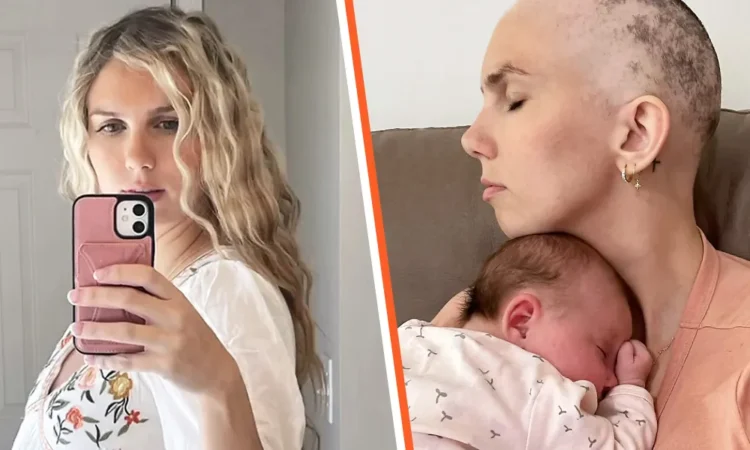
Lindsey Gritton was living what seemed like a normal, happy life. She was pregnant with her second child, and everything about the pregnancy had been smooth and healthy. There were no warning signs, no complications, and nothing to suggest that anything was wrong. She was simply preparing to welcome her baby, thinking about the future, and taking care of her growing family.
Then one day, she noticed something small but unusual. It was a tiny lump in her breast, about the size of a marble, but what made it strange was the burning feeling that came with it. It wasn’t just uncomfortable, it was constant and irritating, something she couldn’t ignore. At first, she tried to stay calm and assumed it was something common during pregnancy, like a blocked milk duct. She even tried to deal with it herself, hoping it would go away, but nothing changed.
When she finally went to see her doctor, she was told it was likely an infection and was given antibiotics. On the surface, that sounded like a simple explanation, something that could easily be treated. But deep inside, she felt uneasy. She had experienced similar things before, and this didn’t feel the same. It was different, and her instincts kept telling her that something more serious was going on.
Instead of ignoring that feeling, she decided to push further and asked for an ultrasound. That decision would later prove to be one of the most important choices she made. During the scan, even before any results were explained, she could sense something was wrong. The technician’s face, the repeated movements over the same area, and the silence in the room all made it clear that this was not something minor.
Doctors quickly realized they needed to act fast. They recommended that she deliver her baby early so they could focus on finding out exactly what was happening and begin treatment right away. At 37 weeks, she was induced, expecting that at least the delivery would go smoothly.
But things took a dangerous turn during labor. She began to lose a large amount of blood, so much that it became life-threatening. For a moment, it seemed like she might not survive the delivery. At the same time, her baby’s heart rate started to drop, and doctors prepared for an emergency surgery to save them both.
In the middle of all that fear and chaos, she made a difficult decision. She refused the surgery because she was thinking ahead. She knew that recovering from a major operation could delay the treatment she would soon need. It was a risky choice, but one she felt she had to make. Somehow, through all the pain and danger, she gave birth to her baby girl safely.
That moment should have been filled with pure joy, but it was quickly followed by something devastating. Just about a week after giving birth, while she was still weak and recovering, she received the results of further tests. Sitting in the car with her husband, she was told that the cancer had already spread to her liver.
At just 29 years old, with a newborn baby and a toddler at home, she was told she might only have six months to live. It was the kind of news that stops everything. Her world, which had just expanded with the birth of her child, suddenly felt like it was falling apart.
But even in that moment, her thoughts were not about giving up. She wasn’t thinking about death in the way people might expect. Instead, she was thinking about her children. She was thinking about staying, about fighting, about doing whatever it took to be there for them for as long as possible.
She started chemotherapy soon after. The treatment was tough and draining. Every few weeks, she would spend hours at the hospital while powerful drugs ran through her body. The side effects were harsh. She felt constantly tired, weak, and overwhelmed. At home, she still had to be a mother, even when her body felt like it had nothing left to give.
Her husband became her biggest support. He stepped away from his own work and took on the role of caring for their children full-time. He stayed up at night with their newborn so she could get the rest she needed after treatment. He carried the weight of the household while also trying to stay strong for her.
The physical changes were also hard for her to accept. She couldn’t breastfeed her baby. Her hair began to fall out. Her body no longer felt like her own. As a woman and a mother, that loss affected her deeply. But even more painful was the fear of not being there for her children in the future.
She began to prepare in ways that no parent ever wants to. She recorded videos, wrote letters, and left messages filled with love, advice, and encouragement for her children to read in the future. She wanted them to always feel her presence, even if she wasn’t there.
One of the most heartbreaking moments was when she tried to explain the situation to her young child. Sitting down with her toddler, she gently talked about the possibility that she might not always be around. It was a conversation filled with innocence and sadness, something that no mother should ever have to do.
Every day became more meaningful. Simple things like playing, laughing, or just being together felt more important than ever. She held onto those moments tightly, knowing how fragile life can be.
Through all of this, her husband never stopped believing that she would survive. His confidence became a source of strength for her. Even when things felt uncertain, she held onto that hope.
After completing chemotherapy, she continued with other treatments. Over time, something unexpected began to happen. Her scans started to show no active signs of cancer. While doctors still consider her condition incurable, this change gave her something she desperately needed, time.
Now, she focuses on living in the present. She spends her days making memories with her children, watching them grow, and enjoying the moments she once feared she would miss. Birthdays, small achievements, and everyday experiences now feel incredibly special.
She lives with both reality and hope at the same time. She knows her condition hasn’t completely gone away, but she chooses to believe in the possibility of more time, more memories, and more life. Her story is not just about illness, but about strength, love, and the powerful instinct to fight for the people who matter most.